NASA & GE Aerospace's Hybrid-Electric Flight Takes Off for Sustainable Aviation

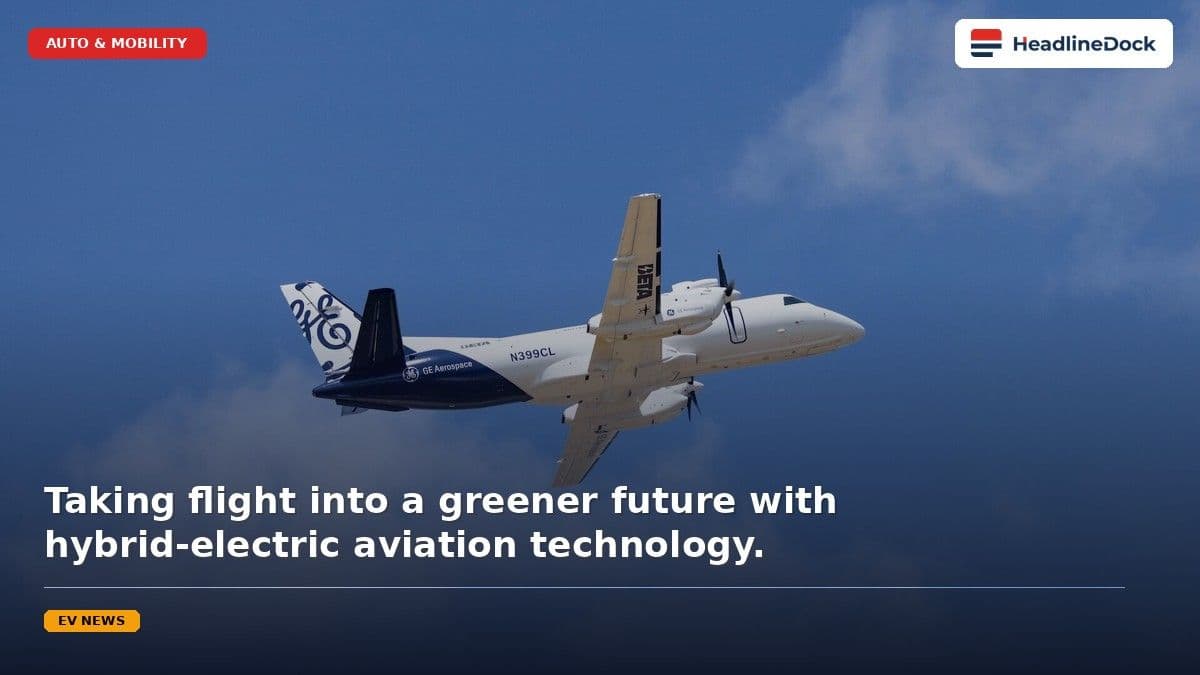
NASA and GE Aerospace have successfully demonstrated a megawatt-class hybrid-electric propulsion system using a modified Saab 340B aircraft. Tested at altitudes over 30,000 feet, this milestone aims to significantly lower fuel consumption and airline operating costs, marking a major step forward for the future of sustainable, commercial aviation.
Read it in Short
QUICK OVERVIEW
NASA and GE Aerospace successfully flew a megawatt-class hybrid-electric engine on a modified Saab 340B aircraft.

The system achieved test flights above 30,000 feet, proving it can handle commercial aviation environments.

The primary goal of the hybrid system is to reduce commercial airline fuel consumption and long-term operating costs.

The project has shown steady progress since 2011 with no technical failures or safety incidents reported during testing.
NASA & GE Aerospace's Hybrid-Electric Flight Takes Off
For decades, the aviation industry has viewed hybrid-electric propulsion as a theoretical dream—a concept often relegated to small-scale experimental drones or light, short-range aircraft. However, a major breakthrough has officially moved this technology from the whiteboard to the sky.
NASA and GE Aerospace have successfully demonstrated a megawatt-class hybrid-electric propulsion system, marking a definitive turning point in sustainable aviation. By successfully testing this technology on a modified Saab 340B regional aircraft at altitudes exceeding 30,000 feet, the team has proven that hybrid power is no longer just a futuristic ambition—it is a validated reality ready to transform how we fly.
The Mechanics of a Modern Breakthrough
The core of this achievement lies in the integration of a gas turbine with advanced electric motors and energy storage systems. Unlike traditional aviation engines that rely entirely on the mechanical output of a fuel-burning turbine, this hybrid-electric system creates a collaborative environment. The system intelligently balances power demands between the turbine and electric components, optimizing fuel burn throughout the flight envelope.
This is not a small-scale prototype; it is a megawatt-class system. Operating at this scale is a massive engineering hurdle because it requires managing high-voltage, high-current electricity in the thin, cold, and high-vibration environment of a commercial aircraft flying at cruise altitude. The successful demonstration confirms that the architecture can handle the rigorous demands of commercial aviation, not just the controlled conditions of a laboratory.
Comparison: Traditional Engines vs. Hybrid-Electric Systems
| Feature | Hybrid-Electric System | Traditional Jet Engine |
|---|---|---|
| Primary Power | Gas Turbine + Electric Motor | Gas Turbine Only |
| Altitude Capability | Proven > 30,000 ft | Standard Commercial Altitudes |
| Economic Goal | Lower fuel burn & operating costs | Thrust & Mechanical Performance |
| System Integration | Integrated energy storage/converters | Conventional mechanical fuel cycle |
Why This Matters for the Future of Air Travel
This demonstration carries significant weight for both the aerospace manufacturing sector and the commercial airline industry. Fuel consumption is consistently one of the largest operating expenses for airlines. By proving that a hybrid system can effectively supplement traditional engines, the aerospace industry is creating a clear roadmap to reduce fuel usage and, by extension, the carbon footprint of regional air travel.
As Laurie Grindle, Director of the Aeronautics Division at NASA, noted that this project reflects NASA’s mission to validate bold possibilities through rigorous testing. The goal is to turn these breakthroughs into technologies that provide real-world value for the public. When passengers eventually board hybrid-electric regional jets, they may notice little difference in the flight itself—which is exactly the point. According to Ralph Jansen, an aerospace engineer at NASA Glenn Research Center, stated that the hybrid flight experience feels “just like a regular plane,” confirming that efficiency does not have to come at the expense of passenger comfort or operational reliability.
Safety and Reliability Validation
A common concern with emerging propulsion technology is the potential for system instability. During the development and demonstration phase of this project, researchers focused heavily on long-term safety validation. It is important to note that the project has recorded zero safety incidents, technical failures, or mid-flight bugs. The transition from ground testing at NASA’s Electric Aircraft Testbed in Sandusky, Ohio, to actual flight demonstrations has been characterized by steady, error-free progress, underscoring the maturity of the current hardware and software design.
A Journey of Decades
The recent success at the Farnborough International Air Show is the culmination of a long-term research trajectory that began in 2011. Since that initial conceptualization, the project has moved through rigorous phases of development, including ground-based integration testing in 2022 that simulated high-altitude conditions. Following the successful milestone flights in mid-2026, the technology is now positioned to inform the next generation of fuel-saving regional aircraft, setting a new standard for the industry’s long-term sustainability goals.
📖 NASA Coverage Timeline (Story Graph)
Follow the chronological evolution of NASA updates and related announcements on HeadlineDock:
- Jun 28, 2026 — NASA Launches Daring Rescue Mission to Save Aging Swift Observatory
- Jun 28, 2026 — Why Nuclear Power in Space is Essential for Future Interplanetary Missions
- Jul 08, 2026 — Why Former NASA Chief Questions Artemis Moon Lander Plans Complexity
- Jul 21, 2026 — Shaping the Emerald City: How Glaciers and Humans Built Seattle
- Jul 21, 2026 — NASA’s New VTE Risk Score Algorithm for Astronauts to Improve Health Safety
- Today — Active Coverage: (You are reading this article)
Frequently Asked Questions
What aircraft was used for the hybrid-electric test?
A modified Saab 340B regional aircraft was used to carry and test the megawatt-class hybrid-electric engine system.
How high can this hybrid-electric aircraft fly?
The hybrid-electric system has demonstrated the capability to fly at altitudes above 30,000 feet, which meets standard requirements for commercial regional aviation.
Why is this important for the average airline passenger?
This technology is specifically engineered to reduce fuel burn, which is one of the highest operating expenses for airlines, potentially making air travel more efficient and sustainable for passengers.
Is this the same as small electric drones?
Unlike small-scale electric drones, this is a megawatt-class system designed to power regional-class commercial jets, presenting a significantly more complex engineering challenge.
Who collaborated on this project?
The demonstration was a collaborative effort led by NASA and GE Aerospace, with significant contributions from BETA Technologies and Boeing.
Related Articles
 India Joins WTO Agreement on Fisheries Subsidies: Balancing Global Sustainability
 NBA Tests New Free-Throw Rules and Smart Ball Technology This Summer
 ITV Upgrades ITVX Streaming Platform With New Edge Video Delivery Technology
Government Unveils Strategic Defence Investment Plan Prioritizing Autonomous Drone Technology