NASA’s New VTE Risk Score Algorithm for Astronauts to Improve Health Safety

NASA has launched a formal VTE Risk Score Algorithm to standardize clinical decision-making for blood clot prophylaxis among astronauts. Developed by the OCHMO, this tool utilizes weighted risk factors—primarily left internal jugular vein stasis—to ensure proactive medical management during long-duration space missions like those on the ISS.
Read it in Short
QUICK OVERVIEW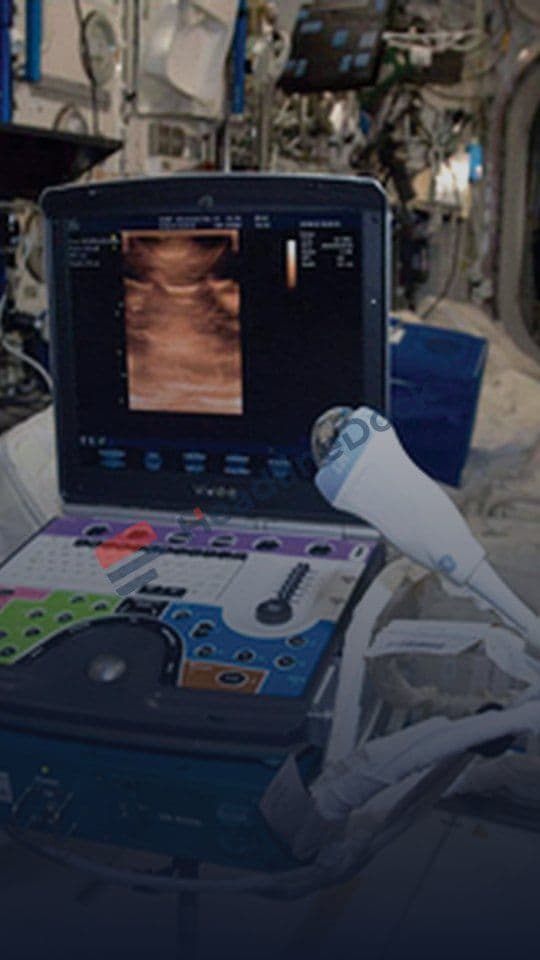
NASA introduced a standardized VTE risk scoring algorithm to proactively assess blood clot threats for long-duration spaceflight.

The algorithm uses a weighted system incorporating IJV stasis data and terrestrial thrombosis risk factors to guide anticoagulation treatment.

Developed by the OCHMO working group, the tool aims to replace previous reactive medical decision-making protocols.

Clinical experts flagged concerns regarding current in-flight ultrasound hardware limitations, urging refined assessment protocols to ensure accurate risk quantification.
NASA’s New VTE Risk Score Algorithm for Astronauts
Spaceflight presents a physiological paradox: while microgravity shields the human body from the crushing force of gravity, it introduces novel, life-threatening risks. Among the most concerning is Venous Thromboembolism (VTE)—the formation of blood clots that can migrate to the lungs or brain. Following a series of incidents on the International Space Station (ISS), NASA has shifted from reactive, case-by-case medical management to a rigorous, data-driven framework.
On July 17, 2026, the NASA Office of the Chief Health and Medical Officer (OCHMO) released a formal, standardized clinical algorithm designed to assess VTE risk in astronauts. This milestone represents a transition toward proactive, mission-critical healthcare essential for the success of long-duration missions, including the upcoming Artemis program.
Understanding the VTE Risk Score Algorithm
The new algorithm acts as a standardized clinical gatekeeper, determining exactly when a crewmember requires prophylactic anticoagulation medication. Before this development, clinical decisions were often hampered by the lack of a universal scoring system, forcing flight surgeons to rely on individual judgment rather than a unified set of weighted benchmarks.
The core input is the identification of stasis in the left internal jugular vein (IJV). The working group, which finalized its findings in April 2026, identified this as a dominant physiological marker of clotting risk in microgravity. By combining space-specific ultrasound data with traditional terrestrial thrombosis risk factors—such as personal medical history and genetic predispositions—the algorithm calculates a weighted score to justify medical intervention.
Diagnostic Approaches: A Comparison
| Feature | Previous Approach (Pre-2026) | New Algorithm (2026+) |
|---|---|---|
| Decision Basis | Clinical judgment/Anecdotal | Quantitative, weighted scoring |
| Primary Indicator | Vague clinical symptoms | Left Internal Jugular Vein (IJV) stasis |
| Standardization | Individual-based assessment | Unified, protocol-driven decision |
Why This Matters for Deep Space Exploration
The transition to this standardized risk score is a vital prerequisite for human expansion beyond low-Earth orbit. On the ISS, rapid medical evacuation or advanced diagnostic support is theoretically possible. As NASA pivots toward the Artemis missions and eventual exploration of Mars, the reliance on high-latency, autonomous medical decision-making becomes paramount.
By quantifying risk today, the OCHMO is establishing the baseline of health maintenance required to keep crews safe when they are months away from the nearest terrestrial hospital. Standardizing this data ensures that flight surgeons have a clear, evidence-based protocol to prevent VTE before it becomes a mission-ending catastrophe.
Troubleshooting and Limitations: Addressing Hardware Gaps
The clinical team has identified a critical bottleneck: the limitations of current in-flight hardware. Experts noted that the ultrasound equipment currently stationed on the ISS faces challenges in accurately quantifying "slow flow" and subtle stasis patterns.
Because the algorithm relies on these ultrasound inputs, the accuracy of the risk score is tied to the fidelity of the imaging hardware. NASA has recommended an urgent review of in-flight ultrasound assessment protocols. If an astronaut’s score appears borderline, flight surgeons are advised to exercise caution, factoring in the potential for measurement error rather than relying solely on the device readout.
📖 NASA Coverage Timeline (Story Graph)
Follow the chronological evolution of NASA updates and related announcements on HeadlineDock:
- Jun 26, 2026 — International Space Station Faces Growing Safety Risks from Persistent Air Leaks
- Jun 28, 2026 — NASA Launches Daring Rescue Mission to Save Aging Swift Observatory
- Jun 28, 2026 — Why Nuclear Power in Space is Essential for Future Interplanetary Missions
- Jul 08, 2026 — Why Former NASA Chief Questions Artemis Moon Lander Plans Complexity
- Jul 21, 2026 — Shaping the Emerald City: How Glaciers and Humans Built Seattle
- Today — Active Coverage: (You are reading this article)
Frequently Asked Questions
What is the primary risk factor for VTE in astronauts?
The working group identified stasis in the left internal jugular vein (IJV) as the dominant risk factor during microgravity.
Why was this algorithm created?
It was developed to standardize clinical decision-making regarding anticoagulation prophylaxis following observed cases of VTE on the ISS.
Does stasis automatically mean an astronaut needs medication?
No; the algorithm evaluates combinations of weighted risk factors to determine the necessity of treatment.
Are there concerns about the accuracy of current assessment tools?
Yes; the working group cited limitations in in-flight ultrasound capabilities for measuring flow, recommending further review of assessment methods.
Where can I find the official technical documentation?
Technical details are documented in NASA/SP-20260005258/REV1 – NASA Risk of Venous Thromboembolism in Spaceflight.