NBA Tests New Free-Throw Rules and Smart Ball Technology This Summer
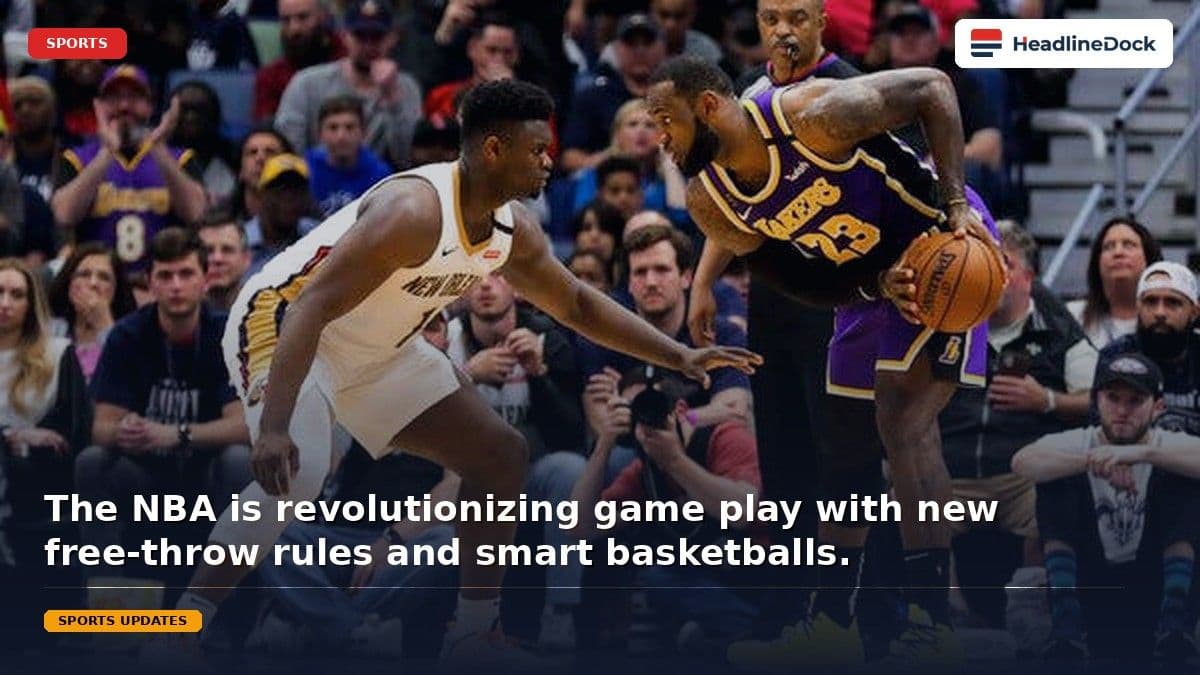
The NBA is trialing a new single free-throw rule and sensor-embedded basketball technology during its 2026 summer league games. These experiments, held across three host cities, aim to improve game flow and officiating accuracy, though the league has not yet committed to permanent adoption for the regular season.
KEY TAKEAWAYS
1 MIN READ- The NBA is testing a single free-throw rule where one shot equals the value of the fouls replaced.
- A new connected basketball featuring an embedded sensor will be used to assist in officiating calls.
- Standard free-throw rules remain active during the final two minutes of games and all overtime periods.
- The rule tests occur during summer league games in Las Vegas, California, and Salt Lake City.
The NBA is set to introduce significant experimental changes during the upcoming summer league games, aiming to refine the pace of play and officiating accuracy. As the league prepares for a series of exhibition matches in Las Vegas, California, and Salt Lake City, officials are rolling out a new NBA free-throw rule designed to streamline game flow.
Updating Game Flow and Officiating Technology
Under this trial NBA free-throw rule, the traditional multi-shot format will be condensed. Instead of taking two or three separate free throws, a player will attempt a single shot that carries the weighted value of the original number of foul shots earned. For instance, if a player is fouled while missing a three-point attempt, they will take one free throw worth three points. This policy will not apply to the final two minutes of regulation play or during any overtime periods, maintaining standard protocols for high-pressure closing moments. This specific adjustment has been utilized in the G League since the 2019-2020 season.
In addition to rule modifications, the NBA is testing advanced hardware in the form of a connected basketball. This ball is equipped with an embedded sensor specifically designed to monitor contact and movement. The primary objective is to assist officials with challenging calls, such as determining which player last touched the ball before it went out of bounds. According to league representatives, the integration of this sensor technology does not alter the weight, texture, or overall playability of the basketball.
These initiatives follow a long history of the summer leagues acting as a development ground for professional basketball standards. Previous experiments that successfully transitioned into regular-season regulations include the coach’s challenge, the transition take-foul penalty, and adjustments to how end-of-quarter desperation shots affect individual statistics. While some critics, including former professional players, have expressed skepticism regarding the NBA free-throw rule, the league views these tests as essential data-gathering exercises. There is currently no confirmed timeline for when these features might be adopted for regular-season professional play.
The upcoming schedule begins with the California Classic, featuring teams like the Golden State Warriors and Sacramento Kings. The Salt Lake City Summer League will soon follow, leading into the comprehensive Las Vegas Summer League, where all 30 teams will participate, allowing the league to gather extensive feedback on these new adjustments.