Why Did the Stock Market Crash Today? 900-Point Sensex Drop
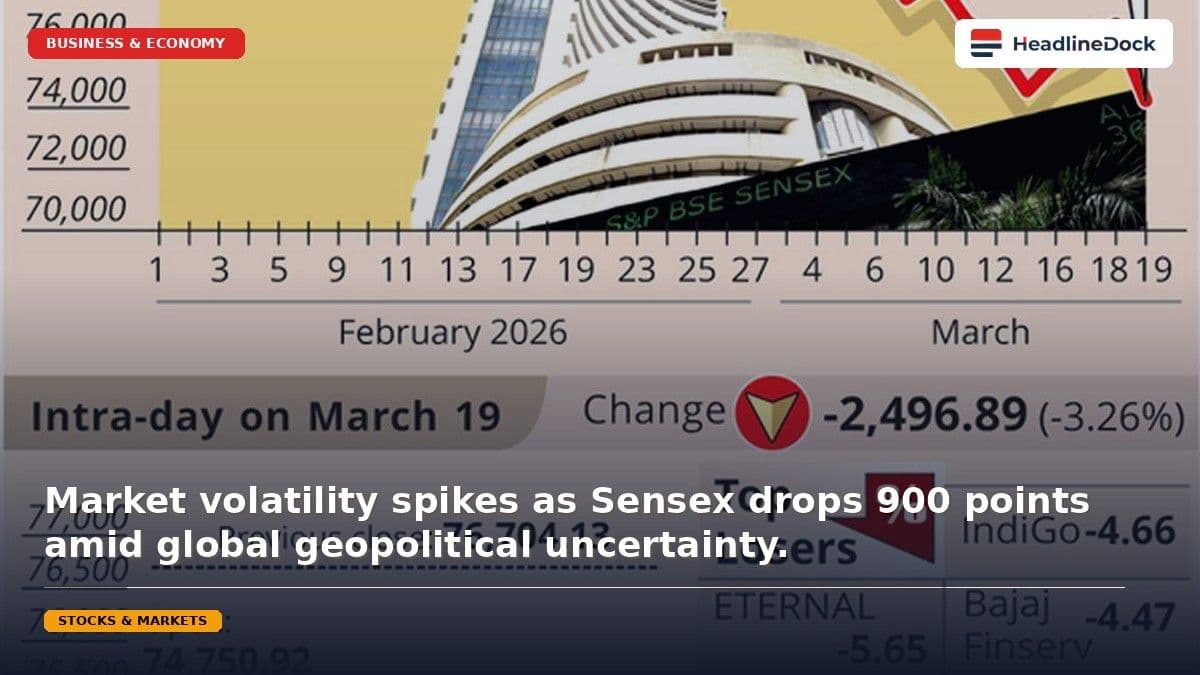
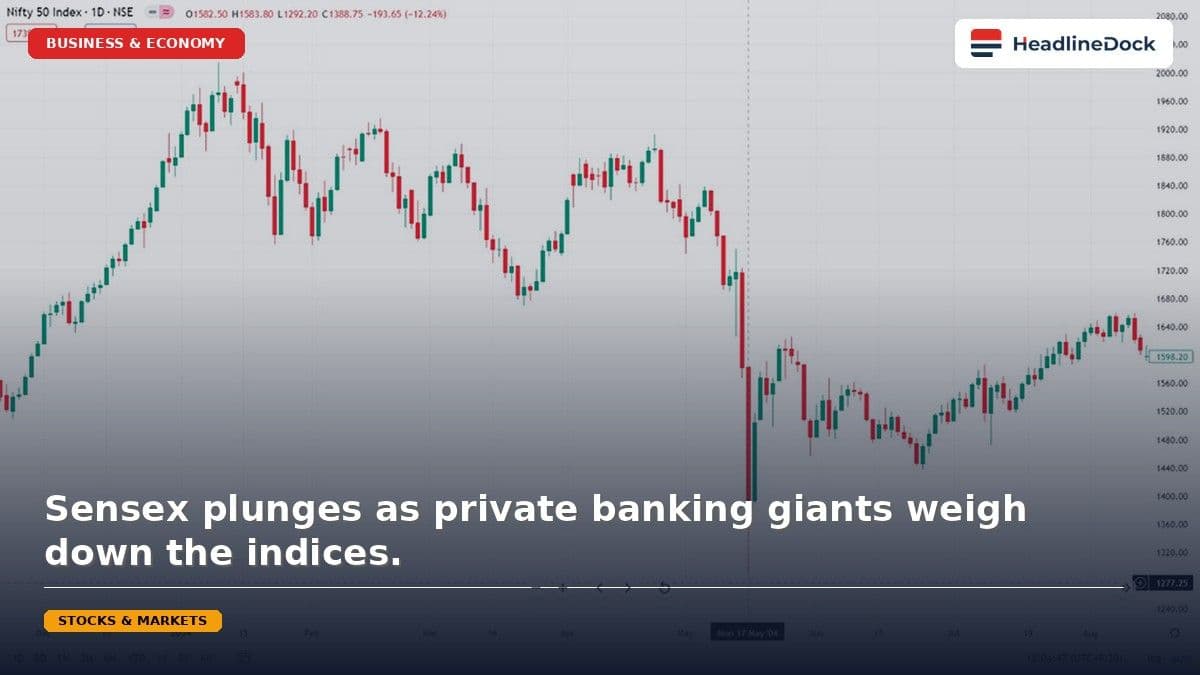
On July 22, 2026, the Indian stock market faced a sharp decline, with the BSE Sensex falling nearly 900 points to 76,934. The downturn was fueled by rising crude oil prices, geopolitical instability in the Middle East, and negative global sentiment regarding US tariff policies and tech-sector sell-offs.
Read it in Short
QUICK OVERVIEW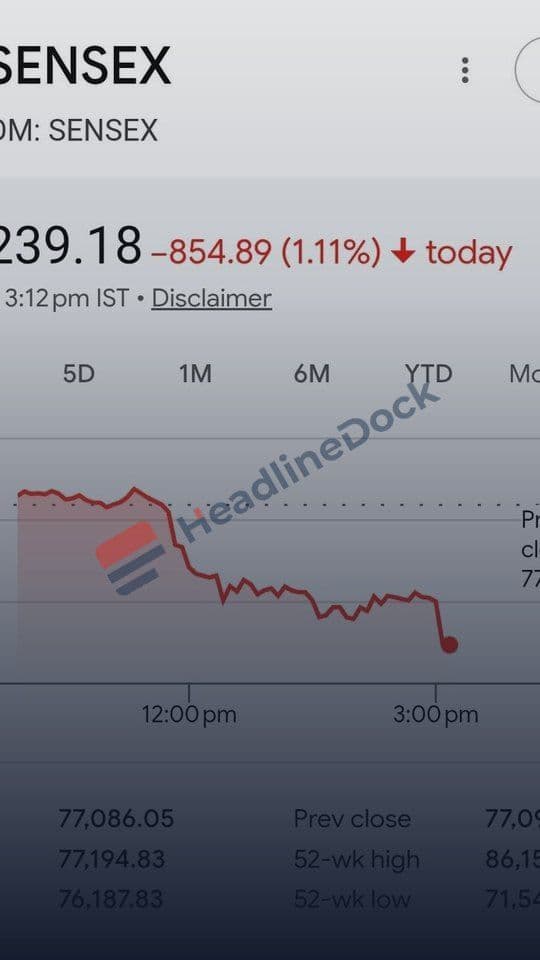
BSE Sensex recorded a significant decline of approximately 900 points, closing at 76,934.

Market sell-off driven by rising Brent crude oil prices and global geopolitical tensions in the Middle East.
Significant selling pressure observed in Pharma and Banking sectors led to early-trade index drops.
Global investor anxiety over potential US tariff policies triggered broad liquidation across major international indices.
Why Did the Stock Market Crash Today? 900-Point Sensex Drop
The Indian equity markets faced a stark reality check on July 22, 2026, as the BSE Sensex plummeted by nearly 900 points. Closing the session at 76,934, the index marked its steepest single-day decline in the recent period, leaving investors and market participants scrambling to decipher whether this represents a temporary correction or the inception of a more systemic downturn.
This sharp retreat was not an isolated event but rather the climax of mounting global anxieties. For the astute observer, the "gap-down" opening—where the index began the session significantly lower than the previous day’s close—signaled from the first bell that institutional selling pressure would define the day's narrative.
The Anatomy of the Sell-Off
The decline observed on July 22 was fueled by a confluence of macroeconomic headwinds rather than domestic corporate failure. Market behavior throughout the day remained consistently bearish, with no significant recovery attempts, suggesting that the selling was driven by larger, macro-thematic shifts that transcended individual company performances.
The primary contributors to this market pressure included:
- Crude Oil Volatility: As a nation that remains a massive importer of energy, India is hypersensitive to Brent crude prices. Geopolitical tensions in the Middle East, specifically involving the Iran/US-Israel dynamic, have pushed energy costs upward, directly threatening India's import bill and inflationary outlook.
- Global Macro Sentiment: Negative spillover from global technology markets, where major entities have faced recent liquidation, dampened investor appetite for risk. Concerns regarding future US tariff policies have further injected long-term uncertainty into the export-oriented sectors.
- Sector-Specific Liquidation: While the broader market suffered, the Pharma and Banking sectors bore the brunt of the day's profit-booking. These sectors often act as bellwethers for economic health, and their collective decline amplified the index's downward trajectory.
Market Impact Drivers: A Comparison
Understanding why this volatility matters requires looking at the interplay between external risks and internal economic stability. The following table illustrates how these drivers impact market sentiment and long-term investment strategies.
| Factor | Immediate Market Impact | Long-Term Implication |
|---|---|---|
| Rising Crude Oil Prices | Increased import costs/Inflationary fear | Narrower corporate margins |
| Geopolitical Tensions | Capital flight to "safe-haven" assets | Heightened market volatility |
| US Tariff Policies | Uncertainty in export-heavy indices | Potential supply chain restructuring |
Why Geopolitics Remains the "Systemic Bug"
In modern financial markets, geopolitical instability functions similarly to a "bug" in a complex software system—it disrupts the orderly flow of capital. When conflict escalates in the Middle East, institutional investors often exit emerging markets to seek refuge in assets perceived as safer. This explains why the Sensex mirrored trends observed in global indices; capital is being reallocated globally, not just locally.
Furthermore, higher oil prices act as a double-edged sword. Not only do they widen the current account deficit, but they also stoke inflationary pressures, forcing central banks to potentially reconsider their monetary policy stance. This creates a feedback loop of anxiety for retail and institutional investors alike.
How to Navigate Current Volatility: A Cautionary Checklist
For individual investors, reacting to a 900-point drop with panic is rarely a strategy for long-term success. Instead of reactive trading, consider this analytical approach to navigating the current climate:
- Monitor Support Levels: Rather than looking at daily percentage drops, track core index support levels (such as those for the Nifty 50). These levels provide historical context for where buying interest has historically re-emerged.
- Analyze Global Cues: Since the current decline is driven by macro-factors, watch how US and European indices perform. If global selling persists, domestic indices are likely to face continued pressure.
- Avoid "Panic-Selling": High-quality assets often undergo short-term price fluctuations due to external noise. Distinguish between a fundamental shift in a company’s earning potential and a general market "washout" caused by macro-fears.
- Review Portfolio Exposure: If your portfolio is heavily concentrated in sectors currently under fire, such as Banking or Pharmaceuticals, reassess your risk tolerance rather than liquidating indiscriminately.
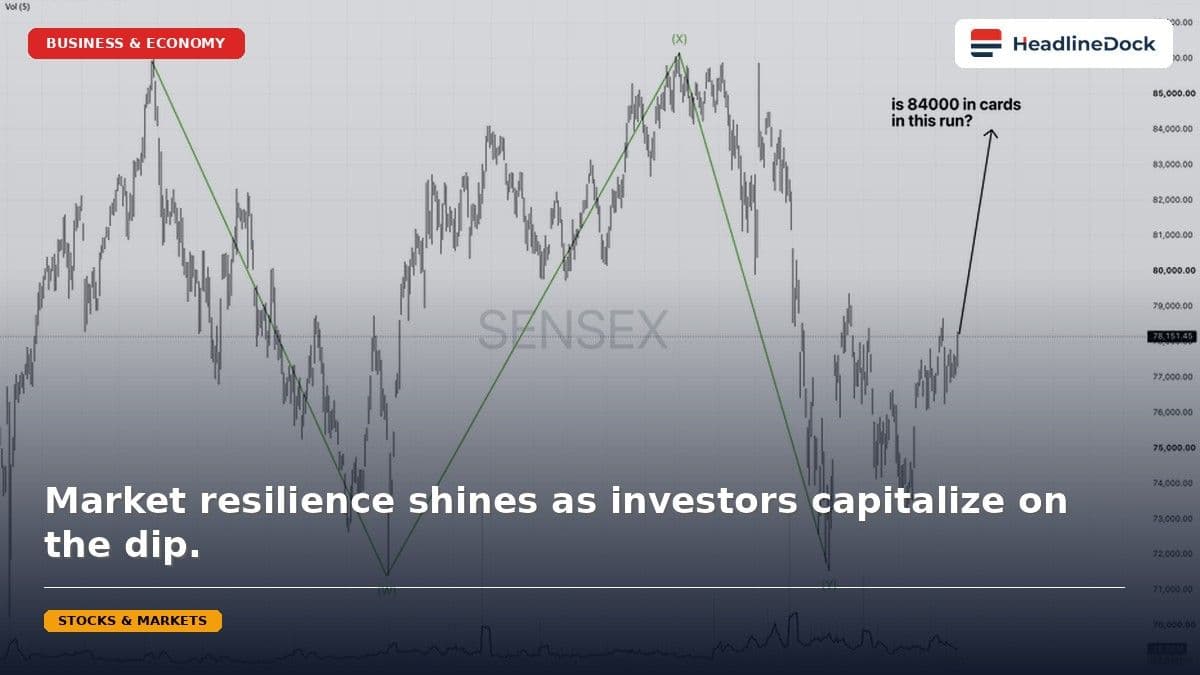
While the market closed at 76,934, analysts are maintaining a tone of cautious vigilance. The focus for the coming days will not be on domestic earnings, but on whether the geopolitical noise stabilizes sufficiently to allow market participants to return to long-term valuation metrics.
📖 BSE Coverage Timeline (Story Graph)
Follow the chronological evolution of BSE updates and related announcements on HeadlineDock:
- Jun 20, 2026 — The Global Ocean Observation System Faces Funding Crisis When Needed Most
- Jun 20, 2026 — Shiv Sena (UBT) Issues Show-Cause Notices to Six Absentee Lok Sabha MPs
- Jul 20, 2026 — BSE Sensex Crashes 900 Points: Key Reasons Behind the Market Sell-off
- Jul 21, 2026 — BSE Sensex Today: 5 Reasons Why the Market Fell and Recovered
- Jul 21, 2026 — BSE Sensex Today: 5 Reasons Why Market Fell and Recovered
- Today — Active Coverage: (You are reading this article)
Frequently Asked Questions
Why did the Sensex fall today?
The fall is attributed to rising Brent crude prices, global geopolitical tensions, and sector-specific selling in pharma and banking.
Is this the start of a major market crash?
While the index saw a sharp decline, analysts are monitoring support levels. Market participants are advised to exercise caution and avoid panic-selling.
How do oil prices affect the Indian stock market?
India is a major importer of crude oil; rising prices increase the import bill, widen the current account deficit, and stoke inflationary pressures, which negatively impacts corporate margins.
Which sectors were most affected?
Pharmaceuticals and banking stocks were under the most significant pressure during the session.
What should retail investors do?
Investors are advised to track global cues and core index support levels (such as Nifty 50 support zones) before making major portfolio adjustments.