Sensex Tanks 700 Points: 3 Reasons Why the Indian Stock Market is Falling Today
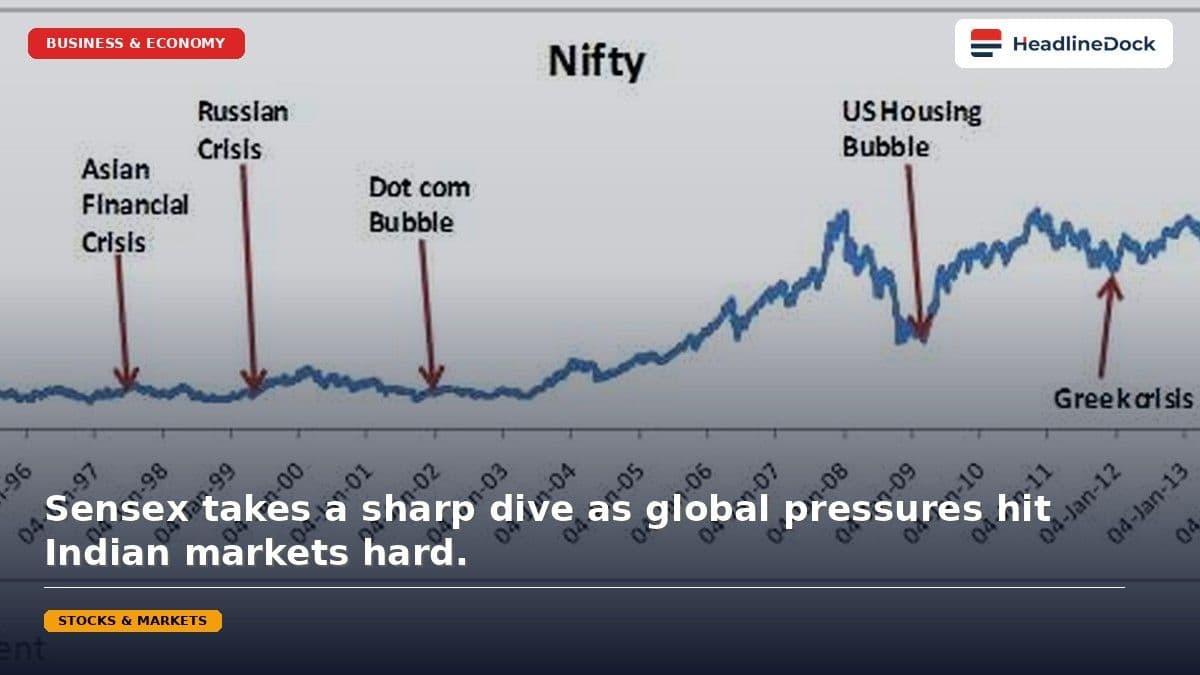
On July 23, 2026, the Indian stock market witnessed a massive sell-off as the Sensex plunged 700 points and Nifty 50 fell below 24,000. The decline was driven by Middle East geopolitical tensions, new US pharmaceutical tariffs, and rising crude oil prices exceeding $95 per barrel.
Read it in Short
QUICK OVERVIEW
BSE Sensex plunged over 700 points due to global market headwinds.
Nifty 50 index slipped below the psychological 24,000-point threshold.
Geopolitical instability and rising Brent crude prices above $95/bbl are driving the sell-off.

New US tariffs on generic pharmaceutical drugs triggered significant selling pressure in Indian pharma stocks.
Sensex Tanks 700 Points: 3 Reasons Why the Indian Stock Market is Falling Today
On July 23, 2026, the Indian stock market experienced a sharp correction. The benchmark BSE Sensex plunged over 700 points, while the Nifty 50 slipped below the critical psychological threshold of 24,000. This represents a decisive "risk-off" environment where investors are scrambling to protect portfolios against a confluence of global headwinds.
The current volatility is the culmination of a tense week that began building on July 18, when initial jitters regarding West Asian stability emerged. By July 22, cracks were visible in the pharmaceutical and banking sectors. Today’s drop marks a reaction to compounding geopolitical and macroeconomic pressures that have reshaped the near-term outlook for Indian equities.
Market Snapshot: The Anatomy of the Decline
The selling pressure today was broad-based, affecting key growth sectors. Performance indicators from the trading session include:
- BSE Sensex: Down 700+ points.
- Nifty 50: Closed below the 24,000 mark.
- Nifty IT Index: Underperformed with a 1.6% decline.
- Investor Sentiment: Shifting from growth-oriented to defensive.
The depreciation of the Indian Rupee against the US Dollar has acted as a force multiplier for inflationary concerns, pressuring foreign institutional investors (FIIs) to reallocate capital toward safer, dollar-denominated assets.
Market Comparison: Pre-Crash vs. Current State
| Metric | Pre-July 23 Status | Post-July 23 Status |
|---|---|---|
| Nifty 50 Index | Above 24,000 | Below 24,000 |
| Brent Crude | < $90/bbl | > $95/bbl |
| Investor Sentiment | Cautiously Optimistic | Defensive/Risk-Averse |
The Three Pillars of Today’s Market Fall
1. Geopolitical Instability in the Middle East
Escalating tensions between the US and Iran have created significant uncertainty. Global investors generally flee to safety when geopolitical friction in energy-producing regions rises, fearing supply chain disruptions and a sustained economic slowdown.
2. US Tariff Concerns on Pharma
The pharmaceutical sector is facing a fresh regulatory challenge. New US trade policies specifically targeting generic drugs have introduced a headwind that threatens the profit margins of major Indian pharma firms. As a typically defensive sector, this volatility signals to the market that the policy impact is significant.
3. Macroeconomic Pressure: The $95 Crude Barrier
Brent crude prices have surpassed the $95 per barrel threshold. For an energy-importing nation like India, this surge inflates the import bill, weakens the Rupee, and drives domestic inflation. This squeezes corporate margins, making high-growth stocks less attractive to investors calculating higher input costs.
Investor Guidance: Navigating Volatility
- Avoid Panic Selling: Historical cycles show that reactive, emotional selling often results in locking in losses. Unless your investment horizon has fundamentally changed, stay the course.
- Monitor Global Catalysts: Watch for developments in US-Iran relations. This is the primary "volatility tap" at the moment; stabilization here will be the first sign of a market floor.
- Shift to Defensive Assets: When growth sectors like IT and Banking underperform, portfolio diversification into defensive sectors can help buffer the impact of the current slide.
- Exercise Caution: Experts advise caution regarding the "buy-on-dip" strategy. Do not deploy capital until markets show clear technical signs of bottoming out, particularly in sectors currently acting as a drag on the indices.
The road ahead for the Indian stock market in late July 2026 remains tied to global developments. While the drop below 24,000 for the Nifty 50 is a significant psychological milestone, it is essential to distinguish between a temporary geopolitical reaction and a long-term structural reversal.
Frequently Asked Questions
Why did the Sensex fall today?
The market decline was primarily triggered by geopolitical tensions between the US and Iran, new US tariffs on generic drugs, and Brent crude oil prices rising above $95 per barrel.
What level did the Nifty 50 breach?
The Nifty 50 index breached the critical psychological support level of 24,000 during the trading session on July 23, 2026.
Are IT stocks performing well?
No, IT stocks underperformed during this session, with the Nifty IT index dropping by approximately 1.6% due to pressure from rising US bond yields and a strong dollar.
How are global oil prices affecting the market?
Rising oil prices increase India's import bill, which negatively affects the value of the Indian Rupee and increases input costs, thereby compressing corporate profit margins for many firms.