NASA Psyche Mission Captures Stunning Mars Crescent During Flyby
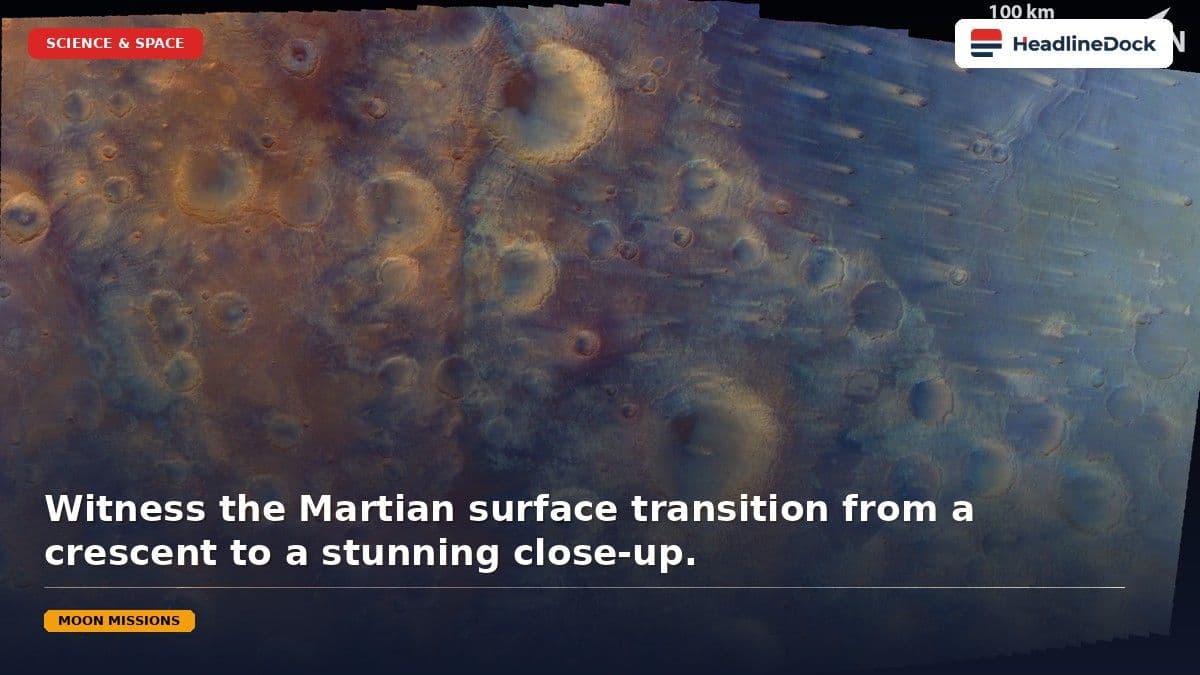
In May 2026, NASA’s Psyche spacecraft successfully utilized Mars for a gravity-assist maneuver to reach the asteroid 16 Psyche. The encounter served as a critical instrument calibration test, yielding high-resolution time-lapse imagery of the Martian surface and confirming the operational integrity of the spacecraft's scientific systems.
Read it in Short
QUICK OVERVIEW
NASA's Psyche spacecraft successfully performed a gravity-assist maneuver at Mars in May 2026.
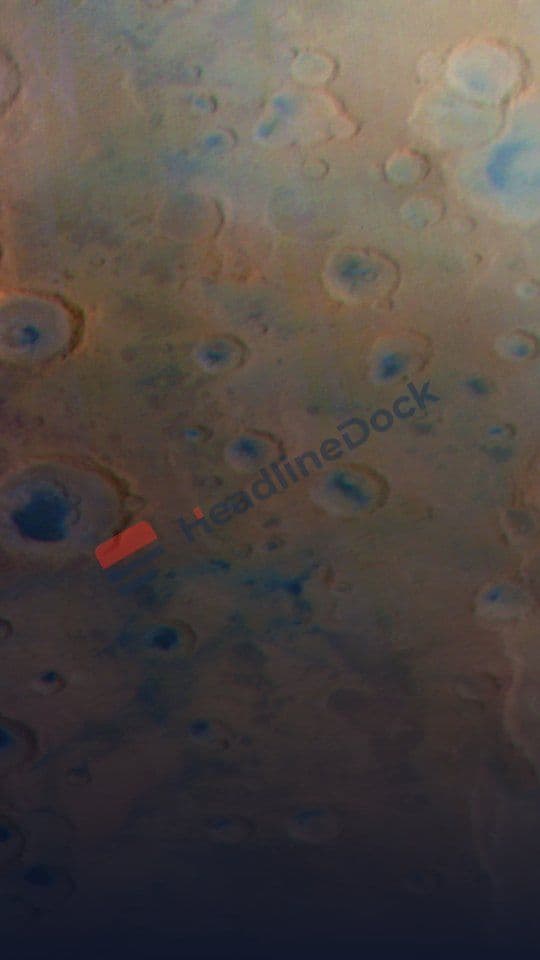
The flyby provided a vital calibration test for the spacecraft's multispectral imaging instruments.

Images show the transition from a crescent view to high-resolution Martian surface imagery.

The maneuver was executed flawlessly to adjust the craft's trajectory toward the asteroid 16 Psyche.
NASA Psyche Mission Captures Stunning Mars Crescent During Flyby
For a spacecraft hurtling through the silent vacuum of the solar system, a planet is rarely just a destination—it is a tool. In May 2026, NASA’s Psyche spacecraft turned the Red Planet into a giant gravitational slingshot. As it swung past Mars to adjust its trajectory toward the metallic asteroid 16 Psyche, the spacecraft’s onboard suite provided us with a rare, breathtaking perspective of Mars transitioning from a distant, growing crescent into a high-resolution, full-frame landscape.
This encounter was far more than a beautiful photo opportunity. It was a mission-critical "shakedown" of the spacecraft’s imaging systems, ensuring that when the craft reaches its final target, its instruments are perfectly calibrated to unlock the mysteries of one of the most enigmatic objects in our solar system.
The Physics of the Slingshot
To reach the asteroid belt, spacecraft often perform a gravity-assist maneuver. By flying close to a planet, a spacecraft "steals" a tiny fraction of the planet’s orbital momentum, using that energy to accelerate or change course without burning precious onboard fuel. While this maneuver is common, it remains a feat of extreme precision.
Between May 2 and May 15, 2026, Psyche performed this dance with Mars. The maneuver was not designed to study the planet itself—the goal was strictly navigational. However, the mission team at NASA, JPL, and ASU recognized a secondary opportunity: a perfect, high-stakes test environment. By imaging the known terrain of Mars, scientists could verify the focus, exposure, and multispectral capabilities of the spacecraft’s instruments, confirming they are ready for the unpredictable surface of a metallic asteroid.

Instrument Capabilities: From Mars to the Asteroid Belt
The Psyche mission relies on a multispectral imager capable of peering through the surface of celestial bodies to understand their chemical and mineralogical composition. While the imager is built to decipher the metallic secrets of 16 Psyche, applying these sensors to Mars offered a live-fire exercise.
Comparison of Imaging Objectives
| Feature | Purpose at Mars | Purpose at 16 Psyche |
|---|---|---|
| Multispectral Imaging | Calibration of sensors | Characterization of composition |
| High-Res Topography | Testing navigational focus | Mapping surface morphology |
| Gravity Assist | Trajectory correction | N/A |
The resulting data—specifically the composite crescent images categorized as PIA26586—provides a clear visual narrative. Observers can see the planet’s progression from a sliver of light to an expansive, cratered horizon. This imagery serves as a crucial bridge between the mission's current cruise phase and its ultimate scientific objectives.
Mission Success and Operational Integrity
In the world of deep-space hardware, the "first test" is always a moment of nervous anticipation for engineers. However, the Mars gravity assist was completed without incident. Mission parameters were met with perfect accuracy, and there have been no reports of bugs, imaging errors, or hardware failures during the flyby.
This stability allows the mission team to focus entirely on the upcoming cruise phases, as the spacecraft continues its long trek through the void toward the metallic world of 16 Psyche.
The Significance of "Bonus" Science
Planetary science communicators have heralded the Mars flyby footage as a masterclass in outreach. Beyond the technical data, the "growing crescent" visualization offers the public a tangible sense of the spacecraft’s movement. By documenting the journey through such evocative imagery, NASA reinforces the long-term vision of the mission, maintaining public interest during the quiet years of deep-space transit.
All imagery captured during the May encounter, including the time-lapse documentation and high-resolution composite images, is available through the NASA Photojournal website. As the spacecraft moves further from the inner solar system, these images stand as a reminder of the precision required to explore the distant, metal-rich frontiers of our neighborhood.
📖 NASA Coverage Timeline (Story Graph)
Follow the chronological evolution of NASA updates and related announcements on HeadlineDock:
- Jun 28, 2026 — Why Nuclear Power in Space is Essential for Future Interplanetary Missions
- Jul 08, 2026 — Why Former NASA Chief Questions Artemis Moon Lander Plans Complexity
- Jul 21, 2026 — Shaping the Emerald City: How Glaciers and Humans Built Seattle
- Jul 21, 2026 — NASA’s New VTE Risk Score Algorithm for Astronauts to Improve Health Safety
- Jul 21, 2026 — NASA & GE Aerospace's Hybrid-Electric Flight Takes Off for Sustainable Aviation
- Today — Active Coverage: (You are reading this article)
Frequently Asked Questions
Why did the Psyche spacecraft fly by Mars?
The spacecraft performed a gravity assist to adjust its trajectory and velocity, ensuring it arrives at the metallic asteroid 16 Psyche with the correct orbital path.
Was this a scientific mission to Mars?
No. The Mars encounter was a navigational maneuver. However, NASA scientists used the opportunity to calibrate the onboard multispectral imager.
What did the spacecraft see during the flyby?
It captured images ranging from a distant crescent view to high-resolution close-ups of the Martian surface.
How can I see the images taken by Psyche?
The official images, including the composite crescent views, are available on the NASA Photojournal website.
What is the next major milestone for the mission?
The spacecraft continues its cruise phase toward the asteroid 16 Psyche for its primary scientific investigation.