India’s Coal Gasification Strategy: Energy Security & Industrial Growth

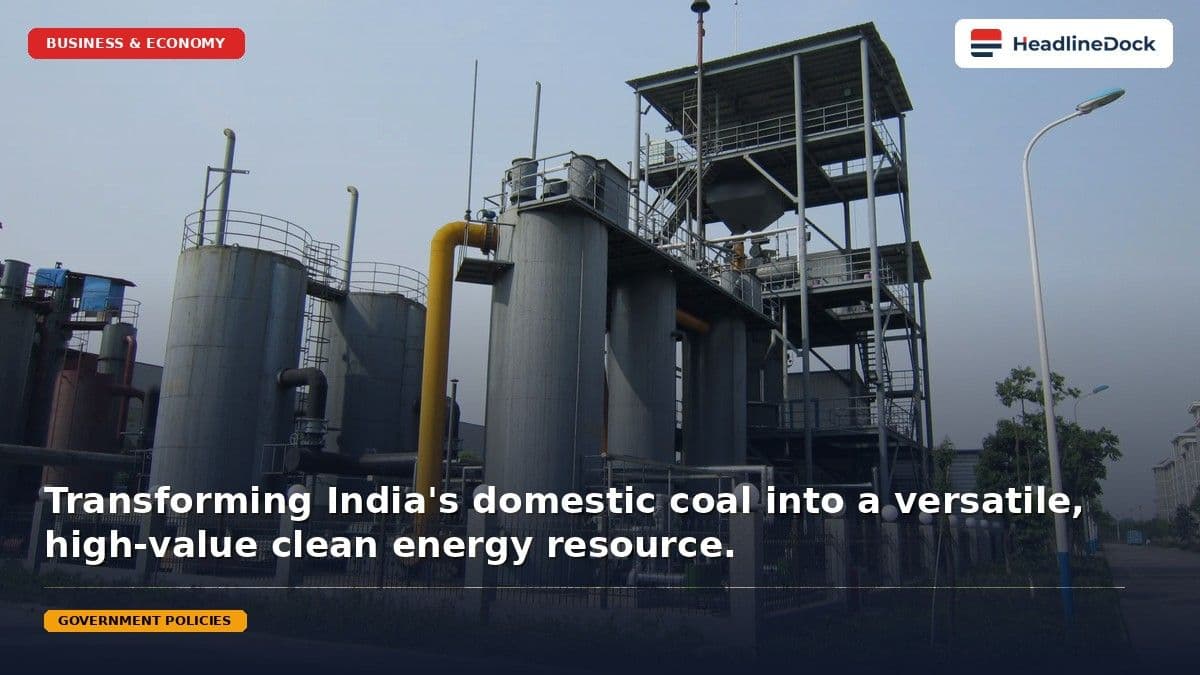
India is accelerating its National Coal Gasification Mission with a ₹46,000 crore incentive package to reach 100 MT capacity by 2030. This initiative aims to transform domestic coal into chemicals, fertilizers, and hydrogen, significantly reducing India's reliance on energy imports and unlocking difficult-to-mine coal reserves.
Read it in Short
QUICK OVERVIEW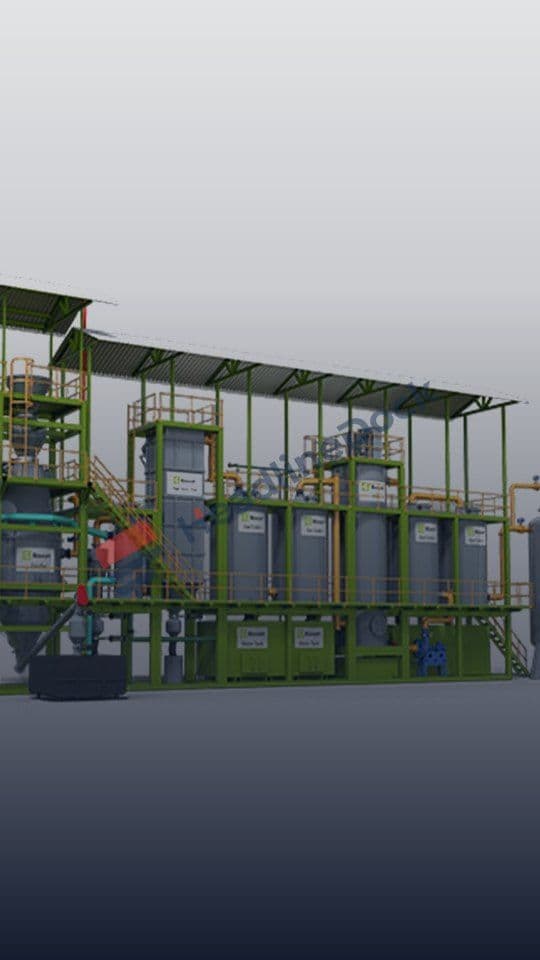
India targets 100 Million Tonnes of annual coal gasification capacity by 2030 to enhance energy security.
Government incentives total ₹46,000 crore, offering up to 20% capex support and 30-year coal linkage.
The initiative aims to reduce energy import dependence, with an expected annual substitution value of ₹1.5 lakh crore.
Overcoming high-ash coal challenges remains critical, requiring advanced refractory technology and long-term maintenance strategies.
India’s Coal Gasification Strategy: Energy Security & Growth
For decades, coal has been viewed primarily as a fuel to be burned for electricity—a process that is as carbon-intensive as it is inefficient. However, the Indian government’s National Coal Gasification Mission is fundamentally rewriting this narrative. By positioning coal as a "chemical feedstock" rather than just a fuel source, India is embarking on a strategic shift to transform its vast domestic reserves into high-value synthetic natural gas, chemicals, fertilizers, and hydrogen.
With a bold objective to achieve 100 Million Tonnes (MT) of coal gasification capacity by 2030, this initiative serves as a cornerstone for India’s energy security. The commitment behind this vision is massive: a cumulative ₹46,000 crore investment aimed at reducing import dependence and catalyzing industrial innovation.
The Evolution of India’s Gasification Strategy
The policy landscape has matured significantly since the mission’s inception in 2021. While the January 2024 incentive scheme focused on seeding the industry and ensuring the viability of initial projects, the May 2026 expansion represents a pivot toward aggressive industrial scaling.
The Ministry of Coal has authorized an additional ₹37,500 crore to bolster the initial ₹8,500 crore framework. This isn't just a budget increase; it is a structural evolution designed to de-risk the investment landscape for major developers. By moving from initial project testing to a sustained, long-term industrial roadmap, the government is signaling that gasification is no longer an experimental venture but a primary pillar of national energy policy.
Financial and Regulatory Incentives
The current framework provides a robust safety net for private and public sector players. Notably, the capital expenditure (Capex) incentive has been increased to up to 20% of eligible costs for plant and machinery. Furthermore, the 30-year coal linkage tenure ensures that projects have a predictable, long-term supply chain, effectively insulating developers from market volatility.
For Underground Coal Gasification (UCG), the government has slashed floor prices from 4% to 2% and provided a 50% rebate on Performance Bank Guarantees. These measures directly address the high capital intensity that has historically deterred players from entering the sector.
| Feature | 2024 Initial Scheme | 2026 Expanded Scheme |
|---|---|---|
| Financial Outlay | ₹8,500 crore | ₹37,500 crore |
| Capex Incentive | 15% of Capex | Up to 20% of eligible cost |
| Coal Linkage | 30-year tenure | 30-year + additional linkage |
| Revenue Rebate | 50% | 50% |
Why This Matters: Energy Security and Industrial Diversification
The logic behind this massive shift is simple yet powerful: India currently relies heavily on imported energy and chemical feedstocks. Once all currently approved projects—including the work of Jindal Steel Limited and Talcher Fertilisers Limited—are fully commissioned, the nation expects an annual import substitution value of approximately ₹1.5 lakh crore.
Gasification allows India to access "deep-seated" coal reserves that account for 40% of its total deposits but are unsuitable for traditional mining. By converting this coal into Syngas, manufacturers can create green hydrogen and ammonia, essential components for the nation’s fertilizer industry and the growing green energy sector.
Addressing Technical Challenges: A Guide to Implementation
While the economic incentives are strong, industry experts from Deloitte and the Observer Research Foundation (ORF) have identified significant technical hurdles. Indian coal is characterized by high and variable ash content, which creates distinct operational risks.
Troubleshooting High-Ash Complications:
- Slagging and Clinker Formation: High ash content can lead to the formation of slag that damages reactor refractories. Operators must utilize advanced refractory linings specifically engineered for high-ash feedstocks to prevent premature structural failure.
- Technology Scarcity: Because there is a shortage of local gasification technology providers, most projects currently rely on imported technology. To solve this, developers are advised to prioritize long-term maintenance contracts with original equipment manufacturers (OEMs) who have specific experience with high-ash coal reactors.
- Logistical Bottlenecks: Transporting raw coal to centralized hubs is a major operational challenge. Integrating rail-sidings early in the project design phase is essential to maintain consistent input flow.
As of July 2026, 22.6 MTPA of capacity is in progress across eight approved projects. While the hurdles of technological complexity and capital intensity remain, the combination of substantial financial backing and a clear 2030 roadmap places India at the forefront of the global clean coal transformation.
Frequently Asked Questions
What is the primary goal of the Coal Gasification Mission?
The mission aims to achieve 100 Million Tonnes of coal gasification capacity by 2030 to reduce India's reliance on energy imports.
Why is coal gasification considered a cleaner technology?
Coal gasification is considered cleaner because it converts coal into Syngas, a more versatile and environmentally manageable feedstock than burning raw coal.
What financial support does the government provide for gasification?
The government provides up to 20% capex support, 30-year coal linkage tenures, and a 50% rebate on revenue shares for coal used in gasification.
What is the biggest technical hurdle for coal gasification in India?
The high ash content in domestic Indian coal creates mechanical challenges like slagging, which can damage reactor walls and choke machinery.
How many coal gasification projects have been approved?
As of July 2026, 8 projects have been approved, with 22.6 MTPA of total capacity currently under various stages of implementation.