RBI Conducts ₹75,000 Crore 3-Day Variable Rate Repo (VRR) Auction Today

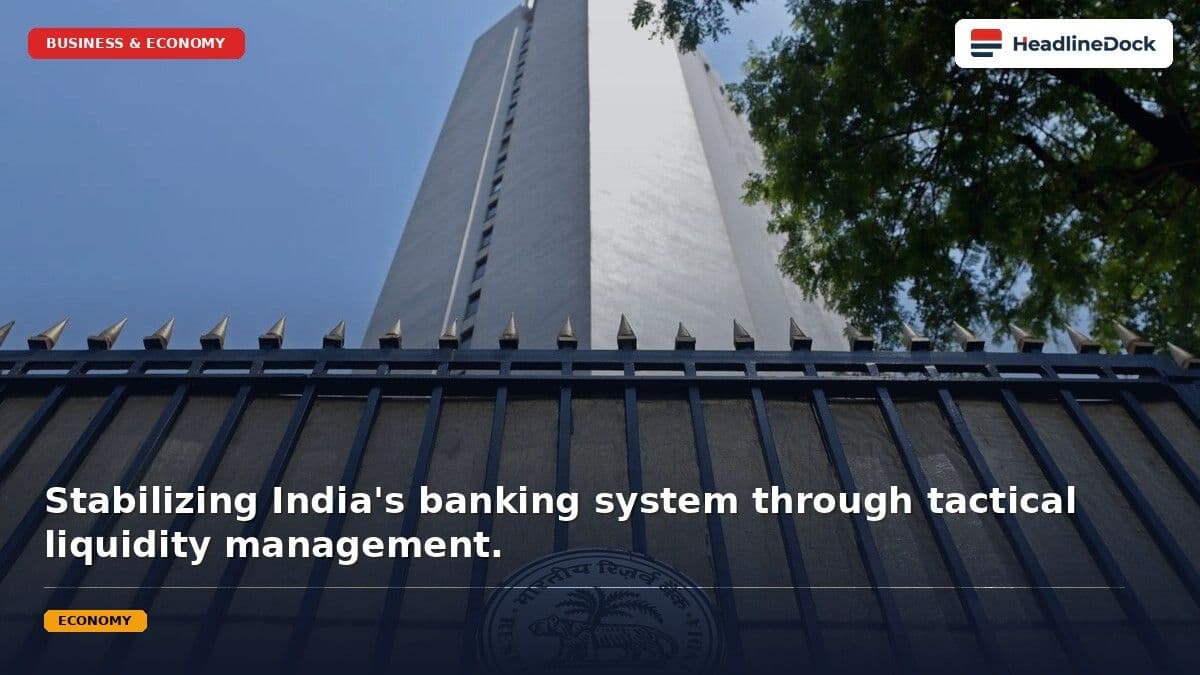
The Reserve Bank of India is holding a 3-day Variable Rate Repo (VRR) auction today, injecting ₹75,000 crore into the banking system. This tactical operation aims to manage liquidity fluctuations and keep short-term interest rates aligned with the policy repo rate before the funds are reversed on July 30.
Read it in Short
QUICK OVERVIEW
The RBI is injecting ₹75,000 crore into the banking system via a 3-day Variable Rate Repo (VRR) auction today.
This tactical operation aims to manage systemic liquidity and ensure money market rates remain aligned with the official policy repo rate.
The auction is a transient measure, with the injected liquidity scheduled for reversal by the RBI on July 30, 2026.
Participation is limited to eligible banks via the RBI's E-Kuber portal during the 09:30 AM to 10:00 AM window.
RBI Conducts ₹75,000 Crore 3-Day Variable Rate Repo (VRR) Auction Today
Today, July 27, 2026, the Reserve Bank of India (RBI) is executing a tactical liquidity operation aimed at fine-tuning the Indian banking system. By conducting a 3-day Variable Rate Repo (VRR) auction for an amount of ₹75,000 crore, the central bank is taking a proactive stance to ensure that systemic liquidity remains balanced and that short-term interest rates stay tethered to the official policy repo rate.
This maneuver, announced on July 24, represents a standard yet critical component of the Liquidity Adjustment Facility (LAF). In the complex ecosystem of Indian banking, liquidity—the availability of ready cash—can fluctuate daily. When surplus liquidity experiences volatility, the RBI intervenes to prevent friction in the money markets, ensuring that commercial banks have the necessary buffer to operate smoothly.
Understanding the Mechanics of the VRR Auction
A Variable Rate Repo (VRR) auction is a temporary injection of funds by the central bank into the banking system. Unlike a fixed-rate operation, the variable nature of this auction allows banks to bid for funds at rates they are willing to pay, provided those rates are at or above the policy repo rate. This creates a market-driven discovery process for short-term borrowing.
The operation is designed to be transient. By providing ₹75,000 crore today, the RBI is addressing current and evolving liquidity conditions. This is not a permanent increase in the money supply. As specified in the auction parameters, the date of reversal is set for July 30, 2026, at which point the injected liquidity will be pulled back, effectively neutralizing the temporary surplus.
Auction Specifications
| Feature | Details |
|---|---|
| Notified Amount | ₹75,000 Crore |
| Tenor | 3 Days |
| Auction Window | 09:30 AM – 10:00 AM |
| Reversal Date | July 30, 2026 |
Why This Move Matters for Banking Stability
The primary goal of this injection is to stabilize the Weighted Average Call Money Rate (WACMR). If liquidity becomes too tight, the cost for banks to borrow from one another overnight spikes, creating volatility that can ripple through the broader economy. By keeping the WACMR anchored near the repo rate, the RBI ensures that the transmission of its monetary policy remains effective.
Historical trends in 2026 indicate that the RBI has been highly adaptive, adjusting auction amounts between ₹25,000 crore and ₹2,00,000 crore based on real-time assessments. Analysts view the current ₹75,000 crore injection as a prudent move to prevent potential liquidity tightness, particularly when systemic surplus levels have shown a tendency to drift below comfortable thresholds.
Operational Guidance for Participants
For Scheduled Commercial Banks (SCBs) and eligible LAF participants, participation in the auction is conducted through the RBI’s E-Kuber portal. Because this is a high-stakes, time-sensitive operation, accuracy and preparedness are paramount.
Participation Best Practices
- Connectivity Check: Ensure your institution’s connection to the E-Kuber portal is stable well before the 09:30 AM start time.
- Credential Validation: Verify that all authorized dealer credentials are active. Local network interruptions can lead to missed bidding windows.
- Internal Liquidity Assessment: Before placing a bid, banks should assess their own internal buffers. Demand for VRR auctions can sometimes be muted if banks already hold sufficient internal liquidity; therefore, institutional bidding strategies should align with current interbank rate pressures.
This operation serves as a reminder of the RBI’s commitment to maintaining a stable financial environment. By utilizing tools like the 3-day VRR, the central bank maintains its ability to react to short-term market shifts without altering long-term monetary policy, providing the banking system with the predictability required for sustainable growth.
📖 RBI Coverage Timeline (Story Graph)
Follow the chronological evolution of RBI updates and related announcements on HeadlineDock:
- Jul 21, 2026 — RBI Money Market Operations Update: Assessing Liquidity Absorption for July 2026
- Jul 21, 2026 — RBI Extends Regulatory Directions for The Suri Friends’ Union Co-operative Bank Ltd.
- Jul 21, 2026 — RBI Sets Premature Redemption Price for SGB 2019-20 Series-VIII
- Jul 21, 2026 — RBI Auction Results: States Raise ₹21,491 Crore on July 21, 2026
- Jul 24, 2026 — India’s July 2026 Government Securities Buyback Explained
- Today — Active Coverage: (You are reading this article)
Frequently Asked Questions
What is a Variable Rate Repo (VRR) auction?
A Variable Rate Repo (VRR) auction is a liquidity management tool where the RBI injects cash into the banking system. Banks bid for these funds at interest rates at or above the policy repo rate.
Why is the RBI conducting this auction?
The auction helps the RBI manage evolving liquidity conditions, preventing sudden spikes in short-term interest rates and ensuring stability in the money markets.
What happens on the date of reversal (July 30, 2026)?
On July 30, 2026, the RBI will pull back the injected liquidity, effectively neutralizing the temporary supply of funds provided during the 3-day auction period.
How does this affect bank interest rates?
By controlling liquidity supply, the RBI ensures that the Weighted Average Call Money Rate remains anchored close to the official Repo Rate, preventing rate volatility.
Where can banks find the guidelines for this auction?
Operational guidelines for these auctions are provided through RBI's master circulars and specific press releases, such as the January 20, 2022, announcement.