Mandatory Compressed Biogas Blending to Slash India’s Natural Gas Import Costs
India plans to reduce its natural gas import burden by ₹17,000 crore annually by FY2029 through mandatory compressed biogas blending. The initiative requires a ₹24,000 crore investment to expand production capacity to 4,000 TPD, bolstering domestic energy security and infrastructure.
Highlights
- •Mandatory CBG blending is projected to cut India's natural gas import bill by ₹17,000 crore by FY2029.
- •Scaling production requires an estimated ₹24,000 crore investment in capacity expansion between FY2027 and FY2029.
- •The goal is to increase national installed capacity from 900 TPD in FY2026 to 4,000 TPD by FY2029.
- •Policy initiatives like the CGD-CBG Synchronisation Scheme are critical for meeting long-term domestic energy production targets.
India is set to achieve a major transformation in its energy sector by implementing mandatory compressed biogas (CBG) blending. By integrating this sustainable fuel into the existing city gas distribution networks, the nation aims to significantly reduce its reliance on imported natural gas. Projections indicate that this shift could decrease the annual natural gas import burden by a substantial ₹17,000 crore by the end of fiscal year 2029.
Infrastructure Expansion and Investment Requirements
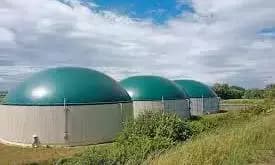
To realize the full potential of this initiative, the nation must scale up its production capabilities. Current estimates suggest that a minimum of 1,000 TPD of installed capacity needs to be added annually over the next three fiscal years. This expansion is essential to grow the total installed capacity from 900 TPD in FY2026 to 4,000 TPD by FY2029. Achieving these ambitious targets will necessitate an estimated investment of ₹24,000 crore between FY2027 and FY2029.
The success of the compressed biogas program relies on several critical operational factors. The financial viability of individual plants is contingent upon the cost of raw materials, the pricing of fermented organic manure (FOM), and the procurement rates for CBG. Furthermore, developers must contend with operational challenges, including the need for consistent year-round supply chains, the development of adequate pipeline connectivity, and the management of carbon dioxide as a production byproduct. Addressing these technical and logistical bottlenecks is vital for the widespread adoption of compressed biogas across the country.
Strategic Impact of Blending Obligations
Since the introduction of the one percent mandatory blending obligation on April 1, 2026, the industry has seen initial progress. This policy specifically targets the City Gas Distribution (CGD) sector, which currently represents nearly one-quarter of India's domestic gas demand. In FY2026 alone, the mandate led to the consumption of approximately 0.36 mmscmd or 1,00,000 MTPA of CBG, successfully meeting the initial targets. By aligning the CGD-CBG Synchronisation Scheme with broader government initiatives, policymakers aim to create a robust framework that supports long-term energy security.
As the country continues to refine its energy policies, the transition toward indigenous production remains a priority. By fostering a stable environment for investment and resolving infrastructure gaps, the initiative is expected to play a central role in mitigating future import pressures. This transition not only supports the national economy by curbing the heavy import bill but also promotes a cleaner, self-reliant energy landscape for both transport and household gas consumers.