Joschka Fischer Warns of Impending US Exit from NATO Alliance Structure
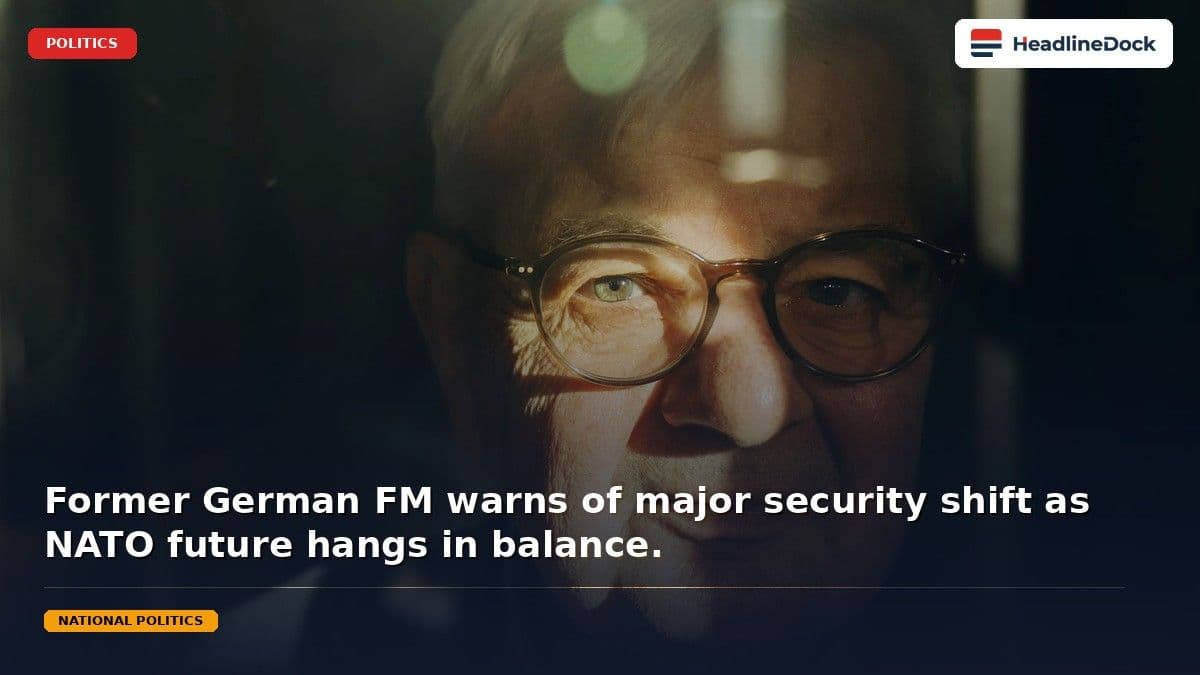
Former German Foreign Minister Joschka Fischer has warned that the United States may soon withdraw from NATO. He advocates for a new, independent European defense alliance that utilizes British and French nuclear capabilities to ensure regional stability amid shifting geopolitical alliances.
KEY TAKEAWAYS
1 MIN READ- Joschka Fischer predicts that the US is on a path toward leaving NATO.
- Fischer proposes a European-led security alliance with a shared nuclear umbrella.
- The potential security shift would rely on French and British nuclear assets.
- Fischer urges more sensitive communication from the German government regarding defense ambitions.
The future of the trans-Atlantic security alliance is facing serious scrutiny as Joschka Fischer, the former foreign minister of Germany, has issued a stark warning regarding the potential departure of the United States from NATO. Amidst rising geopolitical tensions, the 78-year-old political figure expressed deep skepticism about the long-term survival of the current alliance structure under the leadership of President Donald Trump.
Joschka Fischer, who served as Germany’s foreign minister and vice-chancellor between 1998 and 2005, suggested that the United States is effectively on a trajectory to withdraw from the pact. During discussions leading up to the upcoming NATO summit in Ankara, he argued that while European leaders are currently working diligently to maintain good relations with the American administration, these efforts may not be enough to ensure the alliance's stability in the long run.
Proposed European Defense Strategy
Should the United States follow through on a path toward withdrawal, Joschka Fischer has proposed a significant shift in defense strategy. He advocates for the remaining NATO allies to continue their collaboration and form a new, unified European defense structure. A central component of this proposed strategy would be the establishment of a collective nuclear umbrella, utilizing the existing nuclear capabilities held by France and the United Kingdom, rather than relying on American protection.
The former diplomat emphasized that any transition toward a more "Europeanized" version of NATO would require careful negotiation regarding decision-making authority and funding. He expressed strong opposition to the idea of an independent, purely national German nuclear deterrent, citing historical concerns that could arise among European neighbors. Instead, he maintained that the integrity of a collective European security framework is paramount to preventing instability on the continent.
Furthermore, Joschka Fischer criticized the current tone of communication coming from the German government. He warned that public declarations about building the strongest conventional army in Europe should be handled with greater sensitivity. He underscored that the continent needs a nuanced approach that acknowledges historical context and addresses the anxieties of neighboring nations. As the Ankara summit approaches, these comments highlight the growing anxiety among European policymakers regarding the shifting dynamics of global security and the evolving relationship with the current American administration.