Political Fallout: The Impact of the Rift Between Flávio and Michelle Bolsonaro
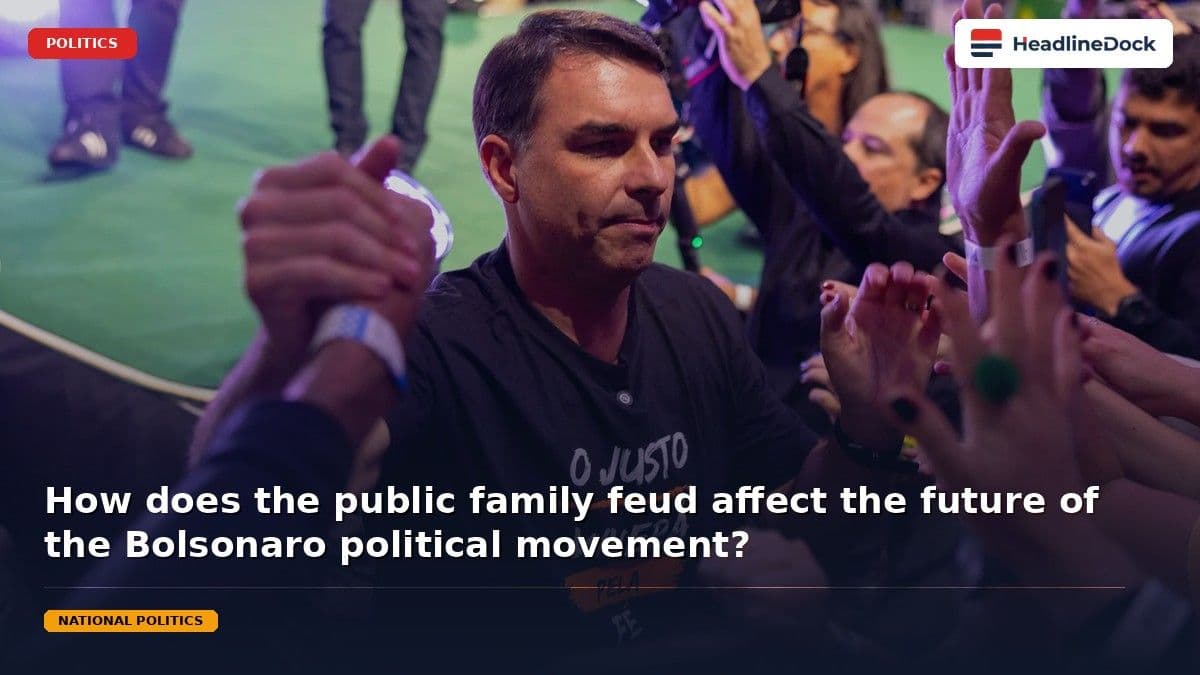
The public conflict between Flávio and Michelle Bolsonaro has created internal instability within Brazil's Liberal Party. While the rift has negatively impacted Flávio's polling numbers, he remains the leading contender for bolsonarista succession, forcing the party to recalibrate its strategy ahead of the elections.
KEY TAKEAWAYS
1 MIN READ- Flávio Bolsonaro faces campaign challenges following a public dispute with Michelle Bolsonaro.
- Polling data suggests the conflict has weakened the senator's candidacy among voters.
- The PL is actively working to engage female voters and solidify its party ticket.
- Despite internal tensions, Flávio remains the top choice for political succession among bolsonaristas.
The internal political landscape of Brazil's PL (Liberal Party) is currently navigating a significant period of instability following a public dispute involving Flávio Bolsonaro and former first lady Michelle Bolsonaro. The conflict, which surfaced after Michelle Bolsonaro released a video claiming she had been disrespected by her stepson, has prompted party leadership to attempt to mitigate damage ahead of the upcoming election cycle.
Addressing Internal Friction and Voter Sentiment
During a recent communications seminar held by the PL, Flávio Bolsonaro, a senator and presidential hopeful, sought to project strength and unity despite the evident rifts. When questioned about the tension, he shifted focus toward outreach initiatives aimed at women, emphasizing policy proposals such as the expansion of daycare facilities. Despite these efforts, recent data from AtlasIntel indicates that the controversy has created a measurable impact, with a majority of respondents suggesting the public discord has weakened his campaign.
The disagreement has not only created a buzz within the party but has also divided the conservative base. While some segments of the electorate view Michelle Bolsonaro's actions as a valid expression of her position, many loyalists of former President Jair Bolsonaro have expressed concern that the fallout favors political opponents, specifically the current administration led by Lula. The crisis has introduced a layer of uncertainty for political analysts, who suggest the instability could hinder efforts to attract alliances with other parties.
Strategic Challenges for the PL
The ongoing situation has complicated the party's strategy, particularly in its goal to engage female voters. Internal discussions have highlighted the necessity of selecting a woman as a vice-presidential candidate to help stabilize the party's image and consolidate support. Figures such as Nikolas Ferreira have publicly advocated for the party to maintain focus on its core mission of opposing the current government, urging members to move past internal conflicts.
Despite the challenges, polling data highlights an ambiguous reality for the PL. While the family discord is perceived as detrimental to the immediate campaign of Flávio Bolsonaro, he remains the most preferred candidate among bolsonaristas to succeed the former president politically. Michelle Bolsonaro, although holding significant influence with conservative women, has yet to translate that capital into widespread support as the primary successor. As the party approaches upcoming conventions, the ability to manage this familial and political friction will remain a critical factor in shaping the effectiveness of their national platform.