Getting Murdoched: Exploring the Tactics of the Murdoch Media Empire
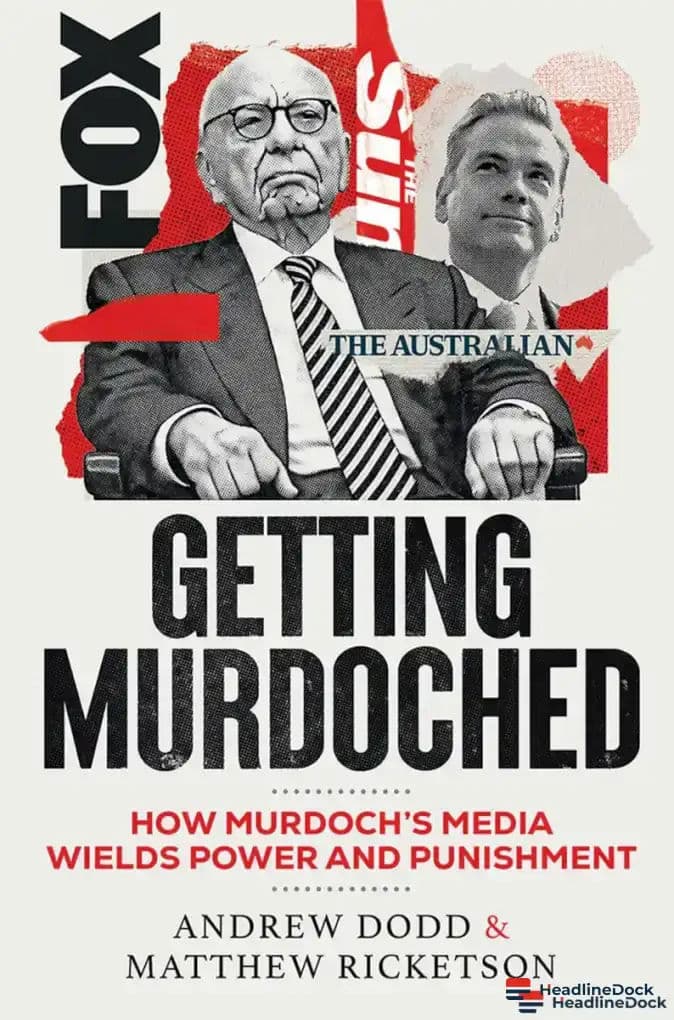
This article reviews the book 'Getting Murdoched' by Andrew Dodd and Matthew Ricketson, which investigates the methods used by the global media empire to wield political power and intimidate those who challenge its narrative across Australia, the UK, and the US.
Highlights
- •Authors Andrew Dodd and Matthew Ricketson analyze the methods behind the Murdoch media empire.
- •The book investigates patterns of institutional bullying and intimidation across three major countries.
- •Specific focus is given to how Fox News reshaped political discourse in the United States.
- •The research highlights the long-term impact of media concentration on public policy and individuals.
Rupert Murdoch stands as one of the most influential figures in modern global media, with his reach extending far beyond his Australian origins. The concentrated nature of the Australian media landscape is frequently cited as a reflection of his enduring impact, even as his professional focus shifted toward the United States. A new analytical work, Getting Murdoched, examines the methods through which the Murdoch empire has exerted its significant political and social influence.
Authors Andrew Dodd and Matthew Ricketson, both veteran academics in journalism, provide a detailed investigation into how the organization has historically utilized its platforms to apply pressure on individuals and political entities. By analyzing operations across Australia, the United Kingdom, and the United States, the book documents a recurring pattern in the firm's editorial strategy. The authors describe a drive to secure stories that frequently align with specific political objectives and ideological viewpoints.
Examining the Influence of Murdoch Media
The book specifically highlights the contentious tactics often referred to as Murdoch media bullying, focusing on the experiences of citizens who found themselves targeted by various outlets. The study explores how these campaigns are managed, particularly through regular columnists and high-profile commentators who engage in intensive ideological warfare. In the United States, the establishment of the Fox cable network in 1996 provided a transformative platform that reshaped national discourse and proved instrumental in shifting the political climate.
The authors point out that while the media organization has faced some limitations—such as the fallout from the News of the World phone hacking scandal in the UK or legal settlements with Dominion Voting Systems—it remains a potent force in shaping public opinion. The Murdoch media bullying tactics discussed in the book underscore a consistent methodology of maintaining power through sustained pressure on those who challenge the empire's narrative or interests.
Furthermore, the text analyzes the specific dynamics within the Australian market, where the press has often expressed deep skepticism regarding climate change and has maintained persistent hostility toward certain economic policies. By detailing these patterns, Dodd and Ricketson offer a forensic look at the intersection of media, money, and power. The authors conclude that the underlying motivation appears to be a dual desire for wealth and political influence, often disregarding individual consequences to achieve these broader institutional goals.