India’s Export Promotion Mission and New FTAs: A Trade Update


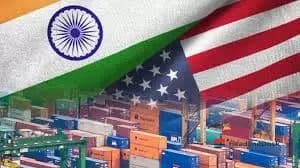
India is accelerating its global trade presence through the ₹25,060 crore Export Promotion Mission and aggressive FTA expansion, including new deals with the UK and Oman. Structural reforms, such as removing courier value limits, are specifically designed to empower MSMEs and streamline the nation's international logistics and competitiveness.
Read it in Short
QUICK OVERVIEW
The government launched a ₹25,060 crore Export Promotion Mission (2025–2031) to enhance global export competitiveness.

Effective March 2026, the ₹10 lakh per-consignment value limit for courier exports was removed to aid small-scale exporters.

New trade agreements, including India-UK CETA and India-Oman CEPA, were successfully implemented in 2026 to boost market access.

65 new Export Facilitation Centers (EFCs) have been established nationwide to provide localized support for Indian MSME exporters.
India’s Export Promotion Mission and New FTAs: A Trade Update
India is currently witnessing a fundamental shift in its international trade architecture. For decades, the nation’s export strategy relied heavily on broad, incremental policy changes. Today, that approach has been replaced by a two-pronged "Global-Local" strategy: the aggressive expansion of high-value Free Trade Agreements (FTAs) coupled with a structural, technology-driven overhaul of domestic export infrastructure. For the Indian MSME sector—the backbone of the national economy—this represents a historic transition from serving domestic markets to becoming a resilient link in the global supply chain.
The Dual-Track Strategy: FTAs and the Export Promotion Mission
The government’s strategy is defined by two major pillars. The first is the rapid integration with mature economies through FTAs. With the implementation of the India-UK CETA (July 2026) and the India-Oman CEPA (June 2026), alongside the concluded negotiations for the India-EU FTA, India is effectively securing preferential market access across the most affluent consumer bases in the world. These agreements are designed to harmonize regulatory standards and provide a predictable environment for long-term investment.
The second pillar is the Export Promotion Mission (EPM). With an outlay of ₹25,060 crore spanning 2025–2031, this mission addresses the competitiveness gap that has historically held back smaller manufacturers. The mission is bifurcated into two specialized arms:
- NIRYAT PROTHSAHAN: Focuses on the financial plumbing of trade. It enhances liquidity through interest subvention, export factoring, and credit guarantee programs.
- NIRYAT DISHA: Focuses on the market intelligence of trade. This arm provides holistic support in global branding, high-end packaging, and logistics intelligence.
Policy Evolution: What Has Changed for Exporters?
The most immediate impact for small-scale exporters comes from the removal of legacy bottlenecks. As of March 2026, the restrictive ₹10 lakh per-consignment value limit for courier exports has been eliminated. By removing this ceiling, the government has digitized the export process, allowing MSMEs to utilize faster, courier-based logistics for higher-value shipments.

| Policy Feature | Old Status (Pre-2026) | New Status (Post-2026) |
|---|---|---|
| Courier Export Limit | Capped at ₹10 lakh per shipment | Limit Removed |
| Trade Finance | Ad-hoc credit access | Institutionalized support via NIRYAT PROTHSAHAN |
| Logistics/Infrastructure | Siloed transport planning | PM Gati Shakti-led multimodal coordination |
| Export Reconciliation | Stringent documentation for all values | Relaxed for small-value exports (up to ₹10 lakh) |
Troubleshooting: Navigating the New Regulatory Framework
While these reforms simplify the export journey, businesses must ensure their compliance systems are updated. If you encounter issues, consider these steps:
- EDPMS Reconciliation Issues: The Reserve Bank of India has relaxed reconciliation for small-value exports. Verify that your export shipping bill is correctly linked to your electronic bank realization certificate (e-BRC) within the EDPMS system.
- MSME Status Verification: If you are failing to access NIRYAT PROTHSAHAN credit incentives, ensure your Udyam registration is active and linked to your DGFT profile.
- HS Code Precision: The removal of the courier limit depends on accurate classification. Ensure your HS code matches your product description to prevent customs seizures. For complex classifications, reach out to your nearest Export Facilitation Center (EFC).
Strategic Outlook: A Structural Shift
The establishment of 65 Export Facilitation Centers (EFCs) nationwide signifies that this policy is intended for regional empowerment. By utilizing the "District Export Hub" framework—where every district identifies 3–5 high-potential products—the government is creating a decentralized engine for growth. The move toward E-Commerce Export Hubs (ECEH) acknowledges that the future of Indian exports lies in the hands of digital-native merchants. Combined with the RoDTEP scheme, which continues to refund embedded duties, India’s exporters are now better positioned to compete on price and quality on the global stage.
Frequently Asked Questions
What is the Export Promotion Mission?
The Export Promotion Mission is a five-year government initiative (2025–2031) with an outlay of ₹25,060 crore, focused on improving export competitiveness through trade finance, quality support, and branding.
Has the courier export limit changed?
Yes, effective March 2026, the ₹10 lakh per-consignment value limit for exports through courier mode has been completely removed to facilitate easier small-scale exports.
Are there new trade agreements with the UK or EU?
Yes, the India-UK CETA was implemented on July 15, 2026, and negotiations for the India-EU FTA were successfully concluded in January 2026.
What support is available for MSMEs?
MSMEs can utilize 65 Export Facilitation Centers (EFCs), participate in international fairs via the International Cooperation Scheme, and access credit enhancement support under NIRYAT PROTHSAHAN.