Punjab Farmers Stage Widespread Protests Against Proposed India-US Trade Pact
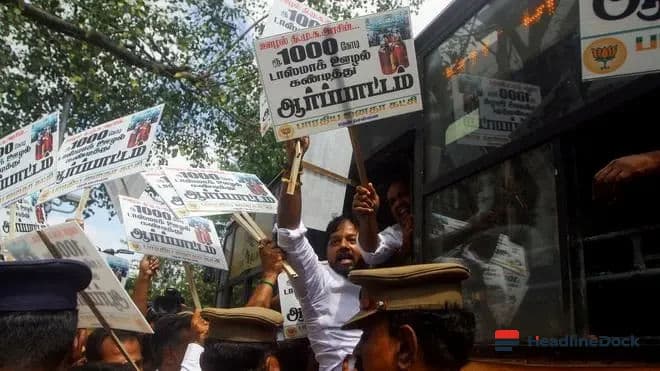
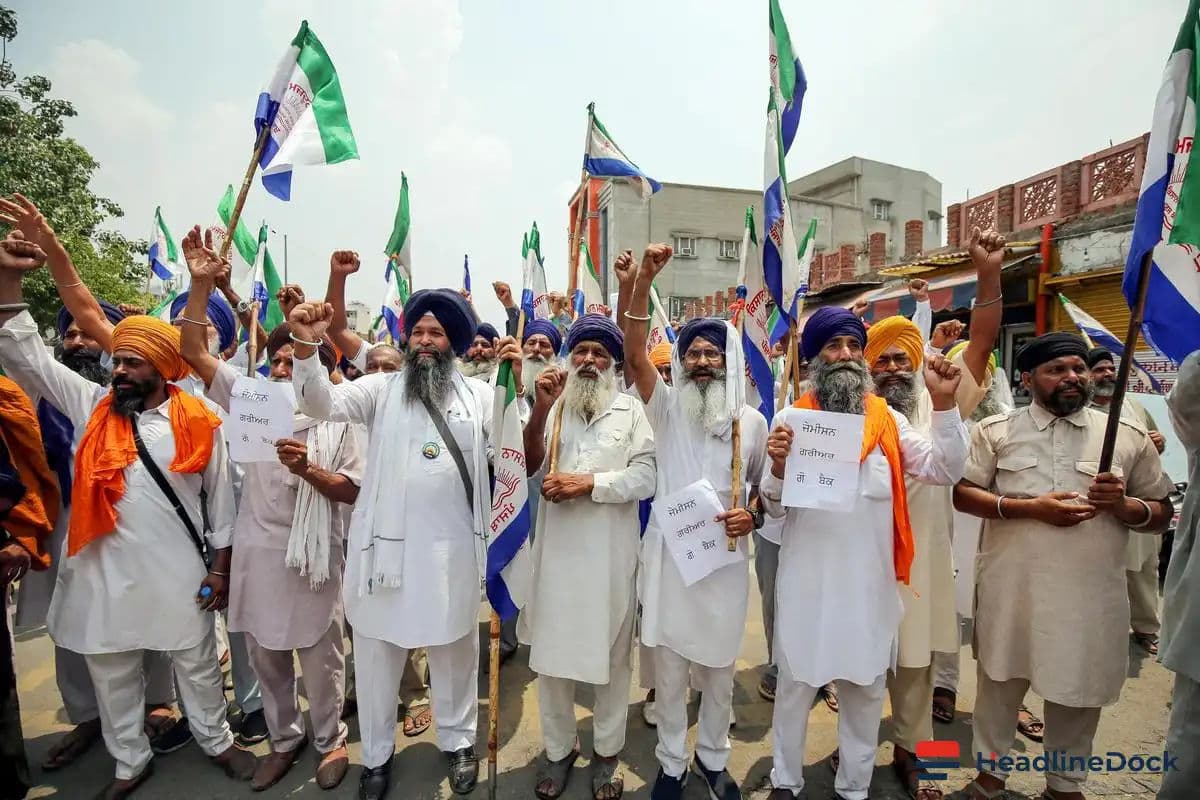
Farmers in Punjab have staged widespread protests across 21 districts against the proposed India-US trade agreement. Protesters, led by the Kisan Mazdoor Morcha, fear the pact will harm small-scale agriculture and have renewed their demands for a legal guarantee on Minimum Support Price (MSP).
Highlights
- •Farmers in 21 Punjab districts protest against the proposed India-US trade pact.
- •Demonstrators burned effigies of PM Narendra Modi and President Donald Trump.
- •Concerns raised over foreign competition impacting small-scale farmers and the dairy sector.
- •Unions are demanding a legal guarantee for Minimum Support Price (MSP) on all crops.
Farmers across Punjab have launched widespread protests against the proposed India-US trade pact, arguing that the deal poses a significant threat to the livelihoods of agricultural workers and local traders. Operating under the banner of the Kisan Mazdoor Morcha, demonstrators organized protests at approximately 28 distinct locations spanning 21 districts on Wednesday to voice their strong opposition.
During these demonstrations, participants expressed their frustration by burning effigies of Prime Minister Narendra Modi and US President Donald Trump. The protesters contend that the bilateral agreement would unfairly prioritize the interests of multinational corporations while destabilizing the domestic agricultural economy, specifically impacting the dairy sector and small-scale farmers.
Concerns Over the Proposed India-US Trade Agreement
In Hoshiarpur, the protest was spearheaded by district president Paramjit Singh Bhulla, who highlighted the disparity between Indian agricultural operations and their American counterparts. Supporters of the India-US trade pact opposition claim that because American farmers benefit from extensive government subsidies and large-scale operations, local Indian farmers—who largely rely on small landholdings—would be unable to compete effectively if the market is opened to foreign imports.
The agitators fear that the deal will lead to an influx of imported agricultural products, such as pulses, fruits, and various food items, directly harming the income levels of rural households. Furthermore, they accused the government of failing to consult with key stakeholders, comparing the current situation to the earlier disputes surrounding the three farm laws.
Beyond the trade deal, the Kisan Mazdoor Morcha is demanding the immediate withdrawal of the Electricity Amendment Bill 2025 and the Seed Bill 2025, while also voicing firm opposition to the implementation of new smart electricity meters. The movement has expanded its scope, with organizers noting that these policies affect not only farmers but also laborers and small-scale merchants.
Calls for Policy Reform and Minimum Support Price
Bhartiya Kisan Union (Doaba) president Manjit Singh Rai addressed the broader agricultural challenges, citing recent warnings from Union Agriculture Minister Shivraj Singh Chouhan regarding potentially reduced monsoon rainfall. Rai emphasized the urgent need for a legal guarantee of Minimum Support Price (MSP) on all crops to safeguard farmers' interests against market volatility.
To improve food security and manage groundwater resources, union leaders are urging the government to prioritize the development of robust irrigation infrastructure and encourage the adoption of water-efficient cropping patterns. Rai further proposed that the state establish district-level task forces to better manage agricultural challenges, improve canal irrigation utilization, and prepare for climate-related risks that threaten the agricultural sector's stability.