Supreme Court Highlights Urgent Need for Forest Protection Across India
The Supreme Court has emphasized the national importance of forest protection, specifically referencing Jharkhand's natural ecosystems. The court declined to intervene in a legal dispute regarding stone mining buffer zones, directing the matter back to the High Court for a final, constitutional resolution.
Highlights
- •The Supreme Court underscored the critical importance of preserving natural ecosystems across India.
- •The case involves a dispute over mining buffer zones near protected forest areas in Jharkhand.
- •The Supreme Court declined to interfere, allowing the High Court to pass a final order on mining regulations.
- •High Court directives maintain stricter distance requirements for stone mining and crushing units near forests.
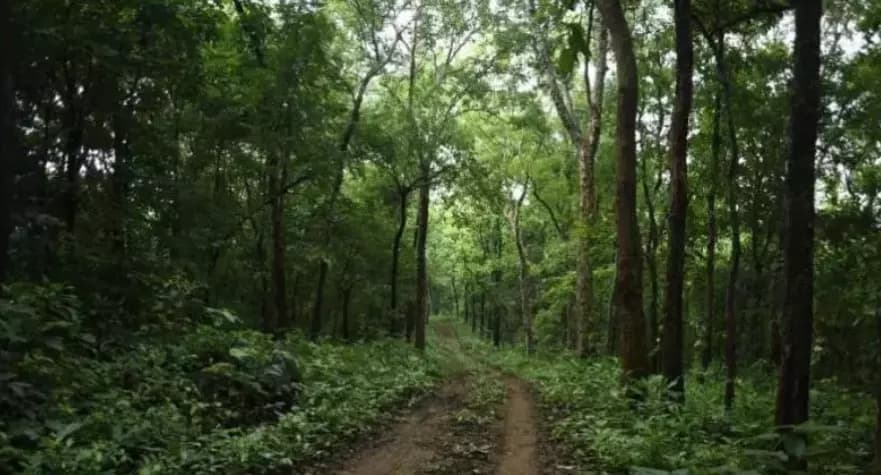
The Supreme Court of India has recently emphasized the urgent need for robust forest protection efforts across the nation. During a hearing on Thursday, a bench led by Chief Justice Surya Kant and Justice V Mohana underscored that states such as Jharkhand possess vital natural ecosystems that must be safeguarded from encroaching industrial activities.
The judicial observations stemmed from a legal challenge initiated by the Jharkhand State Pollution Control Board (JSPCB). This case reached the apex court after the Jharkhand High Court implemented strict directives in January. The state high court had mandated that no regulatory consent should be granted for stone mining or the establishment of stone crushers within a one-kilometer radius of demarcated protected forest boundaries.
Judicial Stance on Forest Protection and Regulatory Oversight
The core of the dispute involves an attempt by state authorities to reduce the minimum distance requirements for stone mining operations. Previously, notifications had allowed these activities to be set up within 400 to 500 meters of forest lands, but a subsequent order sought to shrink this buffer zone to 250 meters. By April, the High Court clarified that for the sake of forest protection, the restrictions would remain firm: 500 meters for stone mining and 400 meters for stone crusher units.
During the session, the Supreme Court questioned the abrupt decision to reduce these distance buffers, noting the critical importance of preserving natural paradises. However, the top court refrained from intervening directly in the ongoing litigation. The bench maintained that the matter is already being addressed by the High Court, which is a constitutional body capable of reaching a final determination.
When legal representatives referenced specific observations made by the High Court, the bench firmly declined to interfere, stating that it does not function as a headmaster to advise constitutional courts. Emphasizing the separation of roles, the justices directed the parties to resolve the merits of their concerns within the high court proceedings. Consequently, the JSPCB counsel withdrew the petition, gaining the liberty to pursue all arguments regarding the forest protection norms and mining distance regulations in the appropriate high court forum.