Severe Heatwave Forces Young Birds to Flee Overheated Nests in Crisis
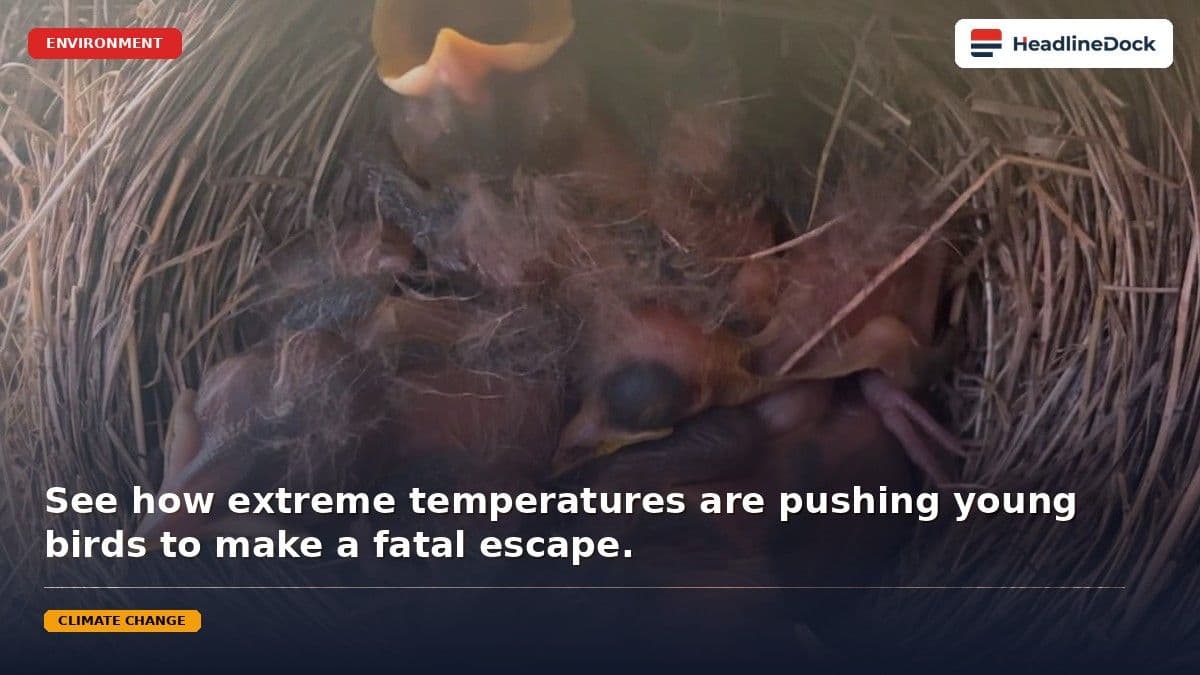
An intense, prolonged heatwave is forcing young birds in Germany to flee their overheated nests, leading to a surge in rescues. Experts are warning the public against unassisted care, as improper feeding can prove fatal to these vulnerable fledglings during the current crisis.
KEY TAKEAWAYS
1 MIN READ- Unusually high temperatures are forcing young birds to leap from nests to escape lethal heat.
- Urban nesting species like swifts and swallows are the most severely impacted by the heatwave.
- Wildlife rescue centers are currently overwhelmed and struggling with limited resources to care for hatchlings.
- Experts urge citizens not to feed water to found birds, as it often causes fatal respiratory complications.
The recent, unusually long heatwave has caused a crisis for local bird populations, leading to a distressing phenomenon where young birds are abandoning their nests prematurely. Experts suggest that the extreme heat, which has pushed temperatures well beyond typical seasonal norms, is creating unbearable conditions in nesting sites. As a result, vögel—particularly common urban species like swifts and swallows—are jumping from their high-altitude nests to escape the lethal internal temperatures.
The Impact of Extreme Heat on Nestlings
According to experts such as Julia Rabanus, a animal welfare professional, the situation has reached a critical stage. Bird nests located under roof tiles or within narrow masonry cracks are absorbing intense solar heat, effectively turning these shelters into ovens. For many vulnerable fledglings, the urge to escape the rising heat outweighs the survival instinct, forcing them into a desperate, often fatal, descent. Shelters in regions like Wiesbaden, Mainz, and Worms are currently overwhelmed with a surge of injured or dehydrated nestlings requiring urgent care.
Martin Rümmler of the NABU (Nature and Biodiversity Conservation Union) highlights that while this behavior is observed annually, the current, early-season heatwave has significantly exacerbated the scale of the issue. He notes that building-dwelling species, such as house sparrows, house martins, and common swifts, are particularly affected due to the high thermal conductivity of their nesting environments.
Guidelines for Concerned Citizens
Public response has been immense, with many citizens attempting to assist the fallen hatchlings. However, wildlife experts emphasize that well-intentioned interventions can sometimes prove harmful. A common, dangerous mistake is attempting to feed the birds water, which can easily lead to aspiration and fatal respiratory issues. Experts strongly advise that any member of the public who discovers a young vögel on the ground should refrain from immediate handling or feeding.
Instead, the recommended protocol is to observe the animal from a distance to determine if it is truly in distress. In many cases, parents continue to care for their young even after they have left the nest. Professional intervention is only necessary if the bird shows clear signs of injury, is lethargic, or belongs to a species that cannot survive on the ground, such as the common swift. For these specialized species, contacting professional wildlife rehabilitation centers remains the only viable path to survival. Efforts to rehabilitate these avian victims are ongoing, with centers hoping to nurse as many survivors as possible back to health before releasing them into the wild.