Heat Threatens Australia’s Seaweed Forests: Are Biobanks the Key to Survival?
Australia's Great Southern Reef is under threat from rising ocean temperatures, which are decimating seaweed forests. Scientists are now pioneering cryopreservation and biobanking techniques to safeguard the genetic diversity of these vital ecosystems and improve their resilience against the intensifying impacts of climate change.
Highlights
- •The Great Southern Reef is facing severe threats from frequent marine heatwaves.
- •Researchers are testing cryopreservation to create seaweed biobanks for genetic conservation.
- •Operation Crayweed has successfully restored self-sustaining seaweed forests near Sydney.
- •Biobanking acts as an insurance policy to help seaweed populations adapt to warmer oceans.
The Great Southern Reef, an extensive network of seaweed forests spanning over 8,000 kilometres along Australia's southern coastline, is currently facing severe environmental threats. As global temperatures rise, marine heatwaves are becoming more frequent and intense, pushing these vital underwater ecosystems toward a tipping point. Scientists are now investigating seaweed biobanks as a potential insurance policy to preserve genetic diversity and prevent the total collapse of these productive habitats.
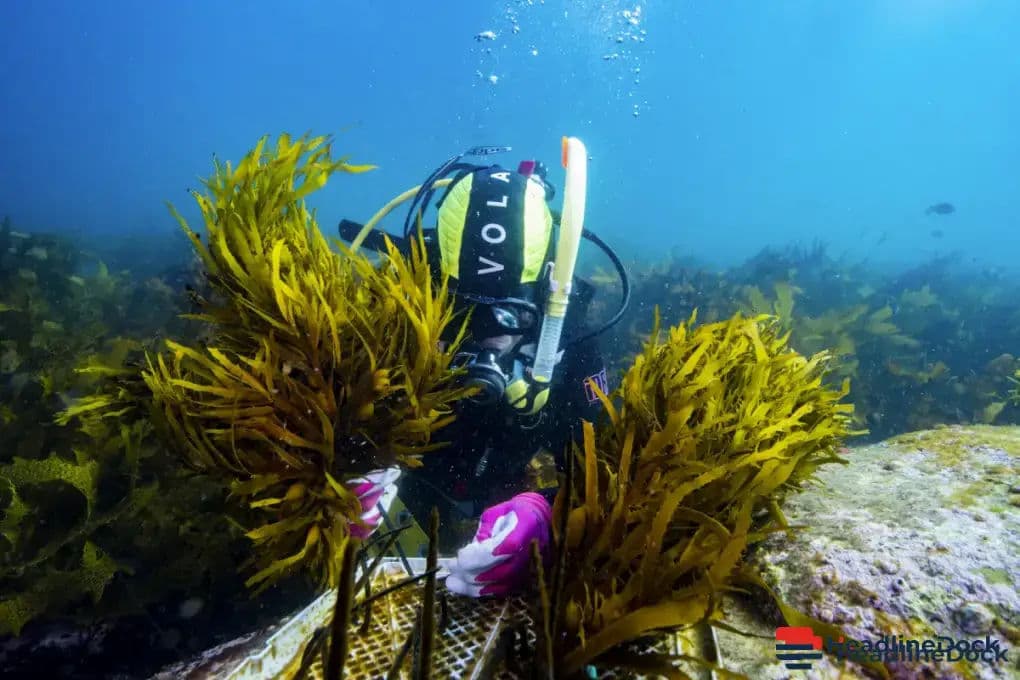
These underwater forests are not merely patches of algae; they are complex ecosystems that support a diverse array of marine life, including seadragons, giant cuttlefish, rock lobsters, and southern blue devils. Beyond their ecological significance, they contribute billions of dollars annually to the Australian economy. However, sudden spikes in ocean temperatures have already caused significant declines in seaweed populations, leading to a substantial loss of genetic diversity, which is essential for species adaptation and resilience against climate change.
Innovative Preservation Strategies for Seaweed Biobanks
To combat these losses, researchers are exploring advanced methods of cryopreservation. This involves freezing reproductive material—such as sperm and germlings—at ultra-low temperatures, roughly –196 °C, to ensure their long-term survival. While this technology has been successfully applied to other species, including humans and corals, applying it to the unique reproductive cycles of fucoid seaweeds remains a complex technical challenge that scientists are working to master.
Recent efforts have focused on species like the golden-brown crayweed (Phyllospora comosa). Following its disappearance from Sydney's coast in the 1980s, projects such as Operation Crayweed have demonstrated that human-led restoration can successfully re-establish self-sustaining populations. By integrating this restoration work with robust seaweed biobanks, researchers hope to utilize assisted gene flow. This process involves identifying individuals better equipped to withstand heat and using their genetic material to enhance the resilience of more vulnerable populations.
Establishing these biobanks requires collaboration between scientific institutions, Indigenous custodians, and government bodies. While cryopreservation is not a replacement for habitat protection or a solution to the underlying causes of global warming, it serves as a critical precautionary measure. By safeguarding the remaining genetic variety of these forests, conservationists aim to provide these ecosystems with a fighting chance to survive the ongoing shifts in ocean temperatures, thereby ensuring the future of the Great Southern Reef and the diverse species that call it home.