President Murmu Addresses India-North Macedonia Business Forum for Strategic Economic Growth
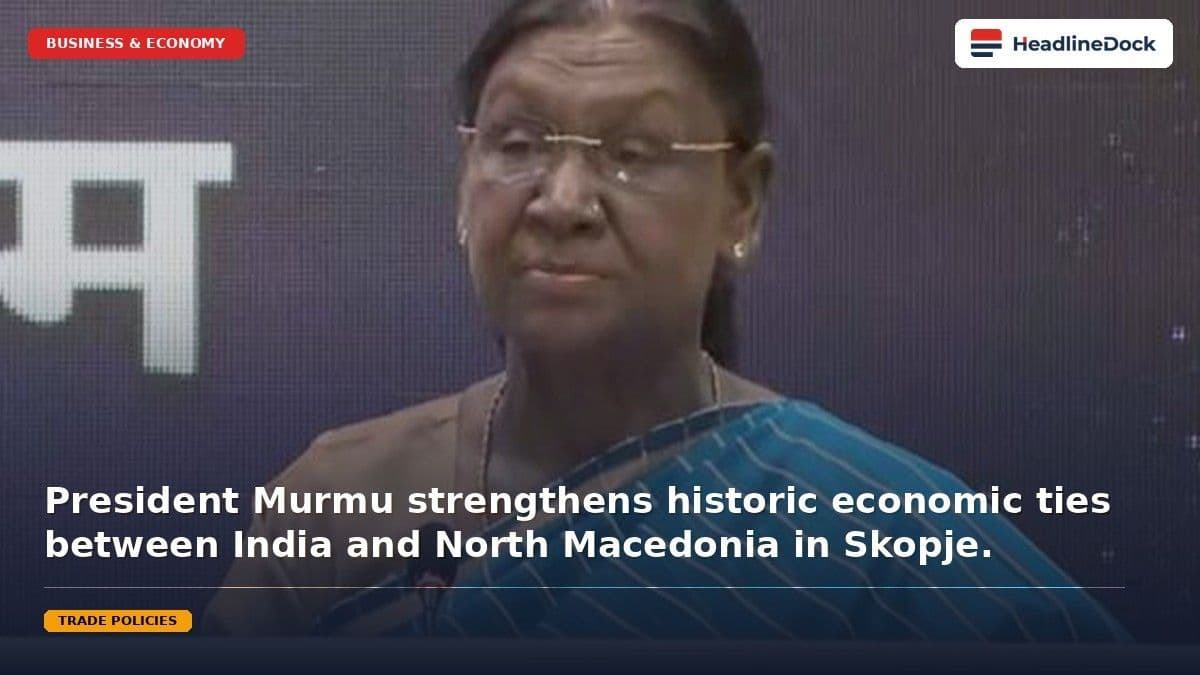
President Droupadi Murmu’s historic visit to Skopje marks the first-ever trip by an Indian President to North Macedonia. The business forum highlights a strategic pivot toward deep economic partnerships in digital innovation, AI, healthcare, and green energy, fostering long-term collaborative growth between the two nations' private sectors.
Read it in Short
QUICK OVERVIEW
President Murmu’s visit marks the first-ever trip by an Indian President to North Macedonia, establishing a historic diplomatic milestone.

The forum aims to pivot from limited trade to a comprehensive partnership, focusing on mutual investment and long-term economic collaboration.

Key strategic sectors for cooperation include digital innovation, AI, pharmaceuticals, agro-processing, and the green energy transition.
North Macedonia has been formally invited to participate in the upcoming World Audio Visual and Entertainment Summit (WAVES) 2027 in India.
President Murmu Addresses India-North Macedonia Business Forum
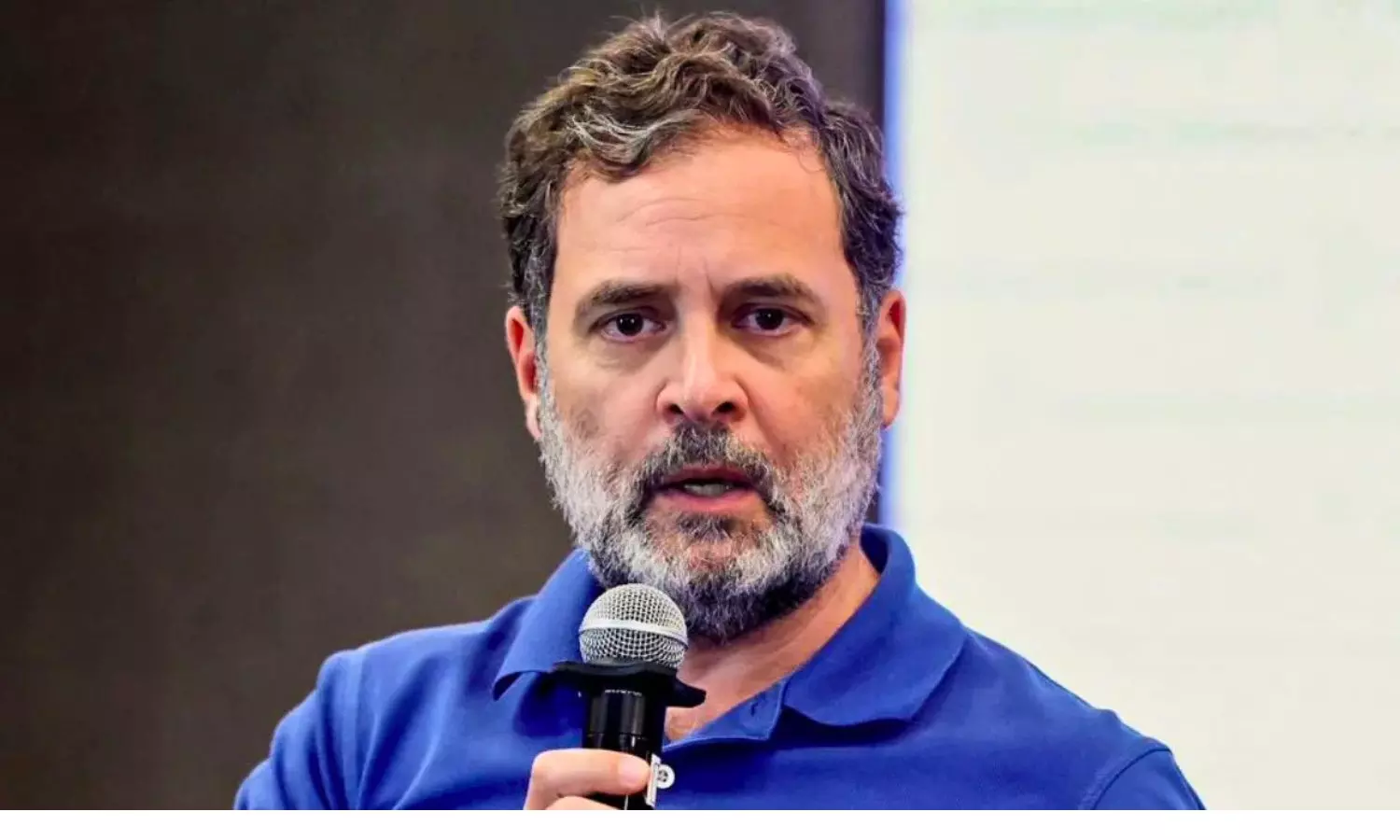
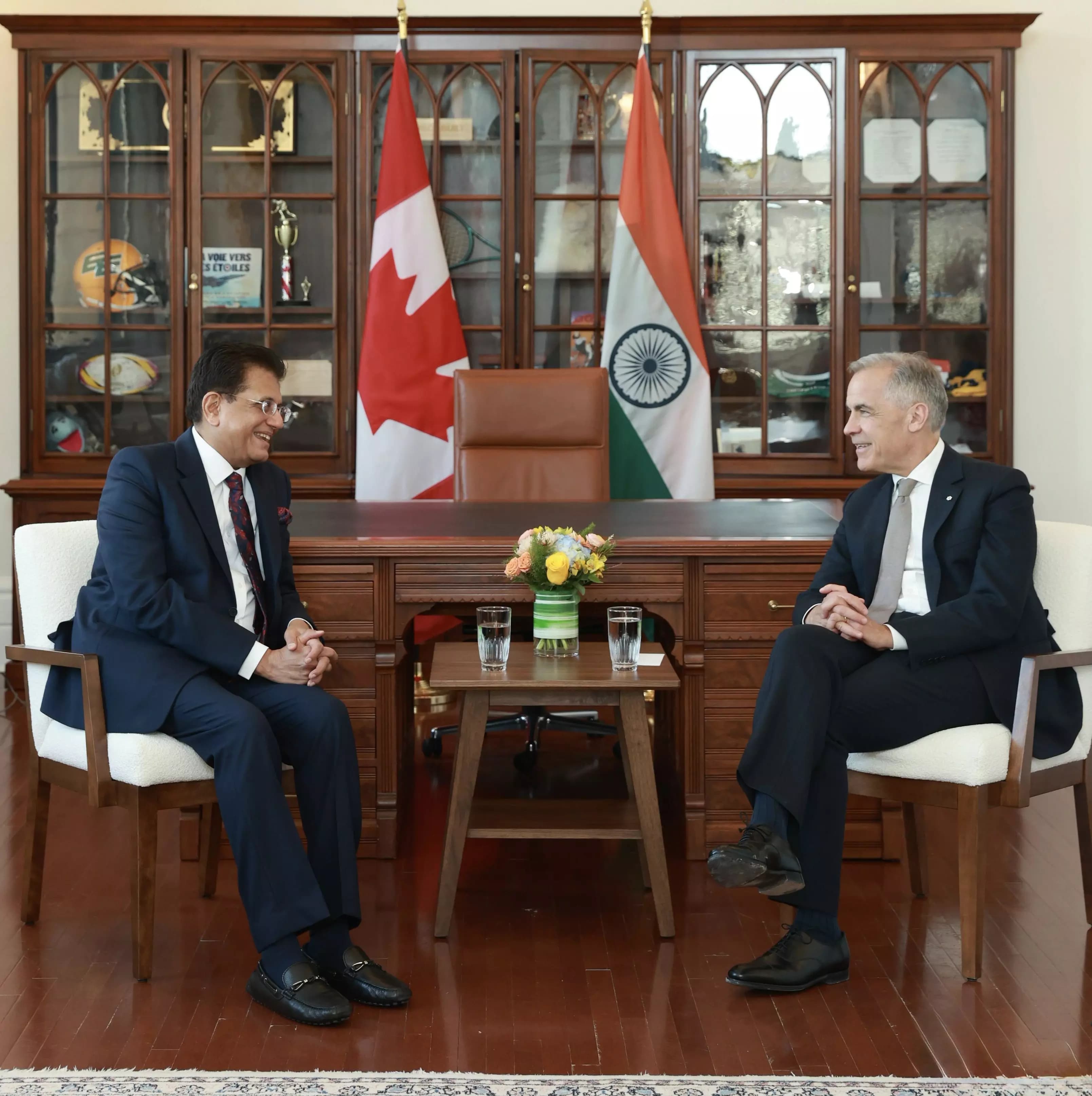
The diplomatic landscape of Eastern Europe shifted on July 21, 2026, as President of India Smt. Droupadi Murmu delivered the inaugural address at the India-North Macedonia Business Forum in Skopje. This event represents the first-ever visit by an Indian President to the Republic of North Macedonia. This visit is a cornerstone of a wider three-nation tour that includes Moldova and Romania—a concerted effort by India to broaden its strategic footprint and economic influence in the region.
Transitioning from Trade to Partnership
For years, economic interaction between India and many Balkan nations remained limited to standard import-export transactions. President Murmu’s address signaled a pivot toward a more comprehensive, strategic economic partnership. The focus is no longer merely on exchanging goods but on building long-term, mutually beneficial ecosystems through technology transfer, joint ventures, and local value creation.
The forum emphasized that the objective is to leverage the unique strengths of both nations. While India brings to the table its massive scale in digital innovation and pharmaceuticals, North Macedonia offers a strategic gateway into the broader European market. By fostering direct connections between the private sectors of both countries, the government aims to catalyze sustainable, cross-border growth.
Strategic Pillars of Cooperation
The vision presented in Skopje is structured around several high-growth sectors. These priorities reflect both India’s internal economic trajectory and the global demand for sustainable technological advancement:
- Digital Innovation & AI: Emphasizing software development and artificial intelligence as the backbone of modern competitiveness.
- Pharmaceuticals & Healthcare: Leveraging India’s strength as the "pharmacy of the world" to build resilient healthcare supply chains.
- Green Energy Transition: Aligning both economies with global climate goals through collaborative research and infrastructure investment.
- Agro-processing: Modernizing agricultural output through technology-driven value chain improvements.
Comparing Economic Models
| Feature | Traditional Trade Model | New Strategic Vision |
|---|---|---|
| Primary Focus | Transactional/Commodity-based | Investment & Innovation-based |
| Technology | Standard Import/Export | Active Technology Transfer |
| Collaboration | Government-to-Government only | Business-to-Business & Academic |
| Scale | Limited/Fragmented | Comprehensive/Institutional |
Bridging the Knowledge Gap: A Practical Roadmap
To address historical gaps in market entry, the President urged the immediate establishment of direct linkages between chambers of commerce, investment agencies, universities, and research institutions in both countries.
- Engage via Chambers: Engage through the established chambers of commerce identified during the forum to ensure vetted professional connections.
- Academic-Industry Partnerships: Organizations looking to leverage AI and R&D should tap into the proposed linkages between Indian and North Macedonian universities.
- Prepare for 2027: Companies should align their product roadmaps with the upcoming World Audio Visual and Entertainment Summit (WAVES) in India, which serves as a future-looking stage for cross-continental cultural and tech collaboration.
Expert Outlook and Diplomatic Context
The Ministry of External Affairs (MEA) has characterized this visit as a "historic chapter" in bilateral relations. Indian Ambassador Arun Kumar Sahu captured the sentiment of the business community, noting that the current economic relationship is essentially a "frontier waiting to be fully conquered."
By moving beyond traditional diplomatic pleasantries, the forum has laid the groundwork for a future where Indian tech expertise meets North Macedonian enterprise. As India continues to diversify its global trade relationships, this engagement serves as a template for how the nation intends to solidify its presence in emerging European markets through structural, long-term cooperation.
Frequently Asked Questions
Why is this visit considered historic?
It is the first-ever visit by an Indian President to the Republic of North Macedonia, marking a significant milestone in bilateral diplomatic relations.
What was the main purpose of the Business Forum?
To encourage businesses to move beyond simple trade transactions toward long-term economic partnerships through mutual investment and technology transfer.
Which sectors were highlighted for investment?
Digital innovation, Artificial Intelligence, cybersecurity, pharmaceuticals, healthcare, agro-processing, and green energy transition.
What is the WAVES summit mentioned by the President?
WAVES stands for the World Audio Visual and Entertainment Summit, scheduled to be held in India in 2027, to which North Macedonia has been invited.