Hyderabad Marks Ashura with 430-Year-Old Tradition of Faith and Mourning
Hyderabad continues its 430-year-old Muharram legacy, marked by solemn Ashura observances. The city's historic traditions, including the Bibi Ka Alam procession and various Ashoorkhanas, highlight a deep-rooted history of faith, mourning, and communal harmony that remains a vital part of its cultural identity today.
Highlights
- •Hyderabad observes the 430-year-old Muharram tradition, honoring the martyrdom of Hazrat Imam Hussain.
- •The historic Bibi Ka Alam procession, dating back to 1594, remains a central event in the city.
- •Hyderabad features nearly 140 Ashoorkhanas that serve as focal points for prayers and Majlis congregations.
- •The observance, also known as Peerla Panduga, highlights communal harmony with participation from various communities.
As the holy month of Muharram arrives, the city of Hyderabad undergoes a profound transformation, becoming a center for deep reflection and solemn remembrance. The annual Ashura observance in the city serves as a powerful testament to its rich historical legacy and composite culture, which has been maintained for over four centuries.
Devotees across Hyderabad gather to honor the martyrdom of Hazrat Imam Hussain, the grandson of Prophet Muhammad, who sacrificed his life in the Battle of Karbala nearly 1,400 years ago. This significant religious event is observed with reverence, focusing on themes of sacrifice and the fight against injustice, which continue to resonate with people across the globe.
The Living History of Ashura in Hyderabad
The city's Ashura traditions are deeply embedded in its history, dating back to the Qutb Shahi era. Throughout the city, particularly in the Old City area, residents create an atmosphere of mourning. Ashoorkhanas, which are dedicated houses of mourning, become focal points for religious activity. Within these spaces, devotees congregate to participate in Majlis—religious assemblies—and to offer prayers before sacred Alams that contain relics associated with Imam Hussain and his family.
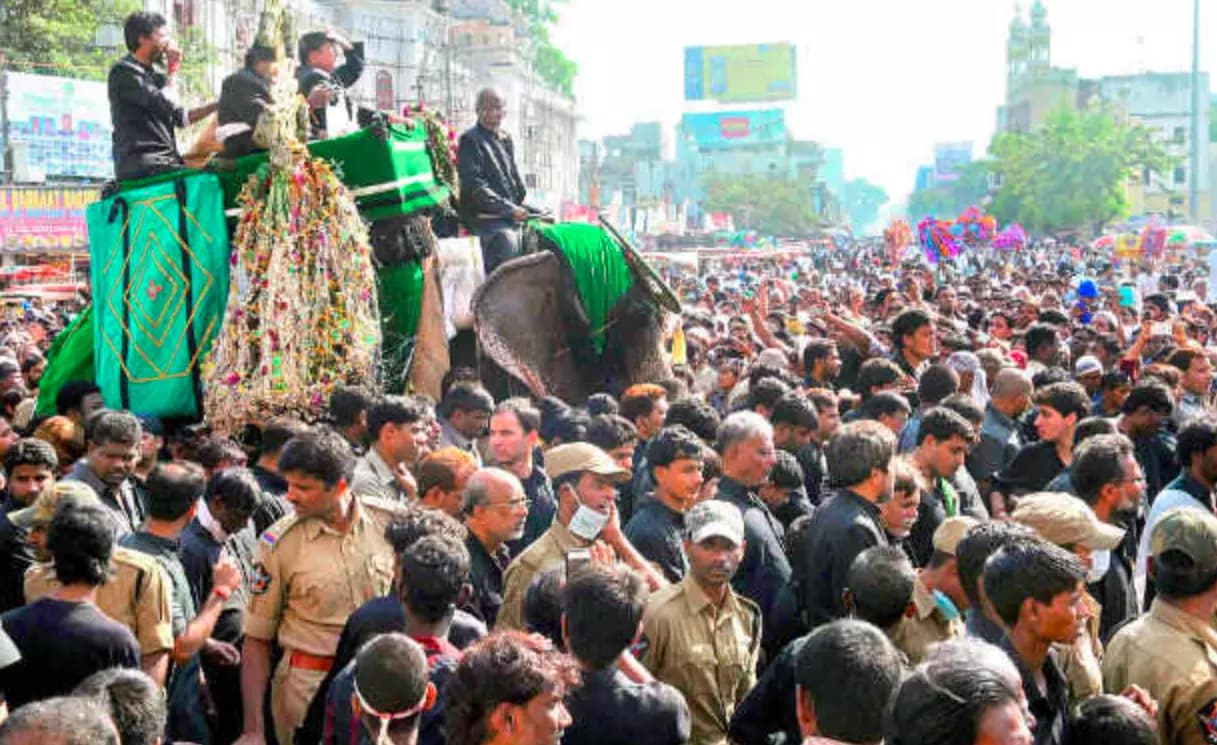
The Bibi Ka Alam procession stands out as a hallmark of this legacy. Dating back to 1594, this event is recognized as one of the oldest and most significant Muharram processions in India. During this procession, the Bibi Ka Alam is ceremonially mounted on an elephant and travels through historic paths, including Charminar, Gulzar Houz, and Pathergatti. This tradition has long enjoyed royal patronage, historically supported by the Nizams of Hyderabad, and continues to draw thousands of participants today.
Beyond the religious significance for Shia Muslims, Ashura in Telangana reflects a shared community experience. Often referred to as Peerla Panduga, the observances frequently see participation from members of the Hindu community as well. This cross-cultural engagement underscores the spirit of harmony prevalent in Hyderabad. Throughout these days of mourning, the city streets are marked by stalls providing free water and sherbet to all, emphasizing the values of compassion and service that define this long-standing tradition.
The Badshahi Ashoorkhana, constructed by Sultan Muhammad Quli Qutb Shah, remains a primary heritage monument that anchors these observances. As participants perform matam—a rhythmic expression of grief—the city collectively remembers a tragedy that helped shape its cultural identity. From the solemn processions to the prayers held in the nearly 140 Ashoorkhanas found across the city, the 430-year-old tradition remains a vibrant and essential part of the Hyderabad experience.