Brazil World Cup Exit Sparks Political Firestorm for Flávio Bolsonaro and Allies


Following Brazil's 2-1 World Cup defeat to Norway, political figures led by Flávio Bolsonaro have utilized the team's elimination to attack the ruling party. The debate has extended to Neymar's performance, further highlighting the country's deep political polarization as players return home from the tournament.
KEY TAKEAWAYS
1 MIN READ- Brazil was eliminated from the World Cup by Norway with a 2-1 loss in the round of 16.
- Senator Flávio Bolsonaro blamed the Workers' Party (PT) for the national team's recent lack of titles.
- Political figures are divided on Neymar's performance, with right-wing lawmakers defending him against critics.
- The defeat has triggered intense political discourse connecting sports failures to broader electoral narratives in the country.
The elimination of the Brazilian National Football Team from the ongoing World Cup has ignited a fierce digital confrontation among high-profile political figures. Following a 2-1 defeat against Norway in the round of 16, where Erling Haaland scored twice, the national mood has quickly shifted from sporting disappointment to intense political finger-pointing.
Political Fallout Over World Cup Exit
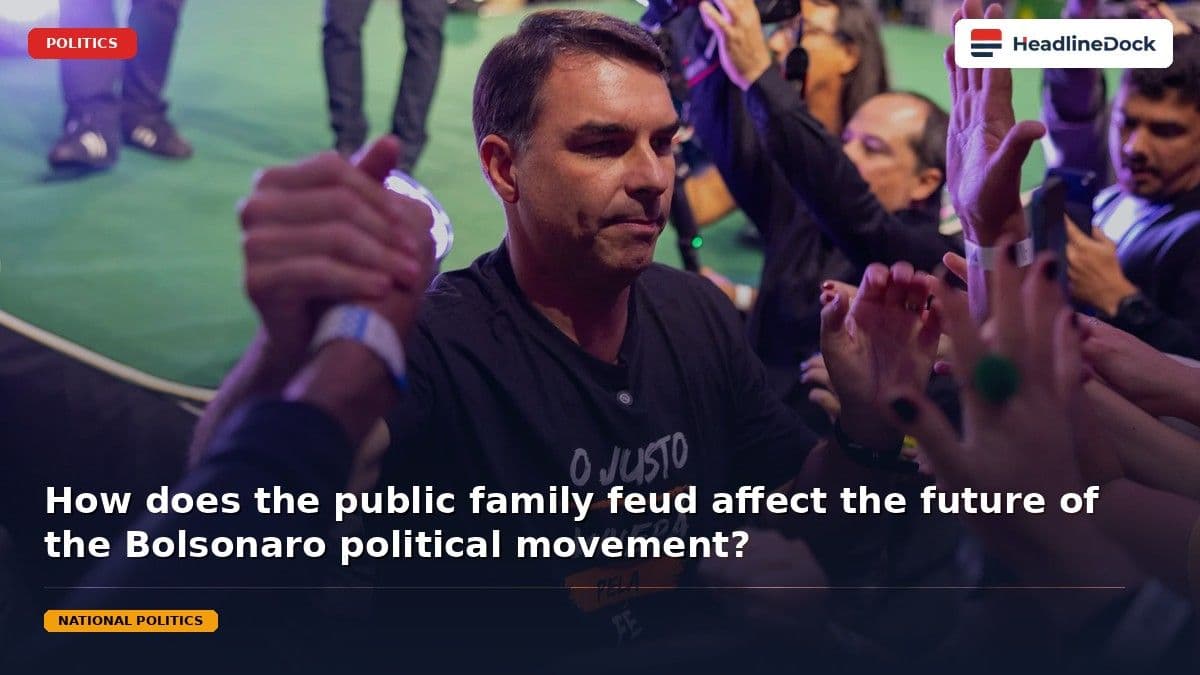
Senator Flávio Bolsonaro was among the first to address the loss publicly. Utilizing his platform on the social network X, the politician linked the national team's recent lack of titles to the current political administration under the Workers' Party (PT). He suggested that since the party assumed power, the country has struggled to secure major victories, though he notably omitted other official titles the nation has claimed in that span, such as Olympic gold medals and the Copa América.
The discourse surrounding the team's star player, Neymar, has been equally polarized. While the striker, who scored a late penalty in the match, has previously expressed support for former President Jair Bolsonaro, he found himself at the center of a debate between various political factions. Supporters from the right-wing camp, including lawmakers Mario Frias and Nikolas Ferreira, rallied behind the athlete. They defended his emotional reaction and performance, with some suggesting that his presence and leadership could have potentially altered the outcome of the match.
Conversely, opponents of the former administration seized the moment to criticize the player's performance. Federal Deputy André Janones questioned the team's tactical focus on the star, while other political commentators described his inclusion in the squad as the result of undue pressure. This internal squabbling highlights how deeply the country's social and political divisions have permeated even its most cherished sporting traditions.
National Sentiment Amid Political Polarization
As the team prepares to return home, the focus has broadened from the match results to the wider implications of Flávio Bolsonaro and his allies attempting to use the sporting defeat to mobilize their base ahead of upcoming presidential discussions. Despite the disappointment of the early exit—the first since 1990—the narrative has firmly pivoted toward the political landscape. Supporters are already looking toward the electoral calendar, echoing sentiments that while a trophy was lost, the broader political battle remains the primary objective. The debate serves as a stark reminder of the current state of national discourse, where the fate of the national team is inextricably linked to competing visions for the country's future.