Hyderabad Launches CURE1 Unified Billing Platform to Streamline Regional Payments
Hyderabad has introduced the CURE1 unified billing platform to streamline payments for property taxes, utilities, and traffic fines in the CURE region. The initiative aims to reduce citizen inconvenience and improve revenue collection through a single, secure digital interface managed by a dedicated steering committee.

Highlights
- •Hyderabad has launched a new unified billing platform for the Core Urban Region Economy (CURE) area.
- •The CURE1 App will consolidate property tax, electricity, water, and traffic violation payments.
- •An 11-member steering committee will oversee the implementation and integration of these municipal services.
- •The government has mandated end-to-end encryption to secure sensitive citizen and financial data on the platform.
Authorities in Hyderabad have officially launched a strategic initiative to streamline public service payments through a unified billing platform. This move is designed to simplify financial transactions for residents living within the Core Urban Region Economy (CURE) area, replacing the current fragmented system that has historically caused significant inconvenience.
For many years, citizens residing in the CURE region have had to navigate multiple, disparate digital portals to settle their various financial obligations. Property taxes, electricity bills, water and sewerage charges, and traffic violation fines were all managed through separate interfaces. This multiplicity of platforms frequently led to confusion, poor compliance rates among residents, complex reconciliation challenges for the government, and measurable revenue loss.
Implementing the CURE1 Unified Billing System
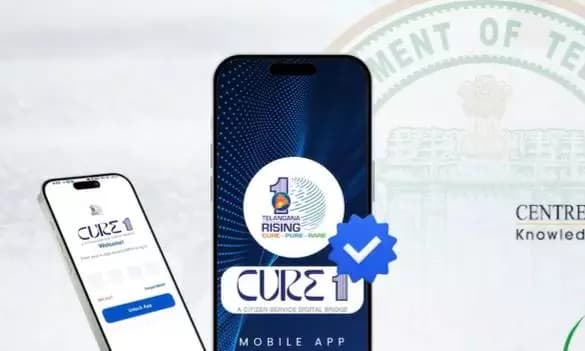
To rectify these systemic issues, the government has introduced the CURE1 common unified billing and collection system. This new infrastructure will be accessible via the CURE1 App, serving as a comprehensive digital hub that consolidates all mandatory payment obligations for individuals and businesses in the region. By integrating these services, the government aims to provide a seamless user experience that encourages timely payments and improves administrative efficiency.
The centralized platform will incorporate a wide array of municipal collections. This includes property tax, various trade licenses, self-assessment forms, superstructure fees, and vacant land tax (VLT) payments. These services will cover the requirements for the Greater Hyderabad Municipal Corporation (GHMC), as well as the CMC and MMC jurisdictions.
To oversee the rollout and maintenance of this new system, the government has constituted an 11-member steering committee. The Municipal Administration and Urban Development (MA&UD) special chief secretary will lead the group as chairperson. The committee includes high-ranking officials from municipal corporations, the police department, and the Hyderabad Metropolitan Water Supply and Sewerage Board (HMWS&SB). Furthermore, the Director of ESD MeeSeva has been appointed as the convener, with the Chairman and Managing Director of TGSPDCL serving as the co-convener.
Given the sensitivity of handling financial and personal citizen data, the MA&UD department has emphasized the importance of rigorous security protocols. The Centre for Good Governance (CGG) and ESD MeeSeva have been jointly tasked with ensuring that all data processed by the CURE1 platform remains protected. The departments have been mandated to implement end-to-end encryption for all information, ensuring security both when data is at rest and while in transit across inter-system communications.