Harassment Allegations in Fufu Bessei Keiji Drama Spark Industry-Wide Debate
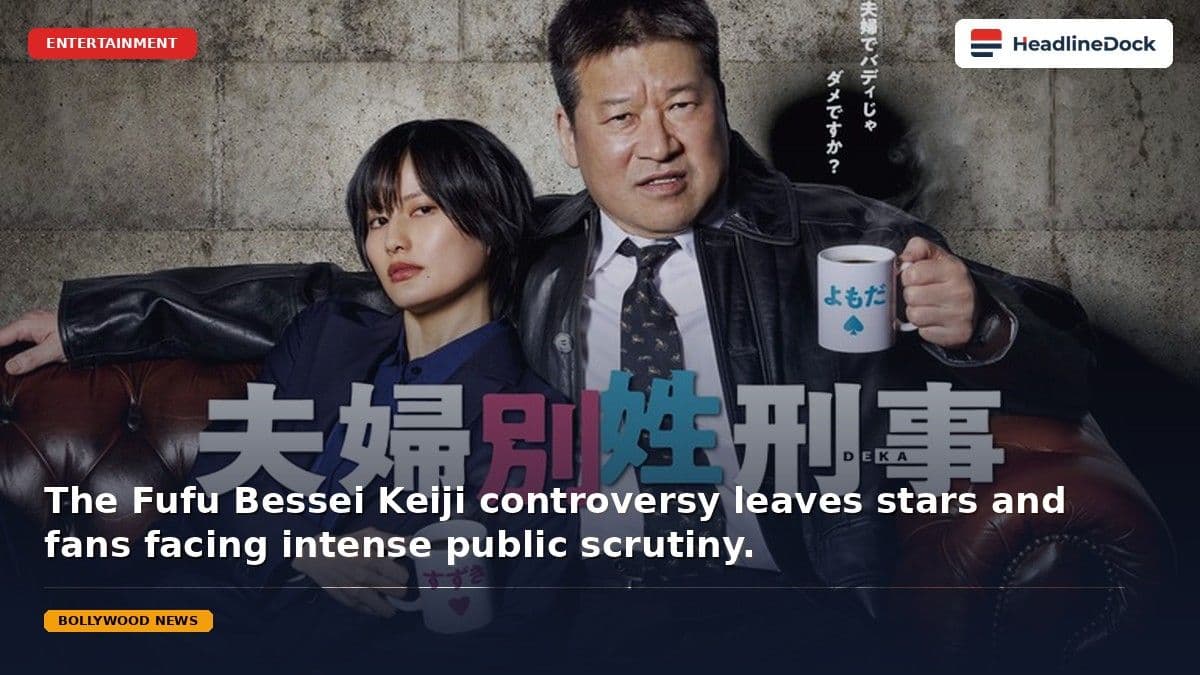
A controversy surrounding the drama Fufu Bessei Keiji has ignited public debate over on-set safety and production accountability. Allegations of harassment between leads Ai Hashimoto and Jiro Sato have resulted in legal threats and widespread social media criticism, drawing responses from prominent industry figures.
KEY TAKEAWAYS
1 MIN READ- Production of the 2026 drama Fufu Bessei Keiji sparked a harassment controversy involving leads Ai Hashimoto and Jiro Sato.
- Fuji Television confirmed it issued a warning to Sato, though his agency denies the harassment claims.
- Ai Hashimoto has been subjected to severe online abuse, leading her agency to pursue legal action.
- Screenwriter Akiko Nogi emphasized that production management, not the actors, bears responsibility for the communication failure.
The entertainment industry is grappling with the fallout of a controversy involving the 2026 drama "Fufu Bessei Keiji", produced by Fuji Television. Recent reports have shed light on an alleged harassment incident during the production, which featured actors Ai Hashimoto and Jiro Sato in lead roles. The situation intensified following a media exposé regarding the dynamics on set, prompting significant online backlash and public debate about responsibility in television production.
Allegations and Industry Response
According to reports, Jiro Sato was accused of harassment after touching Ai Hashimoto during a scene, which reportedly went against the actress's previously requested physical contact limitations. The production team had allegedly been informed of Hashimoto’s restrictions—stemming from past personal experiences—but this information was not effectively communicated to Sato before filming began. Following an investigation by an external law firm, Fuji Television acknowledged the incident and issued a formal warning to Sato.
However, the fallout has been severe. Ai Hashimoto has faced intense harassment and negative comments on her social media channels, leading to the closure of her comment sections. In response, her agency stated they are taking legal action against those responsible for the online abuse. Jiro Sato and his management have strongly contested the harassment allegations, arguing that the reports present a one-sided narrative and denying any inappropriate behavior. Sato has publicly expressed deep frustration, stating that he was unaware of the limitations and had considered stepping down from the production earlier.
Professional Commentary and Accountability
Prominent screenwriter Akiko Nogi, known for acclaimed dramas like "Nigeru wa Haji da ga Yaku ni Tatsu", weighed in on the situation on social media. She emphasized that actors often set boundaries for physical contact, and labeling such requests as unprofessional is misguided. Nogi argued that the responsibility lies primarily with the production side. She suggested that if a producer is aware of an actor's specific requirements yet fails to manage the working environment accordingly, the resulting conflict is a failure of leadership rather than the fault of the performers involved.
The incident has sparked a broader conversation regarding duty of care in Japanese media production. Observers noted that while Fuji Television confirmed it had taken steps to address the environment, the network has faced criticism for not being transparent about how the actress’s specific needs were handled. As the debate continues, the industry is left reflecting on how to improve communication and protect performers from both physical boundary violations and the subsequent social media vitriol that frequently follows such public controversies.