As Europe Rearms, AI-Powered 'Wingman' Aircraft Take Center Stage in Defense
As Europe intensifies its rearmament efforts, AI-powered wingman aircraft are emerging as vital force multipliers. Designed to fly alongside manned jets, these autonomous systems aim to enhance situational awareness and electronic warfare capabilities, with operational service expected by the end of the decade.
Highlights
- •European defense forces are rapidly developing AI-powered wingman drones to accompany manned fighter jets.
- •Industry leaders like Airbus, Boeing, and Helsing are spearheading the design of these collaborative combat aircraft.
- •The technology aims to provide enhanced situational awareness and electronic warfare capabilities during aerial operations.
- •Operational deployment for models like the Ghost Bat and Ravenstorm is currently projected for between 2029 and the 2030s.
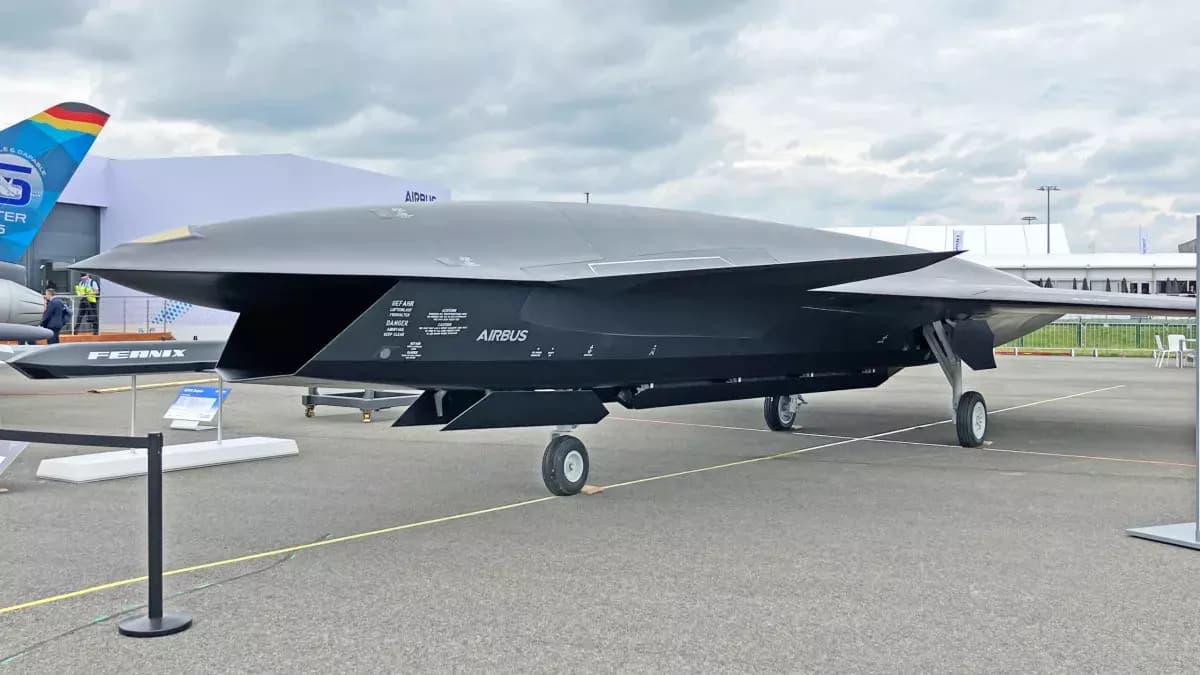
At the recent Berlin airshow, the emergence of the wingman aircraft—also identified as collaborative combat aircraft (CCA)—took center stage as a pivotal development in modern aerial warfare. As Europe moves toward rearmament, these AI-powered, unmanned systems are being designed to fly alongside manned fighter jets, serving as a critical force multiplier by carrying extra sensors, weapons, and electronic jamming capabilities.
The urgency to integrate these advanced wingman drones has been underscored by the ongoing conflict in Ukraine, which has demonstrated that electronic warfare and the ability to disrupt enemy communications are as vital as traditional kinetic strikes. In response, defense leaders are prioritizing technologies that can operate in autonomous swarms to provide situational awareness and tactical advantages.
Advanced Capabilities and Strategic Sovereignty
During the event in Berlin, major industry players including Airbus, Boeing, Helsing, and General Atomics showcased their latest designs for these systems. A central theme throughout the presentations was the necessity for sovereign control. Stephanie Lingemann, head of the air domain at the German defense startup Helsing, emphasized that the AI agent—the "brain" of these systems—must be managed securely to ensure technological independence from non-European sources.
While Germany and France have faced challenges with their joint fighter jet initiatives, they are actively attempting to salvage segments of the Future Combat Air System program by focusing on these related drone networks. Industry leaders argue that wingman aircraft, such as the Boeing MQ-28 Ghost Bat, are not merely drones but sophisticated platforms designed to fuse data and provide high-quality decision-making information back to human pilots in real-time.
Future Deployment and Industry Outlook
Although these technologies represent the next frontier in defense, wingman aircraft have yet to see active combat deployment. Current timelines suggest that operational capacity is still several years away. Boeing projects that its model could be ready for the German Luftwaffe by 2029, whereas Airbus anticipates that its U760b Ravenstorm will likely enter service in the 2030s. Meanwhile, the U.S. Air Force continues to fund prototype development, such as the General Atomics YFQ-42A, to accelerate these capabilities.
As the defense sector looks ahead, additional innovations are expected to be highlighted at major global events, including the upcoming Farnborough airshow in Britain. These platforms underscore a broader transition toward integrated, human-machine teaming in the European theater, reflecting a strategic shift in how military forces plan to achieve dominance in highly contested aerial environments.
,