US Defense Secretary Hegseth Initiates Review of Forces in Europe Amid NATO Tensions
US Defense Secretary Pete Hegseth has ordered a six-month review of American military forces in Europe, conditioning NATO financial contributions on allies meeting defense spending goals as the Pentagon shifts its strategic focus toward China.
Highlights
- •US Defense Secretary Pete Hegseth announces a six-month review of American troop presence in Europe.
- •Washington links its $790 million NATO contribution to member states meeting defense spending targets.
- •The Pentagon is reducing global assets available to NATO as it shifts strategic focus toward China.
- •Reports suggest potential cuts to fighter jets, submarines, and aircraft carrier groups currently designated for NATO.
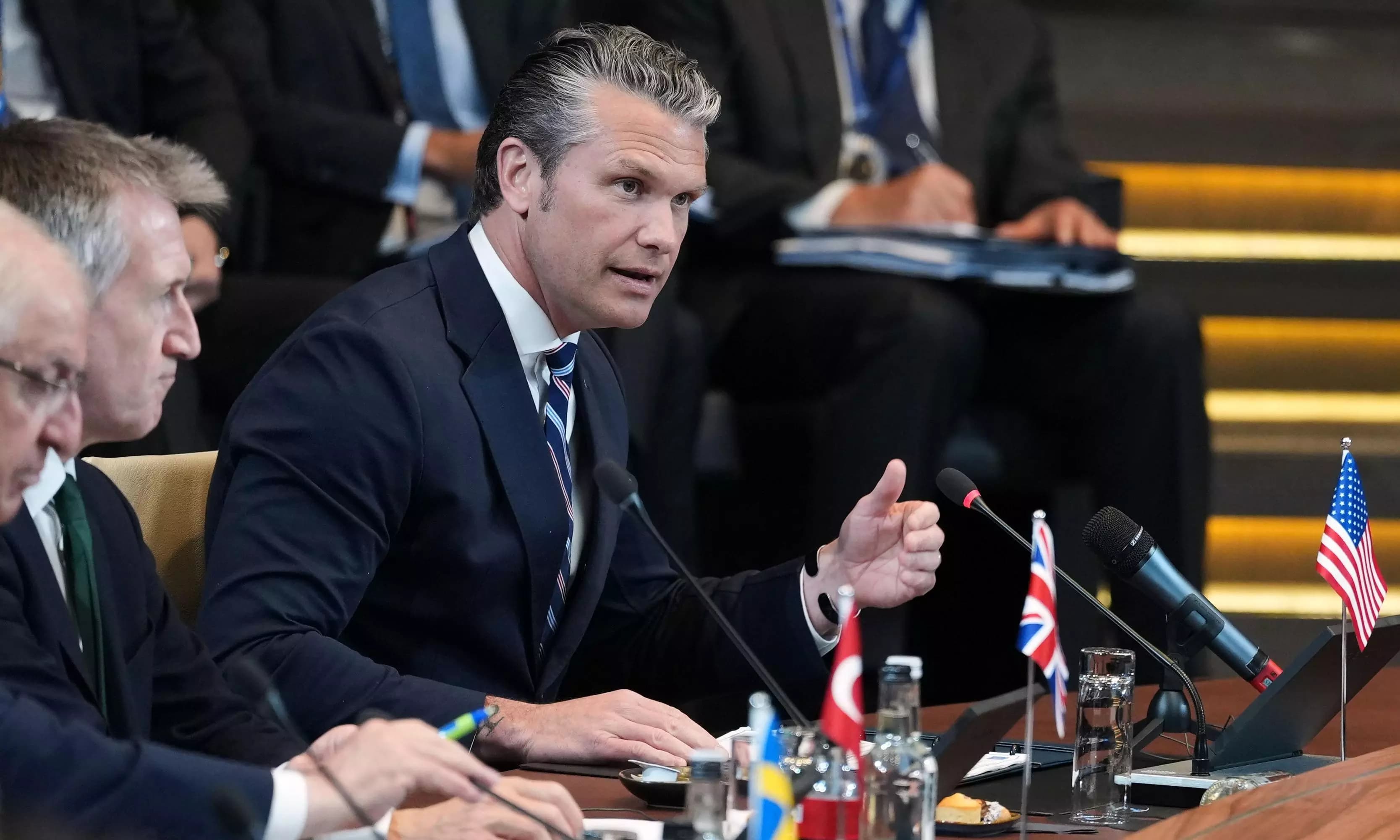
The United States has initiated a strategic shift in its military posture, with Defense Secretary Pete Hegseth announcing a comprehensive review of the American force presence in Europe. Speaking to NATO defense ministers in Brussels, the secretary outlined that the Pentagon's evaluation will take place over the next six months. This move highlights ongoing tensions regarding defense expenditure and alliance commitments, particularly following the recent Iran war.
Strategic Review and NATO Defense Spending
Secretary Hegseth emphasized that the review is intended to ensure that NATO allies accelerate their path toward taking primary responsibility for the continent's security. During the meeting, he pointedly stated that the evaluation would serve as a test for member nations, noting that some countries have failed to meet expectations, while others have performed well. A core concern for Washington is ensuring that United States logistical access—including basing and overflight rights—remains secured after certain European nations restricted these assets during the Iran war, a move Hegseth characterized as unacceptable.
The United States is exerting significant pressure on allies to fulfill pledges made last year to substantially increase defense spending. Hegseth confirmed that the contribution of approximately $790 million toward NATO organizational costs for 2026 would be directly linked to member states hitting their agreed-upon targets. He warned that if allies do not prioritize these financial commitments, Washington's own dues contributions would be reduced accordingly.
Shifting Military Focus and European Security
The American administration is increasingly focused on shifting its strategic attention toward China, leading to expectations that European NATO members must bolster their own conventional defense capabilities. As part of this transition, the Pentagon has already notified partners that it is reducing the number of global assets allocated for NATO operations. Reports indicate these potential cuts involve a significant portion of designated fighter jets, including F-16s and F-15s, as well as reconnaissance aircraft, bombers, drones, a cruise-missile-capable submarine, and an aircraft carrier group.
NATO Secretary General Mark Rutte described the review as a prudent measure to maintain pressure on member nations. While acknowledging the fear of vulnerability, Rutte insisted that the United States would still fulfill its security obligations in the event of an attack. However, concerns remain among allies. German Defense Minister Boris Pistorius noted that while many defense capabilities could eventually be compensated for, the immediate withdrawal of such assets creates significant security challenges, as Europe requires more time to develop the necessary domestic capabilities to offset the reduction in American support.