Spain Achieves Robust Economic Growth While Outperforming South Korea in New GDP Milestone

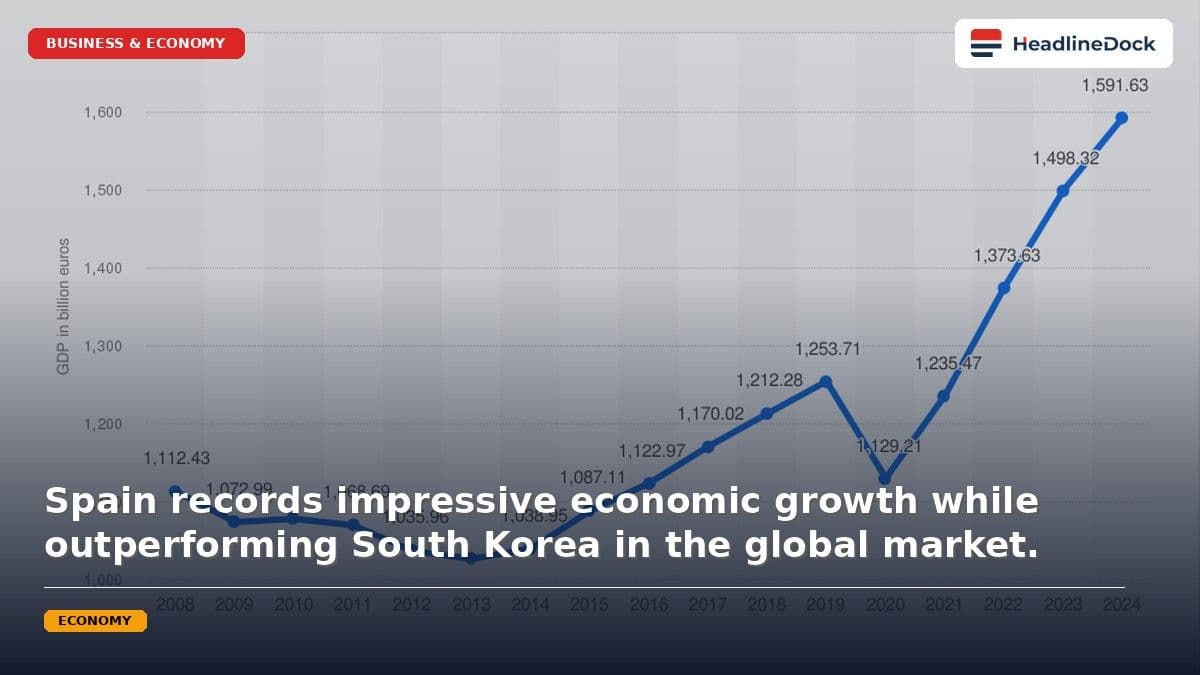
Spain has achieved significant economic growth, surpassing South Korea in GDP, without relying on artificial intelligence. While the current performance is robust and independent of real estate bubbles, analysts warn that long-term sustainability will depend on addressing crucial productivity and investment challenges.
KEY TAKEAWAYS
1 MIN READ- Spain's GDP has recently surpassed that of South Korea in current dollar figures.
- The country is experiencing strong economic growth without significant reliance on AI sectors.
- Unlike past recoveries, the current momentum is not driven by a real estate bubble.
- Future sustainability depends heavily on long-term improvements in industrial and labor productivity.
Spain is currently navigating a distinct phase within the global economy, characterized by robust growth and historically low unemployment rates. Unlike many other European nations, the country has achieved this significant economic expansion without relying on artificial intelligence or other high-tech sectors to drive its momentum. In fact, the nation's annual GDP has now surpassed that of South Korea in current dollar terms, marking a notable milestone for the domestic market.
This economic resurgence is particularly noteworthy as it does not stem from a real estate bubble, which has historically been a source of volatility for the region. Instead, the current growth reflects a broader stabilization in the labor market and population demographics. The resilience of the Spanish economy has captured the attention of financial observers who are seeking successful growth models in a fragmented continental landscape.
Future Challenges and Productivity Trends
Despite the positive indicators, analysts warn that the current model is beginning to show signs of underlying tension. While the lack of an AI-driven boom has not hindered progress so far, experts emphasize that sustainable expansion will eventually require a more structural approach. The central question for policymakers and investors is whether the country can maintain this trajectory if housing markets, capital investment, and labor productivity fail to align with the ongoing population and employment growth.
Moving forward, the primary focus for stakeholders will be on long-term productivity improvements. The economic evolution of Spain suggests that while current performance is impressive, the next phase of growth will likely depend on how effectively the nation integrates investment and innovation into its existing framework. Keeping a close watch on these shifting economy trends remains essential for anyone evaluating the future of European financial health.
Ultimately, the challenge lies in balancing current successes with the necessity of future-proofing the economy. As the global financial climate continues to evolve, the resilience of the nation will be tested not just by job creation, but by the ability to foster genuine advancements in productivity across all industrial sectors.