Rahm Emanuel to Deliver Blistering Critique of Netanyahu in Tel Aviv Speech

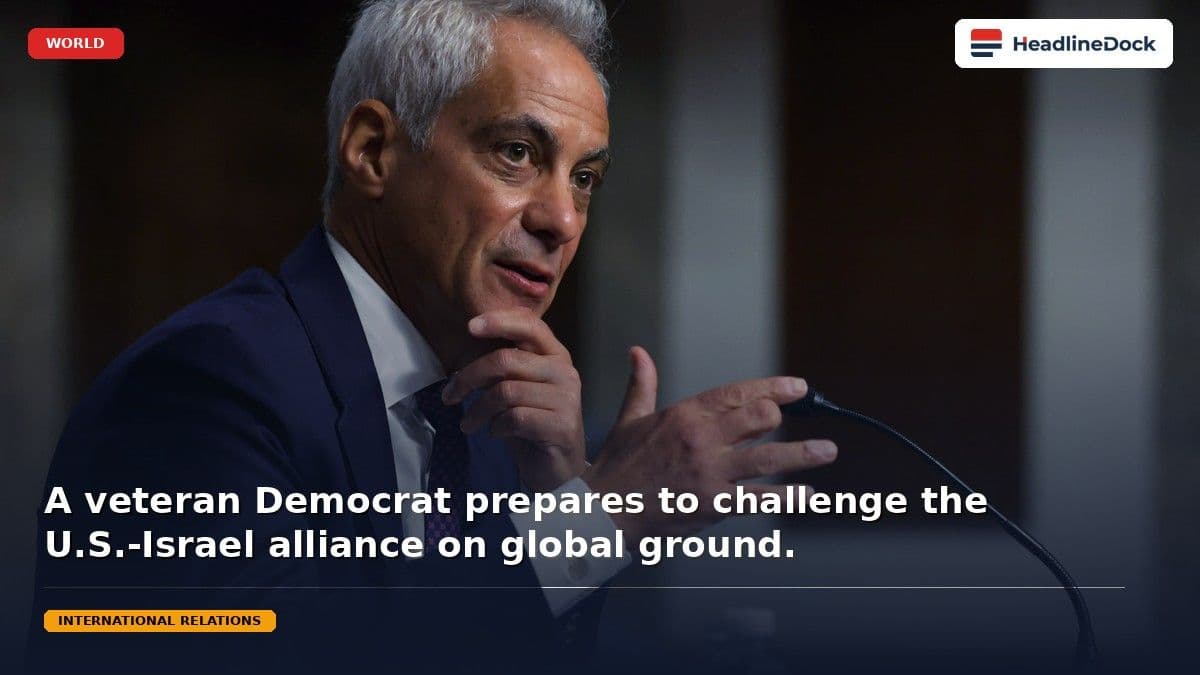
Rahm Emanuel is set to deliver a critical speech in Tel Aviv, arguing that the era of unconditional U.S. support for Israel must end. He proposes significant policy changes, including defense budget reforms and sanctions, reflecting a major shift in Democratic Party foreign policy.
KEY TAKEAWAYS
1 MIN READ- Rahm Emanuel to deliver a stinging critique of Benjamin Netanyahu at Tel Aviv University.
- The address calls for an end to unconditional U.S. support and military subsidies for Israel.
- Proposals include potential sanctions on entities supporting settlements and a shift toward a broader regional peace framework.
- Democratic opinion shows a clear downward trend in support for current Israeli government policies.
In a significant shift for U.S. foreign policy, Rahm Emanuel is set to deliver a bracing address at Tel Aviv University. The former White House Chief of Staff, long considered a stalwart of the Democratic Party’s centrist wing, plans to explicitly challenge the current leadership of Prime Minister Benjamin Netanyahu. This high-profile appearance marks a pivotal moment, as Rahm Emanuel's Tel Aviv speech is expected to signal that the historic era of unconditional American support for the Israeli government may be reaching its end.
Redefining the U.S.-Israel Relationship
The core of the upcoming address focuses on the premise that the alliance between the two nations is at a critical crossroads. Rahm Emanuel intends to argue that the previous approach of blind, silent support has failed to hold leadership accountable, effectively enabling policies that damage long-term regional stability. He plans to propose concrete measures, including potential sanctions against those involved in attacks on Palestinian civilians and property, as well as firms supporting settlements deemed illegal by international standards. Furthermore, he will advocate for ending U.S. subsidies for Israel’s defense budget, suggesting that Israel should purchase American weaponry under the same standard terms as other trusted global allies.
The timing of this commentary is notable as American political sentiment shifts. Recent data indicates that approximately 58% of Democrats now believe the U.S. is overly supportive of the Israeli government. By highlighting that Israel faces increasing international isolation—ranging from the loss of European support to the exclusion of its scientists and academics from global research networks—the speech attempts to reframe the debate for a new generation of American voters. Rahm Emanuel is also expected to pivot away from the traditional two-state solution framework, advocating instead for a broader regional approach involving the Arab League members to establish a sustainable governance authority for the future.
Political Implications and Reactions
This assertive stance places Rahm Emanuel, who possesses his own history of political ambition, in a unique position to influence the trajectory of future Democratic policy. The address is likely to provoke a strong reaction from Benjamin Netanyahu, who is navigating a difficult reelection campaign in October. The Prime Minister may attempt to leverage this public rebuke as a tool for political mobilization, framing himself as a defender of national interest against external pressure. As both major U.S. parties grapple with internal divisions regarding the conflict in Gaza, this speech serves as a strategic marker for how future leadership might approach one of the most complex alliances in modern foreign affairs.