Kakinada Selected as Andhra Pradesh's First Official Street Food Hub Project
The Union Ministry of Housing and Urban Affairs has selected Kakinada as the first city in Andhra Pradesh to launch a model Street Food Hub. Backed by Rs 4 crore in funding, the project aims to formalize vending and ensure high food safety standards.
Highlights
- •Kakinada is the first city in Andhra Pradesh selected for the central Street Food Hub project.
- •The project will receive Rs 4 crore in funding to establish 50 hygienic food stalls along Wharf Road.
- •A 10-member committee will regulate the hub and select vendors based on national guidelines.
- •The hub supports the PM SVANidhi Scheme and aims to promote safe, high-quality street food.
The city of Kakinada has officially been selected to host a new Street Food Hub, marking it as the first location in Andhra Pradesh to implement this significant urban development initiative. The project, which is supported by the Union Ministry of Housing and Urban Affairs, aims to centralize street food vending while ensuring high standards of hygiene and quality for both residents and visitors.
During a recent high-level video conference, ministry officials confirmed the selection of Kakinada among several other cities across the country, including Puri, Manali, Tangmarg, Nathdwara, and Indore. The central government has allocated a budget of Rs 4 crore to facilitate the establishment of this organized food zone.
Transforming Kakinada into a Modern Street Food Hub
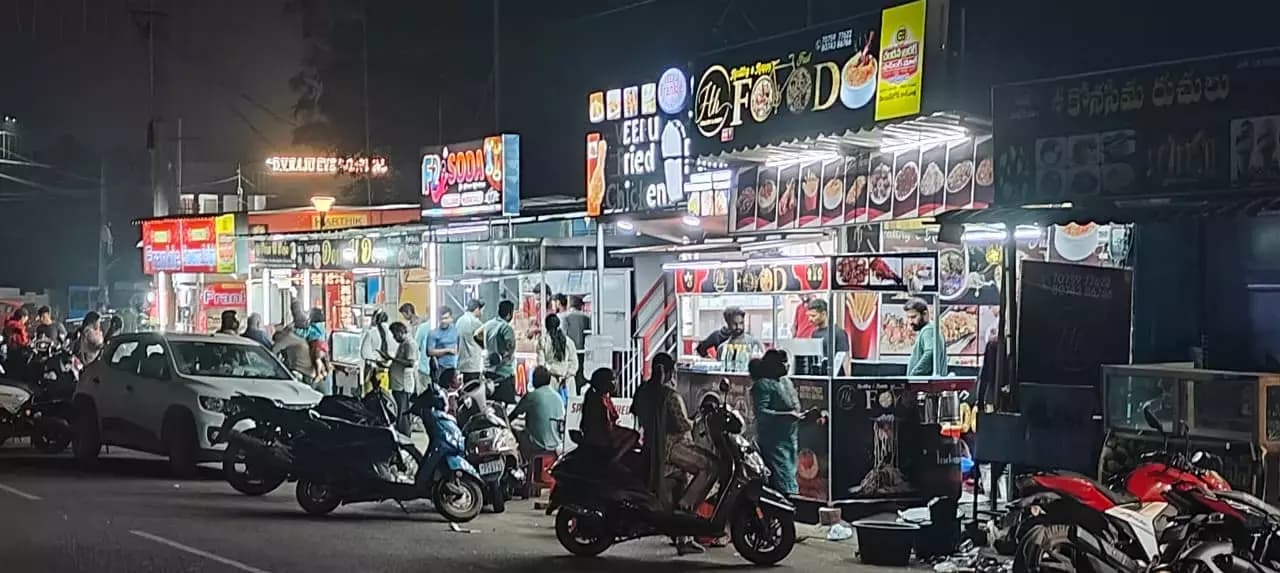
The proposed Street Food Hub will be situated along Wharf Road, conveniently located beside the canal. Plans include the construction of 50 specialized stalls designed to offer a variety of vegetarian and non-vegetarian dishes, with a particular focus on highlighting local marine cuisine. This initiative is expected to provide a substantial boost to the local economy by creating sustainable livelihood opportunities for street food vendors.
Kakinada Municipal Corporation (KMC) commissioner NVV Satyanarayana emphasized that this project aligns with broader government efforts to enhance urban infrastructure and public accessibility to safe food. The development of the hub will also incorporate support measures for beneficiaries of the PM SVANidhi Scheme, ensuring that traditional vendors are integrated into a modern, regulated environment.
To oversee the implementation of the project, a 10-member committee comprising representatives from the Food Safety and Standards Authority of India (FSSAI), the Pollution Control Board (PCB), and municipal officials will be established. This committee will be tasked with formulating comprehensive rules and guidelines in accordance with federal directives. Furthermore, they will oversee the selection process for the 50 vendors who will operate within the facility.
The KMC is currently finalizing a detailed project report to be submitted to the central authorities for final approval. Once the project receives the green light, officials expect construction and implementation to be completed within one year. By transforming existing informal food markets, such as the area near PR College Road, into a structured and model Street Food Hub, the city aims to set a national benchmark for urban food management and tourism-friendly infrastructure.