Investigation Links Recent Fish Mortality to Trichodesmium Algal Bloom in Andhra Pradesh
A major fish mortality event in the Anakapalli district of Andhra Pradesh has been attributed to a combination of a Trichodesmium algal bloom and severe oxygen depletion. While fishermen suspect industrial pollution, experts suggest environmental factors primarily triggered the lethal conditions.
Highlights
- •An investigation at the Boyapadu Fish Landing Centre links mass fish deaths to a Trichodesmium algal bloom.
- •Approximately 11 metric tonnes of biomass were lost, primarily affecting the sensitive Leiognathus species.
- •Oxygen levels in the water fell below healthy thresholds, exacerbated by the decay of the algal bloom.
- •Local fishermen suspect industrial wastewater from nearby drug manufacturing plants may have worsened the impact.
A recent investigation has shed light on a concerning fish mortality event at the Boyapadu Fish Landing Centre in Nakkapalli, located within the Anakapalli district. Environmental experts have linked this mass death of marine life to a Trichodesmium algal bloom combined with critical oxygen depletion in the local waters.
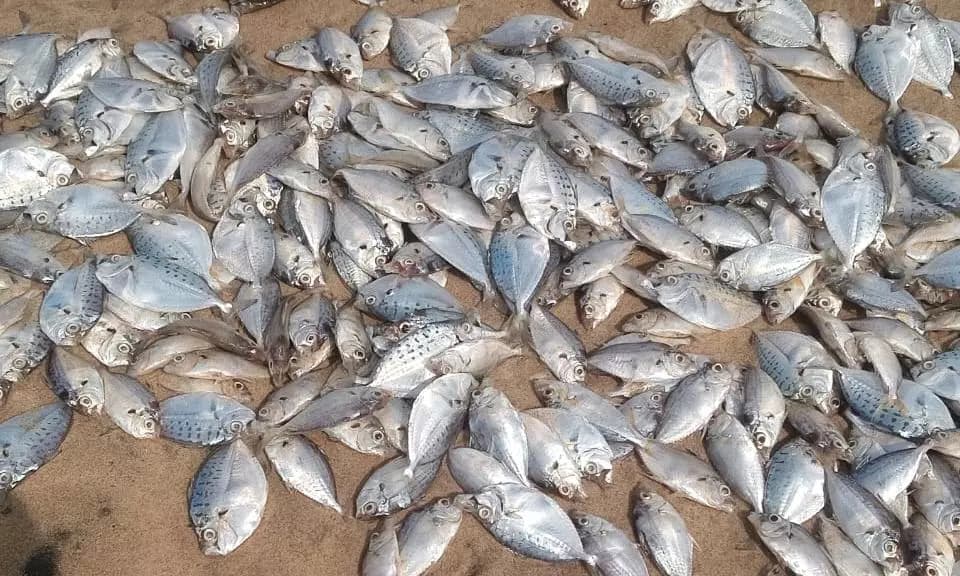
The Central Marine Fisheries Research Institute (CMFRI), specifically its Visakhapatnam Regional Centre, spearheaded the preliminary analysis of the site. Their findings indicate that approximately 94 percent of the deceased marine life consisted of the Leiognathus genus, commonly known as pony fish. This specific species is notably vulnerable to environments where dissolved oxygen levels fall below sustainable limits.
Understanding the Causes of Mass Fish Mortality
The environmental impact was significant, as fish carcasses were discovered scattered across a 1.5-kilometer stretch of the shoreline. Current estimates suggest that the total biomass loss has surpassed 11 metric tonnes. Detailed laboratory assessments identified a dense concentration of Trichodesmium, a type of cyanobacterium, reaching levels of up to 380 cells per millilitre. These organisms are known to consume available oxygen rapidly, often leading to hypoxic conditions that trigger mass fish mortality.
The water quality analysis revealed that dissolved oxygen levels fluctuated between 3.28 and 4.38 mg/L, which is insufficient for maintaining a healthy marine ecosystem. Researchers pointed out that a combination of factors, including intermittent rainfall and sudden temperature fluctuations, likely served as the catalyst for the bloom. As the bloom decayed, it further accelerated the oxygen depletion process, creating a lethal habitat for bottom-dwelling and nearshore species. Physical examination of the fish showed signs of severe respiratory distress, characterized by open mouths, though there were no indications of disease or bacterial lesions.
In response to the tragedy, local fishermen have raised concerns regarding the potential role of industrial activities. Specifically, they have pointed toward nearby bulk drug manufacturing units, alleging that wastewater discharge could have played a part in the ecological disaster. They suggested that offshore disposal pipelines might have inadvertently driven fish schools into hazardous, polluted waters.
While the CMFRI team noted that current evidence does not definitively confirm that industrial effluents caused this specific event, they emphasized that such possibilities cannot be entirely disregarded without ongoing research. To gain a clearer understanding of such incidents, the experts have recommended conducting comprehensive, long-term monitoring. This would include detailed studies focusing on water quality, toxicological profiles, and the dynamics of phytoplankton growth to prevent future occurrences of fish mortality in the region.