India Challenges Outdated UN Mediation Frameworks, Reaffirms Jammu and Kashmir Sovereignty
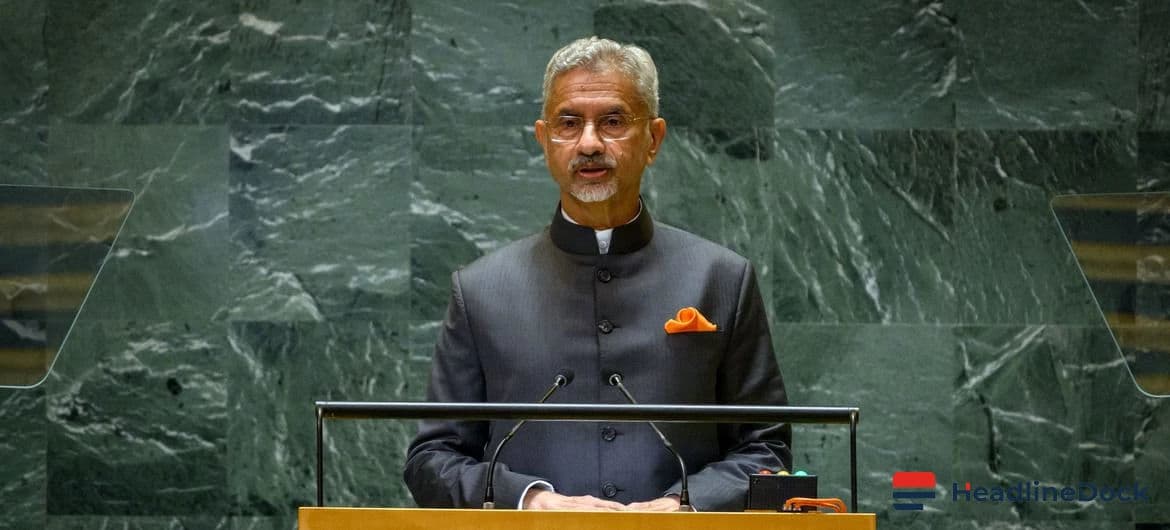
India's Permanent Representative to the UN, Harish Parvathaneni, has called for a review of outdated mediation frameworks under the UN Charter. During a session on Security Council resolutions, he firmly asserted that Jammu and Kashmir remains an internal matter for India, rejecting attempts to politicize the forum.
Highlights
- •India's UN envoy called for a formal review of outdated Chapter VI mediation frameworks.
- •Ambassador Harish Parvathaneni distinguished between the purposes of Chapter VI and Chapter VII of the UN Charter.
- •India reaffirmed that Jammu and Kashmir is strictly an internal matter, rejecting external political commentary.
- •India proposed that Security Council mandates should undergo the same scrutiny as UN General Assembly mandates under the UN80 framework.
At a recent UN Security Council (UNSC) meeting, India addressed the need for modernizing international mediation mechanisms, firmly reiterating that Jammu and Kashmir remains an internal matter. India's Permanent Representative to the United Nations, Harish Parvathaneni, emphasized that outdated frameworks under Chapter VI of the UN Charter require urgent review to remain relevant in today's geopolitical landscape.
During an Arria-formula meeting focused on the implementation of Security Council resolutions, Harish Parvathaneni highlighted the fundamental differences between Chapter VI and Chapter VII of the UN Charter. He noted that while Chapter VII is designed to initiate decisive actions against threats to international peace and acts of aggression, Chapter VI is intended to provide a broader array of mechanisms for settling disputes, such as mediation and arbitration.
India Calls for UN Framework Review
India’s envoy argued that these intervention frameworks were originally developed to address specific, prevailing realities and were never intended to remain valid indefinitely. Citing the long-standing issue of Palestine as a pertinent example, Harish Parvathaneni pointed out that mediation frameworks have historically evolved alongside changing circumstances. He asserted that the assumption of the perpetual applicability of any Chapter VI intervention is inherently erroneous.
The discussion also touched upon the broader UN80 framework, with India suggesting that if member states are conducting a review of General Assembly mandates to enhance efficiency, the Security Council's mandates should undergo similar scrutiny. This push for reform aims to ensure that international bodies remain functional and effective rather than relying on obsolete protocols that no longer serve their intended purpose.
Addressing remarks made by the representative of Pakistan during the forum, Harish Parvathaneni criticized the move as an attempt to politicize the discussion. He took the opportunity to firmly restate India's consistent position regarding regional sovereignty. He declared, “The Union Territory of Jammu and Kashmir is a matter strictly internal to India. It always has been, is, and will remain so.”
This firm stance underscores India's commitment to maintaining its sovereign rights while simultaneously advocating for a more streamlined and rationalized approach to global diplomacy. By calling for a comprehensive review of these UN frameworks, India seeks to ensure that multilateral processes reflect current global realities and contribute meaningfully to the maintenance of international peace and security without interference in domestic affairs.