Ladakh Shutdown Intensifies as LAB-KDA Demand Constitutional Safeguards and Local Control
Ladakh observed a widespread shutdown led by the LAB and KDA to protest administrative policies and demand constitutional safeguards. The movement highlights a growing trust deficit regarding governance and the need for greater local representation in the strategically important Himalayan region.
Highlights
- •The Leh Apex Body (LAB) and Kargil Democratic Alliance (KDA) led a region-wide shutdown in Ladakh.
- •Protesters oppose recent administrative decisions, including land record digitization and the new excise policy.
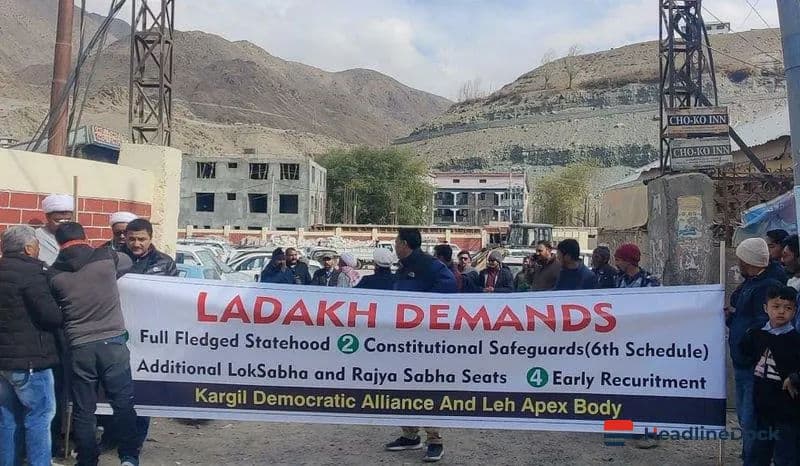
- •Leaders demand statehood, Sixth Schedule constitutional safeguards, and meaningful democratic representation for the region.
- •Dissatisfaction stems from perceived discrepancies in the official minutes of a May 22 Ministry of Home Affairs meeting.
On Tuesday, the region of Ladakh observed a widespread, daylong shutdown as local communities voiced their deepening frustration with the central government. This significant Ladakh shutdown was organized by the Leh Apex Body (LAB) and the Kargil Democratic Alliance (KDA) to protest ongoing delays in addressing key administrative, political, and constitutional concerns.
Daily life in the major urban centers of Leh and Kargil was notably impacted, with business establishments, marketplaces, and private institutions opting to remain closed in solidarity with the protest. A substantial public demonstration also took place in Leh, where local residents and representative leaders gathered to formally voice their opposition to several recent directives issued by the Union Territory administration. These grievances specifically include the newly implemented excise policy, the ongoing process of digitizing land records, and concerns regarding the potential privatization of the Power Department.
Demands for Governance and Constitutional Protection
The core of the Ladakh shutdown centers on a broader struggle for democratic representation and institutional safeguards. Protesters argue that critical decisions shaping the future of the Himalayan region are being executed without meaningful consultation with local stakeholders, civil society members, or elected representatives. The LAB and KDA are united in their ongoing campaign, which calls for statehood for Ladakh, constitutional protections under the Sixth Schedule, and enhanced local control over employment and land rights.
Tensions have been further exacerbated by the dissatisfaction surrounding the official minutes of a May 22 meeting held in New Delhi with the Ministry of Home Affairs. Leaders from the LAB and KDA assert that significant understandings regarding a proposed democratic legislative and financial structure for the region were omitted from the official record. Chering Dorjay Lakruk, co-chairman of the Leh Apex Body, has called upon the government to rectify these records to accurately reflect the discussions, warning that the leadership is prepared to escalate protests if their concerns remain unaddressed.
Sajjad Kargili, a prominent leader of the KDA, emphasized that the regional protest reflects a profound trust deficit. The movement seeks to ensure that critical aspects of the region’s future—ranging from environmental sustainability and cultural identity to administrative accountability—are managed with the direct participation and consent of the local population. While the shutdown remained largely peaceful, with transport services continuing to facilitate movement for tourists, the widespread participation highlighted the community's firm resolve in seeking substantial political and constitutional reforms.