Centre-State Education Partnership for Viksit Bharat 2047 Goals
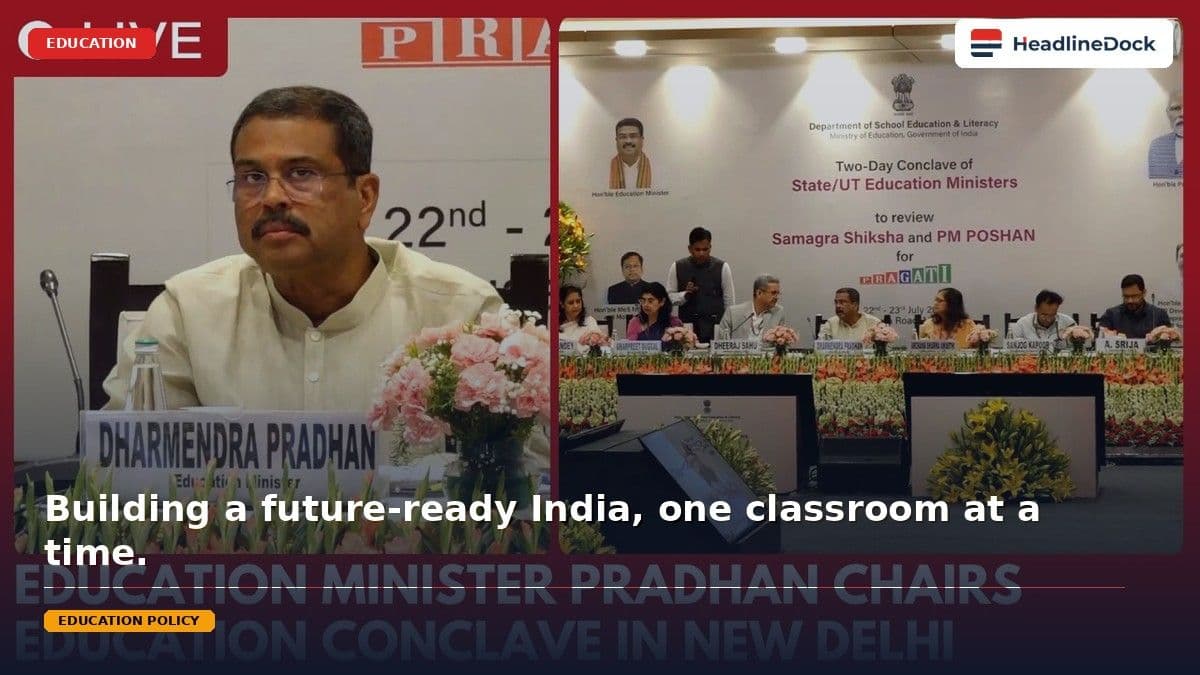
Union Education Minister Dharmendra Pradhan led a two-day Conclave with state leaders in New Delhi to align school education with the National Education Policy 2020. The initiative aims to achieve Viksit Bharat 2047 goals through collaborative governance, AI integration, and a focus on mother-tongue instruction for better learning.
Read it in Short
QUICK OVERVIEW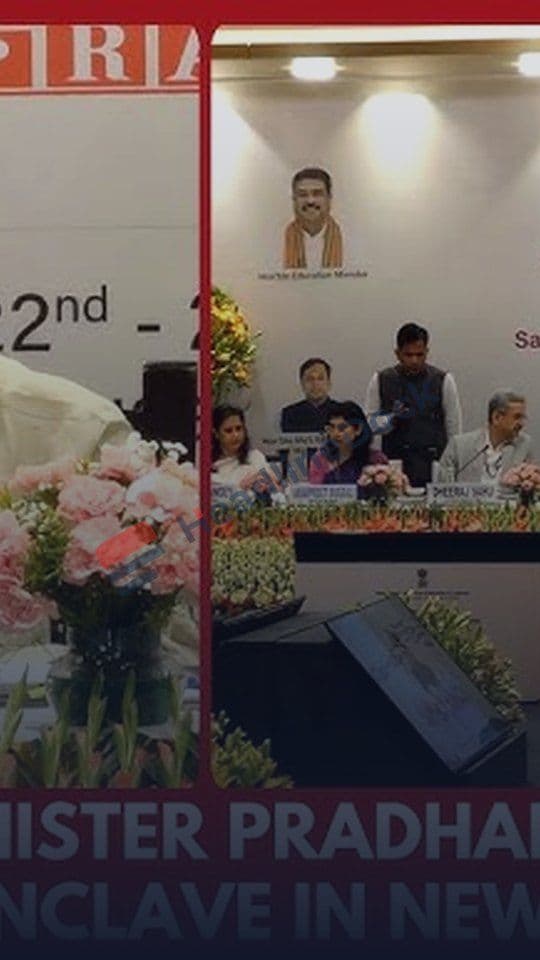
Union Education Minister Dharmendra Pradhan chaired a two-day Conclave with State and UT leaders to align regional school systems with NEP 2020.
The initiative marks a shift from top-down mandates to an 'Equal Partnership' model for executing Centrally Sponsored Schemes.

Key focus areas include foundational literacy, integration of AI in classrooms, and instructional delivery in children's mother tongues.
Success is defined by concrete student learning outcomes and quality of opportunity rather than mere enrollment statistics.
Centre-State Education Partnership for Viksit Bharat 2047
The vision of "Viksit Bharat 2047"—a developed India by the centenary of its independence—is more than an economic roadmap; it is a pedagogical challenge. To reach this milestone, the nation must transform its educational infrastructure into a high-performance engine of human development. The path to a developed nation begins not in federal boardrooms, but in the foundational learning of every child across India’s diverse states.
On July 22 and 23, 2026, a pivotal shift in this journey occurred in New Delhi. Union Minister for Education Shri Dharmendra Pradhan chaired a two-day Conclave of State and Union Territory (UT) Education Ministers, marking a strategic recalibration of how India governs its schools. This was a high-level synchronization of the National Education Policy (NEP) 2020 with the ground-level execution realities of every state, aiming to ensure that the promise of a future-ready India is realized in every classroom.
From Top-Down Mandates to Collaborative Co-Creation
Historically, Centrally Sponsored Schemes (CSS) were often viewed through a lens of federal disbursement. However, the 2026 Conclave signaled a transition toward "Equal Partnership." By bringing state leadership to the table, the Ministry of Education is decentralizing the ownership of learning outcomes. This collaborative framework ensures that national objectives—such as the modernization of schools through the PM SHRI (Prime Minister Schools for Rising India) initiative—are not just implemented, but adapted to local cultural and linguistic contexts.
This shift is underscored by a commitment to accountability. As emphasized by Minister of State for Education and Skill Development Shri Jayant Chaudhary, the goal is to bridge systemic gaps that have previously hindered student performance. By working as equal partners, the Centre and States are moving away from passive administration and toward a dynamic governance model where success is measured by the actual proficiency of the student rather than simply by school enrollment statistics.
Comparison: The Evolution of Education Governance
| Feature | Traditional Approach | Collaborative Partnership (2026) |
|---|---|---|
| Governance | Centre-led mandates | Equal partner co-creation |
| Technology | Secondary addition | Integrated classroom AI/Digital |
| Language | English/Hindi bias | Mother tongue & Multilingual focus |
| Metric | School enrollment counts | Learning outcomes & proficiency |
Modernizing the Classroom: Tech, Language, and Literacy
The current framework targets four distinct pillars to catalyze the nation’s human capital. First, foundational literacy and numeracy remain the bedrock, championed by the NIPUN Bharat initiative. Second, there is an aggressive push to integrate Artificial Intelligence and digital tools into the curriculum, effectively narrowing the rural-urban divide in access to information.
Third, the policy places a heavy emphasis on language pedagogy. By advocating for instruction in a child's mother tongue, the ministry aims to improve cognitive development and concept retention. This is paired with a broader push for multilingualism, ensuring students remain competitive on a global stage while staying rooted in their cultural identity. Finally, the integration of schemes like Samagra Shiksha and ULLAS ensures that the focus remains holistic, covering the entire spectrum from basic schooling to lifelong learning.
Navigating Implementation Challenges
Transitioning to this new model is not without its hurdles. Integrating advanced AI tools into classrooms requires significant infrastructure and teacher training. Similarly, the shift toward mother-tongue instruction necessitates a comprehensive overhaul of teaching materials in regional languages.
How to Navigate These Challenges:
- Localized Resource Scaling: States are encouraged to leverage the PRAGATI (Pro-Active Governance And Timely Implementation) framework to identify bottlenecks in real-time. If a district struggles with digital adoption, the collaborative model allows for the immediate scaling of pilot programs that have succeeded in peer districts.
- Continuous Pedagogical Training: To solve the "instructional lag" during the shift to mother-tongue-based learning, states are focusing on massive capacity-building programs for educators, moving them from rote-learning methods to inquiry-based, multilingual teaching strategies.
- Alignment with National Frameworks: Rather than viewing national guidelines as rigid, administrators should treat them as a "menu of possibilities," selecting the tools within the Samagra Shiksha ecosystem that best fit their unique regional demographics.
Ultimately, the success of this partnership will be defined by the quality of opportunity provided to the next generation. As Shri Dharmendra Pradhan noted, collective success is measured by the actual learning outcomes achieved. By aligning state policies with the national vision for 2047, India is positioning itself to convert its demographic dividend into a competitive global advantage.
Frequently Asked Questions
What is the primary objective of the Education Conclave?
The Conclave aims to align state-level school education policies with NEP 2020 and strengthen the implementation of Centrally Sponsored Schemes to meet the developmental goals of Viksit Bharat 2047.
What role do state governments play in this educational vision?
States act as equal partners in governance, responsible for implementing national initiatives at the local level and ensuring that learning outcomes are met for every student.
Are there specific technological shifts planned for the classrooms?
Yes, the Ministry is actively promoting the integration of Artificial Intelligence, modern educational technology, and digital learning tools to modernize classrooms across the country.
How will the success of this partnership be measured?
Success is measured through actual student learning outcomes and the equality of opportunity provided to every child, shifting focus from enrollment counts to real proficiency.