Birthright Citizenship in Focus as US Debate Meets Mexican Policy Reality
The ongoing US debate over birthright citizenship highlights contrasting policies in Mexico, where automatic citizenship offers stability to migrant families. As the US Supreme Court prepares to rule on the issue, the experiences of families in Tijuana underscore the policy's impact.
Highlights
- •Birthright citizenship policies in Mexico provide automatic status to children born within its borders.
- •The U.S. Supreme Court is set to review the constitutionality of the current administration's restrictions on birthright citizenship.
- •About three dozen countries, primarily in the Americas, currently maintain automatic birthright citizenship laws for those born on their territory.
- •Granting citizenship to children of non-citizens has provided pathways to permanent residency for many migrant families living in Tijuana.
As the debate surrounding birthright citizenship intensifies in the United States, the policies of neighboring nations like Mexico have come under renewed scrutiny. For families living near the border, such as Vivianne Petit Frere, who operates a Haitian restaurant called Lakou Lakay in Tijuana, these legal frameworks have profound personal implications. Her granddaughter, born in Mexico two years ago, holds automatic citizenship, offering a layer of stability and opportunity that contrasts sharply with the ongoing political uncertainty across the border.
The Global Landscape of Birthright Citizenship
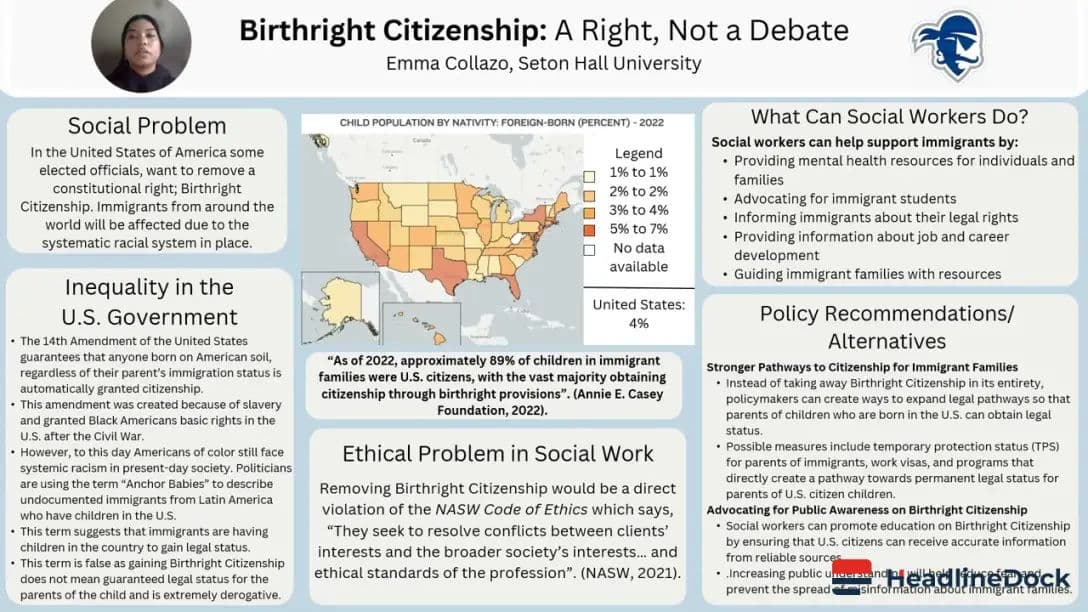
While President Donald Trump has frequently argued that the United States is uniquely positioned in its approach to birthright citizenship, international data suggests otherwise. Approximately three dozen countries, predominantly within the Americas—including Canada, Brazil, Argentina, and Mexico—guarantee automatic citizenship to children born within their borders. This practice, often rooted in historical colonial policies, remains a standard constitutional feature in many nations.
The U.S. Supreme Court is expected to address the constitutionality of the administration’s executive order on birthright citizenship, which was signed on January 20, 2025. This move marked a significant development in the broader immigration crackdown initiated during the current term. As legal experts point out, this constitutional right has been a cornerstone of U.S. law since the adoption of the 14th Amendment following the Civil War.
Implications for Migrant Communities
For individuals like Petit Frere, who migrated from Haiti in 2019, the ability to secure legal status for her family through her granddaughter’s citizenship has been transformative. Mexico allows the parents of children born on its soil to apply for permanent residency, a pathway that has provided security to many in the Haitian migrant community in Tijuana. For these families, a Mexican passport serves as a vital tool, simplifying travel and expanding future prospects in a way that their original national documents cannot.
Conversely, the situation in the Dominican Republic serves as a stark warning about the potential consequences of rescinding such rights. A 2007 ruling, later applied retroactively, left an estimated 130,000 individuals stateless, highlighting the long-term vulnerability created when birthright protections are stripped. As Petit Frere continues her work as a community organizer with the Haitian Bridge Alliance, she emphasizes that children of migrants remain a vital, thriving part of the community. She continues to advocate for the rights of these families while pursuing her own path toward Mexican citizenship, illustrating the deep ties being formed in her adopted home.