Telangana Cabinet to Review Fee Reimbursement and Musi Project on July 2
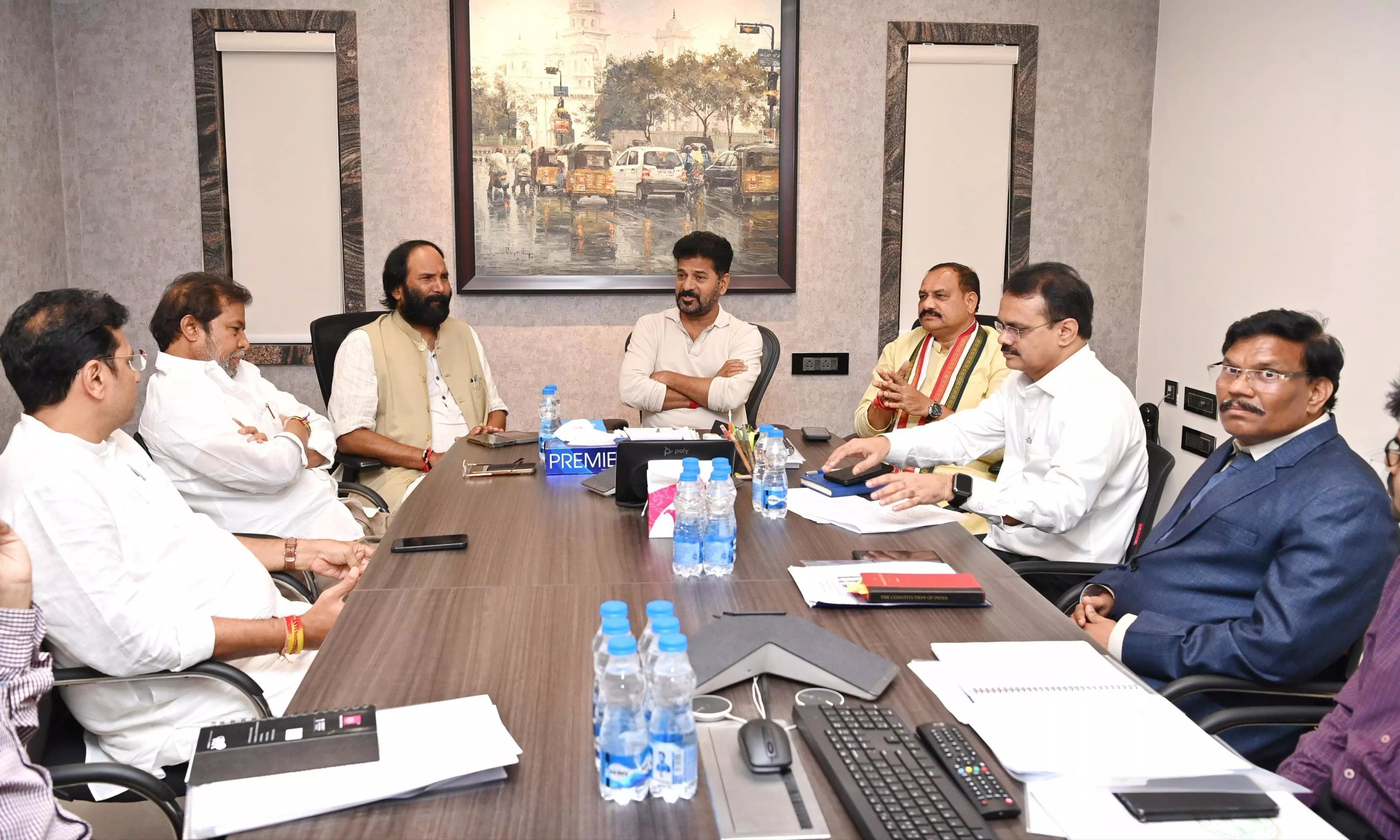
Chief Minister A. Revanth Reddy has convened a Cabinet meeting for July 2 to resolve the contentious fee reimbursement policy amid legal challenges, discuss the Musi River rejuvenation project, and determine the state's strategy regarding the new federal rural employment programme.
Highlights
- •Chief Minister A. Revanth Reddy will chair a cabinet meeting on July 2 regarding fee reimbursement policy.
- •The state is reviewing the Direct Benefit Transfer (DBT) model for student fees following a High Court stay on GO 9.
- •The Cabinet will approve the Detailed Project Report for the 20-kilometre Musi River rejuvenation project.
- •Officials will decide the state's stance on adopting the Centre's new VB-G RAM G rural employment scheme.
Chief Minister A. Revanth Reddy has officially scheduled a high-level Cabinet meeting for July 2 to address several critical governance issues. At the forefront of this agenda is the finalization of the state’s fee reimbursement policy, a matter that has recently faced significant legal scrutiny and administrative challenges.
The upcoming meeting will involve rigorous deliberation on the state's approach to student financial support. This follows the issuance of GO 9 on June 6, which sought to transition the traditional fee reimbursement system into a Direct Benefit Transfer (DBT) model starting from the 2026-27 academic year. Under this proposed change, funds would be deposited directly into students' bank accounts, moving away from the established practice of paying institutions directly, which has been in place since 2008.
Legal Hurdles and Policy Revisions
The transition to the DBT model has encountered immediate legal pushback. Various private college managements have approached the Telangana High Court, challenging the core provisions of GO 9. These institutions are specifically contesting the clause that bars them from collecting tuition fees during admission, as well as the directive to distribute funds to students while substantial arrears, reportedly exceeding 10,000 crore rupees accumulated since 2021, remain unpaid to the colleges.
With the High Court having granted an interim suspension of the order, the government is now focused on reviewing its legal stance. The administration aims to establish a revised, legally sound framework for the fee reimbursement scheme. Officials indicate that the government intends to facilitate the release of these funds by August 15 for new applicants who submitted their paperwork between April and July, pending the outcome of the cabinet's decisions.
Infrastructure and Rural Employment Initiatives
Beyond education policies, the Cabinet will evaluate the Detailed Project Report (DPR) for Phase-I of the Musi rejuvenation project. This initiative aims to revitalize a 20-kilometre corridor along the Musi River, connecting Himayat Sagar and Gandipet to Bapu Ghat. This environmental restoration is viewed as a major infrastructure milestone for the region.
Finally, the meeting will address the implementation of the central government’s VB-G RAM G rural employment programme, which is set to replace the existing Mahatma Gandhi National Rural Employment Guarantee Scheme (MGNREGS) on July 1. As the state has expressed reservations regarding specific provisions of the new central scheme, the Cabinet will determine whether to adopt the program as scheduled or seek alternative strategic options to ensure consistent support for rural workers.