Severe Monsoon Alert: Heavy Rain and Gusty Winds Expected Across 11 States
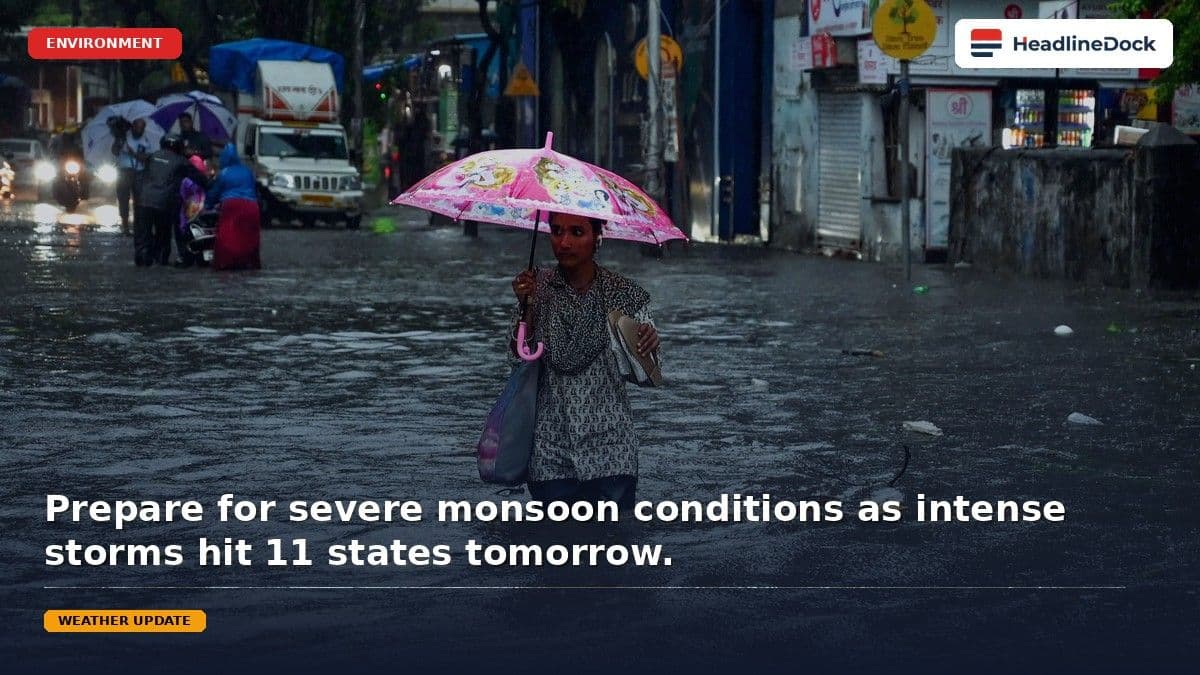
The IMD has issued severe weather warnings for 11 states on July 4, 2026, predicting heavy rainfall and winds up to 90 kmph. The monsoon is gaining strength, displacing previous dry air conditions, with further widespread rainfall expected across India by July 10.
KEY TAKEAWAYS
1 MIN READ- Heavy rainfall and thunderstorm alerts issued for 11 states, including Delhi, UP, and Bihar.
- Powerful wind gusts up to 90 kmph expected to impact daily life and infrastructure.
- Dry air masses are being displaced as the monsoon trough strengthens across the region.
- New low-pressure system in the Bay of Bengal likely to facilitate widespread rainfall by July 10.
As the monsoon season intensifies across the Indian subcontinent, authorities have issued severe weather alerts for tomorrow's weather on July 4, 2026. The India Meteorological Department (IMD) has forecasted widespread heavy rainfall accompanied by powerful gusty winds, potentially reaching speeds of up to 90 kmph, across 11 key states within the next 13 hours.
Regions Affected by Severe Weather Warnings
The upcoming weather event is expected to significantly impact Uttar Pradesh, Delhi, Bihar, Jharkhand, Rajasthan, Uttarakhand, Punjab, Himachal Pradesh, Jammu and Kashmir, Maharashtra, and Kerala. Residents in these regions have been urged to exercise extreme caution as the monsoon gains momentum. The intense conditions, characterized by heavy downpours and lightning, pose substantial risks to both public infrastructure and daily life, with authorities advising citizens to avoid unnecessary travel and remain alert to local advisories.
Specifically, in Delhi, the forecast anticipates heavy rainfall and intense thunderstorms, with wind speeds likely ranging between 60 and 70 kmph. Temperature fluctuations are expected as the city prepares for increased precipitation. Similarly, northern and eastern parts of the country, including Uttar Pradesh and Bihar, are bracing for wind gusts that could peak at 90 kmph. These high-speed winds have prompted warnings regarding potential damage to large trees and power infrastructure.
Monsoon Dynamics and Shift in Weather Patterns
The current meteorological situation has been heavily influenced by the interplay between moisture-laden monsoon winds and dry air intrusions originating from the northwest. For much of the early season, these dry winds from the desert regions of Pakistan inhibited the monsoon's progression, leading to persistent heat and humidity in areas like Delhi and Punjab. However, recent developments indicate that the monsoon trough has strengthened, successfully pushing back these dry air masses.
Meteorologists are now closely monitoring a potential low-pressure system forming over the northern Bay of Bengal. If this system intensifies as predicted, it is expected to clear the remaining pockets of dry air and ensure widespread, consistent rainfall across the country by July 10. While the heavy rains are essential for agriculture, officials have advised farmers and fishermen in coastal regions to remain particularly vigilant. Local administrations are also being prepared to mitigate potential challenges such as waterlogging and localized flooding, which often accompany these intense monsoon bursts.