Reflecting on the Alan Greenspan Legacy and His Impact on Global Economics
The passing of Alan Greenspan at 100 invites a critical review of his tenure as Federal Reserve chairman. While credited with significant economic growth, his legacy is deeply intertwined with the 2008 financial crisis and the limitations of his faith in market self-regulation.
Highlights
- •Alan Greenspan, who led the US Federal Reserve from 1987 to 2006, has passed away at the age of 100.
- •His tenure is remembered for a landmark period of economic growth alongside his role in the 2008 financial crisis.
- •He pioneered a complex risk-management approach for monetary policy while maintaining a strong belief in market self-regulation.
- •Following the 2008 market collapse, he famously acknowledged a major flaw in his long-held economic ideology regarding regulation.
The global financial community is reflecting on the complex legacy of Alan Greenspan, the former chairman of the Federal Reserve, who passed away on June 22, 2026, at the age of 100. Serving as the head of the FED from 1987 until 2006, Alan Greenspan oversaw an era characterized by sustained economic expansion, earning him a reputation as one of the most influential central bankers in modern history. However, his tenure is also closely linked to the catastrophic 2008 financial crisis, highlighting the intricate Alan Greenspan legacy that continues to be a subject of intense debate among economists.
The Evolution of Economic Risk Management
Alan Greenspan was not a typical academic economist; he was a Wall Street consultant who leaned heavily on data-driven analysis. A significant aspect of his contribution was the formalization of a risk-management framework for monetary policy, introduced in 2004. He operated under the belief that central banks must navigate perpetual uncertainty, distinguishing between quantifiable risk and what he termed Knightian uncertainty, where the probability of outcomes is unknown. This approach suggested that monetary policy should not focus solely on the most probable scenario, but rather account for the entire spectrum of potential outcomes and their asymmetric costs.
Throughout his time at the Federal Reserve, he placed great trust in the power of market signals, often prioritizing technology-driven productivity growth as a safeguard against inflation. Even when unemployment levels reached historical lows, he was confident that market mechanisms would maintain balance. Yet, this unwavering faith in the efficiency of markets became his most criticized trait. He famously preferred to manage the fallout of market instability rather than intervene to deflate emerging bubbles, a strategy that led to the phenomenon dubbed the Greenspan put. His reluctance to regulate complex financial instruments, rooted in the belief that institutions would prioritize self-correction, is now seen as a critical error.
Lessons from the 2008 Financial Crisis
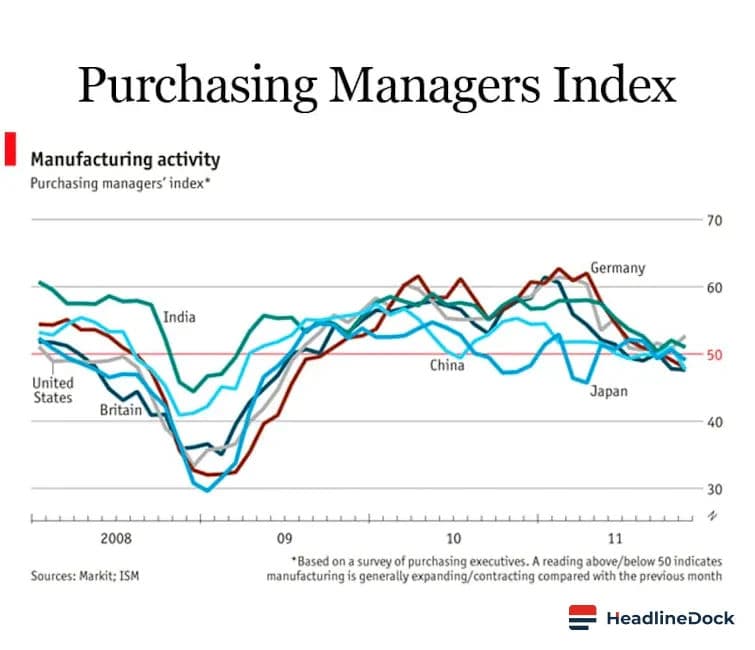
The 2008 financial collapse starkly challenged his reliance on market self-regulation. In an October 2008 appearance before the United States Congress, Alan Greenspan admitted to finding a significant flaw in his economic philosophy, acknowledging that his belief in the self-correcting nature of free markets had been excessively idealistic. Experts such as Paul Krugman and Alan Blinder have noted that his prolonged maintenance of low interest rates, combined with a persistent blind spot regarding financial regulation, were major contributing factors to the crisis.
As policymakers look back at the Alan Greenspan legacy, the emphasis shifts toward what should be preserved and what discarded. His insistence on the independence of the central bank remains a vital principle. However, his over-reliance on the autorregulation of markets serves as a cautionary tale. Future economic governance must prioritize robust supervision and a deeper humility regarding the limits of monetary control.