Johannesburg Secures Massive Loan to Address Ongoing Electricity Infrastructure Crisis
The City of Johannesburg has obtained a R3.8 billion loan from the German bank KfW to revitalize its failing electricity utility, City Power. While the funds aim to address a massive infrastructure backlog, significant management and financial hurdles mean residents will likely face a long wait for improvements.
Highlights
- •Johannesburg secured a R3.8 billion loan from KfW to fix its struggling electricity utility, City Power.
- •The loan features a 15-year repayment term with a five-year grace period on capital payments to ease financial strain.
- •City Power faces an estimated R40 billion infrastructure backlog and requires urgent maintenance to improve service reliability.
- •Immediate improvements for residents are unlikely, as the city must first address deep-seated billing, revenue, and management issues.
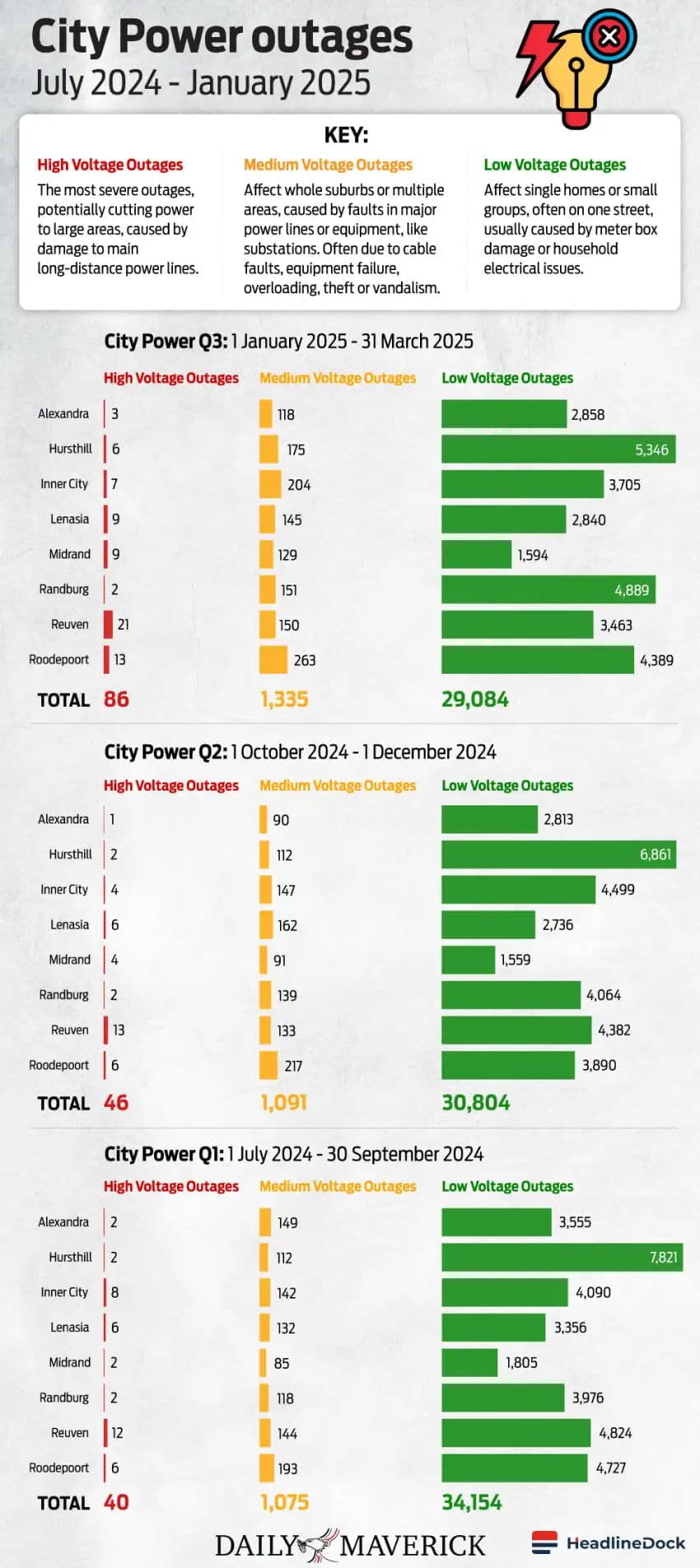
The city of Johannesburg has secured a substantial new loan aimed at addressing its persistent electricity infrastructure challenges. As the commercial hub of South Africa struggles with failing power systems, this financial injection is viewed as a necessary step toward recovery, though immediate results for residents remain unlikely. Recent data indicates that only 38% of residents were satisfied with their electricity services during 2023/2024, a sharp decline from 77% in 2017/18. Furthermore, the auditor general revealed that the city allocated merely 1% of its operating budget toward maintenance in the 2024/25 period, significantly below the national treasury's 8% guideline.
In May 2026, the City of Johannesburg reached an agreement with the German state-owned development bank, Kreditanstalt für Wiederaufbau (KfW), for a R3.8 billion (over US$230 million) concessional loan. This funding is specifically designated to revitalize the municipal electricity utility, City Power, which has faced years of financial mismanagement and operational failure.
Navigating Municipal Debt and Infrastructure Repairs
The decision to pursue this electricity infrastructure loan follows intense scrutiny from the finance minister regarding the city's history of unfunded budgets. While municipalities frequently borrow to support development, the National Treasury has expressed concern over excessive reliance on grants. Johannesburg’s total outstanding loans and borrowings reached R19.4 billion (US$1.181 billion) in 2025. This new KfW loan, however, offers a 15-year term with a five-year grace period on capital repayments, allowing the city to manage its immediate financial burden more effectively.
The utility City Power currently contributes roughly 30% of the city’s budgeted revenue. Despite this, its infrastructure is increasingly prone to breakdown, with an estimated maintenance backlog of approximately R40 billion (US$2.4 billion). The city has also accumulated significant arrears, with unpaid bulk electricity supplies to Eskom exceeding R5 billion (US$304 million). These systemic issues have drawn investigations from the Special Investigating Unit concerning allegations of corruption and administrative malpractice.
Future Outlook for Electricity Service Delivery
Residents should not anticipate immediate improvements in electricity reliability. The process of upgrading aging infrastructure and fixing broken metering and billing systems is extensive. While the loan provides necessary capital, success will depend heavily on the city's ability to improve its revenue collection and enforce stricter financial oversight. City Power has demonstrated potential through innovative projects, such as micro-grids, which could serve as a model for broader reforms.
Long-term progress may require integrating renewable energy sources, such as roof-top solar and battery storage, into the municipal network. Coupled with support from the National Treasury’s Metro Trading Services Reform Programme, this loan represents a critical opportunity for the city to stabilize its electricity sector. Transparency and consistent performance tracking will be essential to ensure that these funds actually deliver the intended enhancements for the public.