From Belfast to Washington: The Script of the Dangerous Migrant Narrative
The dangerous migrant narrative is a recurring global pattern where isolated crimes are reframed to incite hostility toward immigrants. From street riots in Belfast to legislative shifts in the United States, this framework consistently weaponizes individual actions to justify broad, punitive immigration policies and systemic exclusion.
Highlights
- •A recurring pattern of framing individual crimes as a collective threat from immigrants is emerging globally.
- •The narrative playbook includes a triggering event, categorical expansion, social media amplification, and political translation into policy.
- •Recent unrest in Belfast, Dublin, and Southport highlights how quickly misinformation can fuel public hostility toward migrant communities.
- •In the U.S., this logic is often institutionalized through legislative branding that links immigration status to public safety threats.
A disturbing and recurring pattern regarding the narrative of the dangerous migrant has surfaced across international borders, moving from Belfast to Washington. This script typically initiates following a violent assault. Documentation of the event, often in the form of video, is rapidly shared across digital platforms, conditioning the public to perceive the incident not as a single crime, but as evidence of a broader threat posed by outsiders.
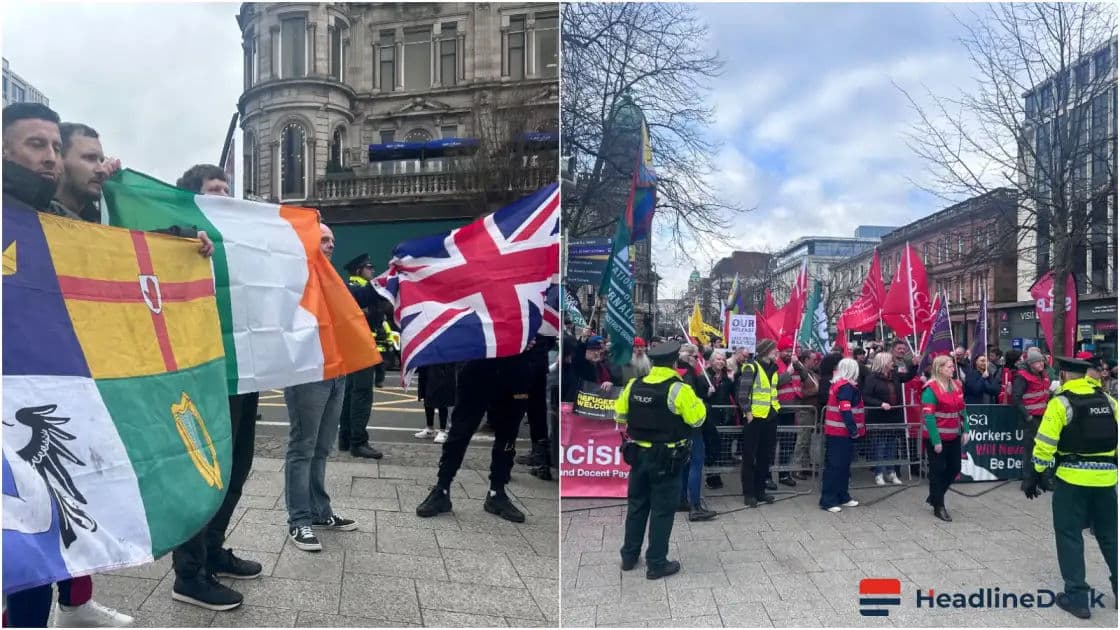
The situation in Northern Ireland provides a clear example of this cycle. Following a severe knife attack in Belfast on June 8, 2026, footage circulated online, leading to widespread civil unrest. Masked rioters engaged in arson, targeting properties and vehicles. Notably, authorities reported that businesses and homes linked to immigrants were intentionally selected for hostility after a Sudanese asylum-seeker was charged in connection with the stabbing. Online actors further exacerbated tensions by releasing the personal details and addresses of immigrants and their legal advocates.
The Repeatable Playbook of Anti-Immigration Narratives
This phenomenon follows a structured series of stages. First, a shocking event, often involving vulnerable populations or graphic imagery, acts as a catalyst. Second, categorical expansion occurs, wherein activists and social networks reframe the individual suspect’s actions as representative of all immigrants or asylum-seekers. This process utilizes disinformation to portray entire groups as a security risk. Third, the narrative is amplified through social media influencers and far-right networks, which intensify public grievance.
Finally, this fear translates into political demands for exclusionary policies, such as increased detention, deportation, or harsher border enforcement. In both Dublin and Southport, similar events transpired, where crimes involving foreign-born or perceived foreign-born suspects were immediately weaponized to fuel anti-immigrant sentiment. Despite the fact that in Southport the perpetrator was later identified as a local teenager, the initial false narratives had already successfully ignited widespread unrest.
In the United States, this script manifests more frequently through legislative and bureaucratic channels. Policies like the Laken Riley Act, enacted by President Donald Trump in 2025, reflect an institutionalized version of this logic. By linking immigration enforcement directly to the prevention of crime committed by individuals labeled as dangerous criminal aliens, the government frames restrictive measures as essential for public safety. Whether expressed through street-level riots in Belfast or executive orders in Washington, the underlying process remains the same: converting isolated criminal incidents into a justification for systemic hostility toward non-citizens. This persistent framework transforms complex social issues into a simple, albeit divisive, moral drama.