FIFA Under Fire After Lifting Balogun Red Card Suspension Ahead Of Belgium Clash

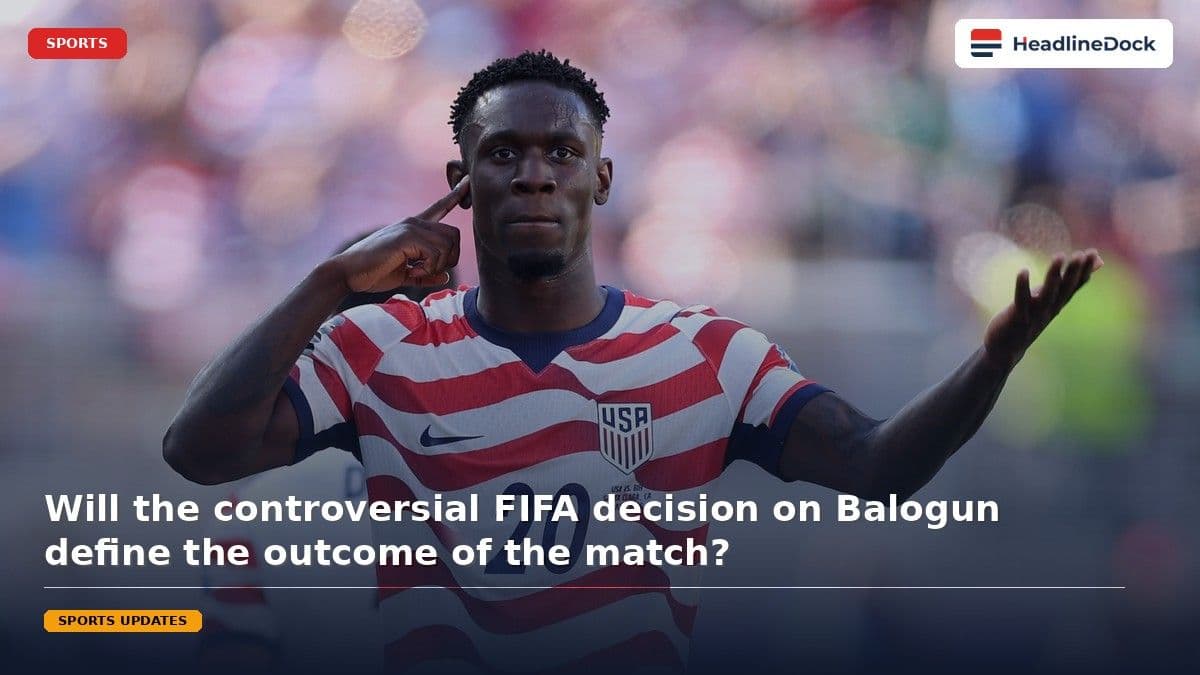
FIFA’s decision to lift Folarin Balogun’s one-game suspension following a presidential review has triggered a major conflict with UEFA. The move to allow the US striker to play against Belgium has raised serious questions regarding tournament integrity and the future of international sports governance.
KEY TAKEAWAYS
1 MIN READ- FIFA suspended a one-game ban for Folarin Balogun, making him eligible for the round-of-16 match against Belgium.
- U.S. President Donald Trump confirmed requesting a review of the original red card decision.
- UEFA has publicly condemned the ruling, claiming it threatens the integrity and credibility of the competition.
- The Royal Belgian Football Association is exploring further legal actions, including potential appeals to the Court of Arbitration for Sport.
A major controversy has erupted surrounding the Nations League and the 2026 World Cup regarding the eligibility of U.S. Men's National Team striker Folarin Balogun. Following a red card issued during the team's victory over Bosnia and Herzegovina, FIFA elected to suspend his mandatory one-game ban for a probationary period of one year. This decision has sparked significant debate regarding the integrity of the tournament and the influence of political figures on sporting governance.
The situation escalated when it was revealed that U.S. President Donald Trump had requested a review of the disciplinary decision. While FIFA maintains that its independent judicial bodies handled the matter without external influence, the move has drawn sharp criticism from various sectors, including UEFA. The European governing body described the decision to clear Folarin Balogun for the crucial round-of-16 match against Belgium as both incomprehensible and unjustifiable.
Legal Challenges and Regulatory Tensions
The Royal Belgian Football Association expressed its strong opposition to the ruling, formally challenging the striker's eligibility. Although the FIFA appeal committee deemed the challenge inadmissible on procedural grounds—stating that the Belgian federation lacked standing in the specific proceedings—the conflict appears far from resolved. Belgian officials have indicated that further legal avenues, potentially including the Court of Arbitration for Sport, remain under consideration.
This incident has intensified existing tensions between global soccer authorities. Critics argue that the retroactive suspension of the ban undermines the consistency of Nations League and World Cup officiating. Conversely, supporters of the decision contend that the original red card was harsh and that a review was a necessary correction to ensure the competition's best players are on the field. As the tournament progresses, the focus remains not only on the upcoming matches but also on the long-term implications this case may have for the governance and regulatory processes of international football.