FIFA President Faces Intense Scrutiny Amid Rising Disciplinary Controversies in Football

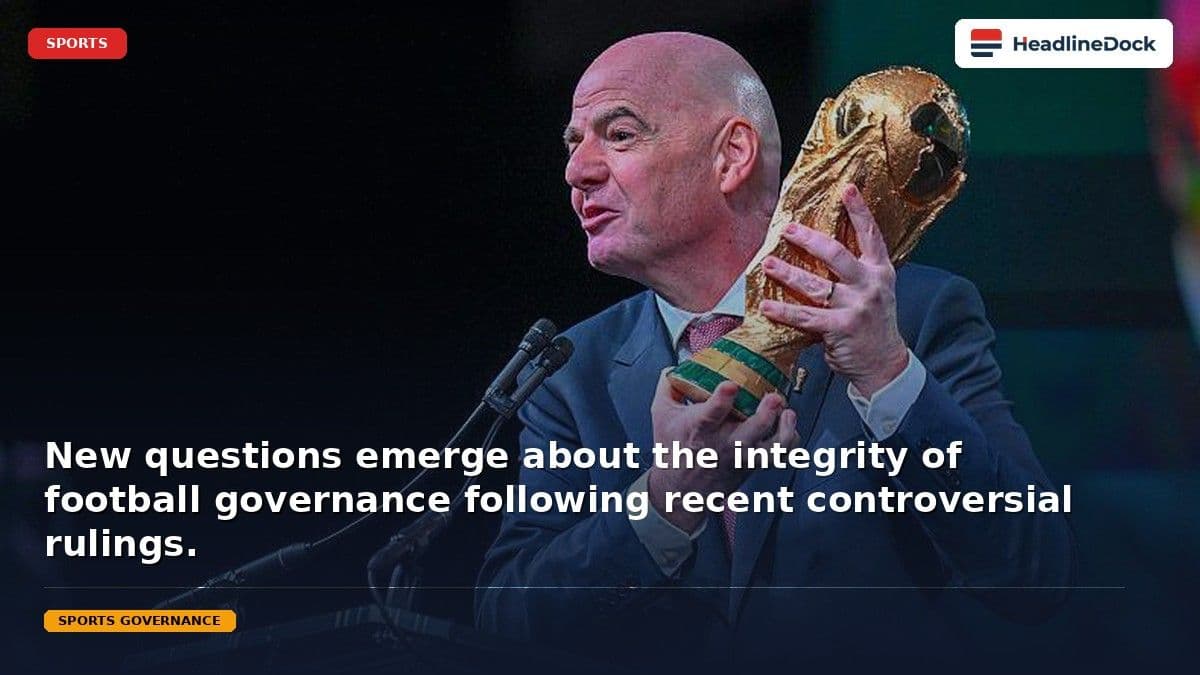
A heated controversy regarding a reversed player suspension has placed the FIFA president under scrutiny. Experts warn that inconsistent disciplinary rulings could jeopardize tournament integrity, while highlighting an increasing divide between European football authorities and the rest of the world regarding current leadership.
KEY TAKEAWAYS
1 MIN READ- The decision to lift Folarin Balogun's suspension has triggered major criticism from legal experts and European football bodies.
- Concerns exist that potential post-match legal challenges could retrospectively invalidate tournament results.
- The controversy highlights a geopolitical split, with Europe questioning leadership while other regions remain supportive.
- Critics argue that internal independence and transparency within the governing body's disciplinary processes are rapidly declining.
The global football community is currently embroiled in a significant controversy regarding the FIFA president and the governing body's recent handling of disciplinary decisions. At the heart of the debate is the sudden reversal of a suspension for American player Folarin Balogun, a move that has sparked widespread indignation among sports law experts and European football authorities.
Legal Uncertainties and Governance Concerns
The situation has raised urgent questions about the transparency and consistency of current football governance. Sports law experts have highlighted a critical vulnerability: if Folarin Balogun participates in a match and secures a victory, a subsequent challenge at the Court of Arbitration for Sport (CAS) could retrospectively declare the player ineligible. This could lead to a chaotic scenario where match results are overturned well after the final whistle, undermining the integrity of the tournament.
Observers are particularly critical of the lack of explanation provided by the governing body regarding its decision-making process. Legal professionals suggest that while a specialized ad-hoc tribunal exists to handle rapid disputes, the administrative inconsistency surrounding this case—and other recent incidents involving national teams and personnel—suggests a growing trend of mismanagement. Critics argue that FIFA is increasingly failing to maintain the rigorous standards expected of a global sports organization.
Global Division and Leadership
The fallout from this incident has exposed a stark geopolitical divide within the sport. While European football associations, including the UEFA and various national federations, have expressed vocal opposition to these developments, support for the current FIFA president remains robust in other continents. Experts note that many non-European associations remain committed to the incumbent leadership, effectively insulating the administration from the criticism emanating from Europe.
There is growing skepticism regarding the independence of the organization's disciplinary committees. Allegations have emerged suggesting that internal checks and balances are eroding, with fewer officials willing to provide critical oversight. Despite assertions that these committees operate independently—specifically regarding claims that external political influence did not impact the ruling—many observers remain unconvinced. As the tournament progresses, the focus remains firmly on whether this incident will trigger a broader reassessment of how the world's most popular sport is managed on the international stage.