Could France Benefit from Adopting the Swiss Direct Democracy Model?
This article examines the Swiss direct democracy system, highlighting how its focus on citizen referendums and federalism drives economic stability and political trust. It further explores the potential for France to incorporate similar democratic mechanisms to enhance public engagement and government accountability.
Highlights
- •The Swiss model utilizes direct democracy to empower citizens and build high public trust.
- •Economic success in Switzerland is linked to a system that prevents over-centralization of power.
- •Swiss politicians focus on consensus-building to avoid public referendums that could overturn their policies.
- •Proposals to integrate direct democratic tools into the French Constitution remain a topic of national discussion.
Could Switzerland's direct democracy model serve as a blueprint for France? This question has gained traction as observers analyze how the Swiss system cultivates high levels of public trust through frequent citizen engagement. By allowing the populace to directly influence public policy via referendums, the Swiss framework encourages a political environment deeply rooted in consensus and accountability.
Switzerland consistently ranks among the most prosperous nations in Europe, boasting a high GDP per capita and impressively low public debt. While critics once attributed this success to controversial fiscal practices or banking secrecy, those arguments have lost weight over time. Crucially, banking secrecy was abolished in 2018, yet the nation's economy continues to thrive. Researchers point to the Swiss political system as a primary driver of this sustained economic health, highlighting how it fosters a unique sense of civic participation.
Understanding the Mechanics of Swiss Direct Democracy
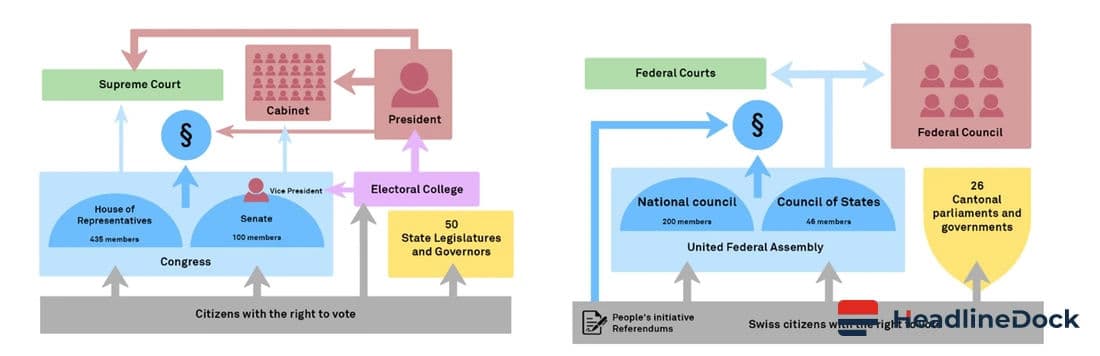
The Swiss model is built upon a series of institutional rights that grant citizens significant power. Key features include the mandatory referendum, which requires public approval for constitutional changes; the optional referendum, allowing citizens to challenge new laws via petition; and the popular initiative, enabling the public to propose constitutional amendments directly. These mechanisms effectively place the final decision-making authority in the hands of the people rather than just elected officials.
This structure results in a political culture where government representatives are highly incentivized to seek broad agreements. Because they face the constant possibility of a public challenge or vote on their policies, politicians prioritize compromise and inclusivity. As a result, Switzerland is often cited as a country where citizens express a strong belief in their ability to shape political outcomes, standing in contrast to the more centralized tendencies seen in other European nations.
Can These Democratic Innovations Be Exported?
The decentralization inherent in the Swiss system is reinforced by its strong federal structure. The cantons retain significant sovereign powers, including substantial control over tax revenues, which encourages regional competition and innovation. While the Swiss system is often labeled as unique and difficult to replicate, experts suggest that the underlying principle—popular control over the Constitution—is a powerful tool for modern governance.
In France, discussions surrounding the introduction of similar democratic tools have emerged, with proponents advocating for reforms that would allow citizens more direct legislative power. While the current French political landscape remains distinctly different, the potential to integrate elements of direct democracy through constitutional adjustments remains a subject of active debate among scholars and political reformers. By shifting the final word to the citizenry, nations may be able to strengthen institutional trust and promote more stable, representative governance.