Congress Alleges BJP’s Two-Thirds Majority Bid Aimed at Ending Reservation
The Congress party has accused the BJP of seeking a two-thirds majority in the Lok Sabha to amend the Constitution and abolish reservation policies, claiming that recent party splits are part of a calculated strategy to consolidate legislative power.
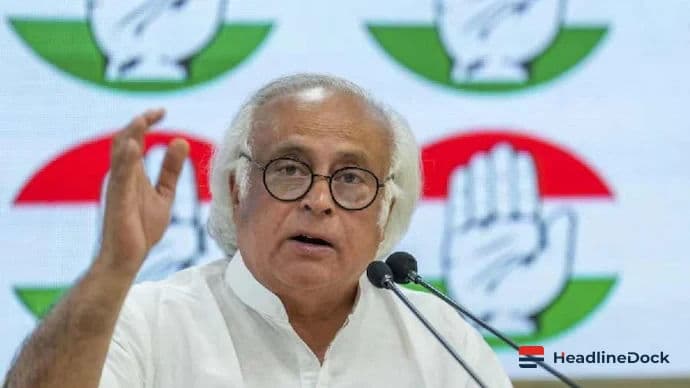
The Congress party has leveled serious allegations against the Bharatiya Janata Party (BJP), suggesting that the ruling party’s primary objective in seeking a two-thirds majority in the Lok Sabha is to amend the Constitution with the ultimate goal of abolishing reservation systems.
According to Congress general secretary Jairam Ramesh, the government is utilizing the push for delimitation, framed under the guise of women's reservation, as a strategic milestone. Ramesh argued that if the administration were genuinely committed to gender-based legislative representation, it would move to implement the Nari Shakti Vandan Adhiniyam based on the existing strength of 543 members in the Lok Sabha for the upcoming 2029 general elections.
Motivations Behind the Search for a Two-Thirds Majority
The Congress leader claimed that the recent instances of political instability within the Trinamool Congress (TMC) and Shiv Sena (UBT) are directly linked to the BJP's pursuit of a two-thirds majority. Ramesh pointed to the events of April 17, describing it as a moment of significant humiliation for the government's leadership when a Constitution amendment bill failed to secure the necessary support in the Lower House. While 298 members supported the measure, it fell short of the 352 votes required.
He alleged that the central government’s subsequent actions, including the orchestrating of defections in opposition parties, are motivated by a desire for revenge following that legislative setback. The Congress asserts that the "400 paar" campaign narrative was essentially a roadmap to acquire enough parliamentary power to fundamentally alter the Constitution, specifically targeting the structures that protect reservation for SC, ST, and OBC communities.
Furthermore, Ramesh dismissed concerns regarding the increase in parliamentary seats, arguing that the focus should remain on the current 543-seat capacity. He emphasized that the opposition’s unified stand on April 17 was directed against the methodology of the proposed delimitation, rather than being an opposition to the concept of women's reservation itself.
Historical Context and Future Concerns
The Congress highlighted deep-seated ideological differences regarding the founding document of the nation, claiming that the BJP and its ideological affiliates have long maintained an uncomfortable relationship with the Constitution. Ramesh noted that the government’s push for a two-thirds majority continues to raise alarms among marginalized sections of society who fear that the long-term intent is to dismantle existing social justice frameworks. As the political landscape evolves, the debate over the future of reservation and the integrity of the Constitution remains a central point of contention between the ruling party and the opposition.