Andhra Pradesh Tightens Industrial Safety Oversight to Curb Workplace Mishaps
The Andhra Pradesh government is implementing stricter industrial safety protocols, mandating regular committee meetings and safety audits for hazardous units. This initiative aims to address safety lapses and reduce industrial mishaps to better protect the state's large workforce.
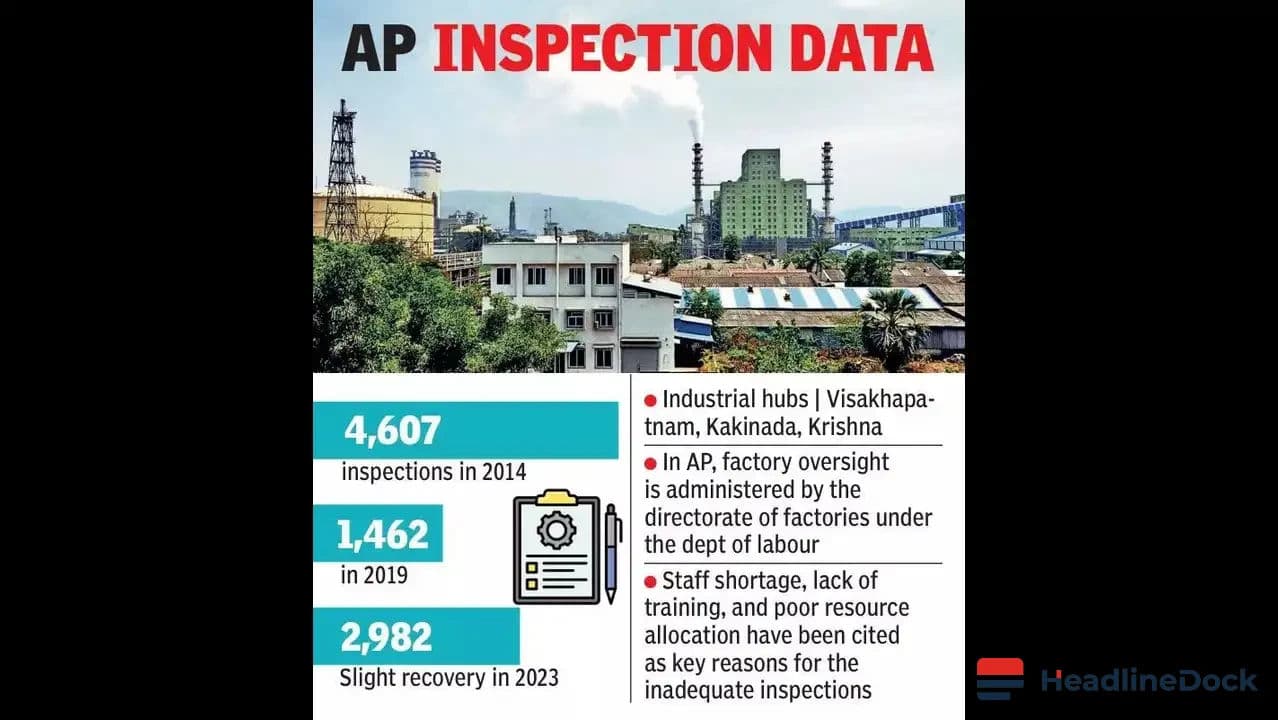
The Andhra Pradesh state administration is intensifying its oversight to bolster industrial safety standards following a recent series of unfortunate incidents. This heightened vigilance is particularly focused on industrial hubs like Visakhapatnam, where officials aim to minimize operational risks and safeguard the workforce.
To improve workplace security, the factories department is mandating regular safety committee meetings for all facilities employing more than 250 personnel. These committees, which are expected to include equal representation from both management and labor, will convene every three months. This structural change is designed to provide workers with a direct platform to voice concerns regarding safety lapses, allowing management to implement corrective actions immediately.
Enhancing Industrial Safety Protocols
Although safety committees are typically appointed for two-year terms, industrial units that handle hazardous materials or utilize high-risk processing methods are now required to maintain a stricter schedule of these meetings. The records from these sessions must be submitted to relevant factories department officials. These authorities are tasked with ensuring that companies demonstrate full compliance with the safety minutes generated during these discussions.
Industry safety experts advocate that these mandatory meetings should not be limited to high-risk sectors. They suggest that all factories, regardless of the severity of materials handled, should adopt these rigorous safety oversight practices to proactively prevent potential accidents. Furthermore, experts recommend that employees be empowered to report safety deficiencies in their specific work areas during these periodic meetings, or through other accessible channels, to ensure that hazards are rectified promptly.
A significant proposal currently under consideration involves the mandatory inclusion of female employees in these safety committees. This initiative aims to incorporate diverse perspectives on workplace hazards and ensure that safety concerns specific to their working conditions are addressed without delay. Furthermore, there is a push to reform the committee composition to discourage the practice of selecting workers who may be hesitant to highlight genuine safety issues due to fear of managerial reprisal.
M. Mohan Rao, the director in-charge of the Andhra Pradesh factories department, emphasized that while safety committee meetings were previously practiced in hazardous units, the state is now committed to strict, uniform implementation. The government’s goal is to ensure that rigorous compliance reports are filed, ultimately curbing the frequency of industrial mishaps across the state.
Currently, Andhra Pradesh oversees approximately 1,510 units classified as hazardous. To protect the lives of the workforce, the state continues to insist on frequent safety audits, often involving third-party assessments. Authorities remain focused on regular equipment inspections, the safe handling of hazardous substances, the execution of emergency response mock drills, and comprehensive awareness campaigns regarding safety norms.
,curated_key_highlights:[