What Australia Can Learn From Iran’s Unconventional Military Defense Strategies
Following the recent conflict involving Iran, this analysis examines the unconventional defensive strategies and decentralized resilience tactics that could offer valuable insights for Australia's future defense posture, industrial preparedness, and national security in an evolving global landscape.
Highlights
- •Iran maintained territorial control despite nearly four months of conflict against major global powers.
- •The use of 'asymmetric deterrence' and decentralized 'mosaic defense' strategies proved effective for regime survival.
- •Australia can learn by adopting unconventional deterrence and building a more resilient, decentralized defense industrial base.
- •Increasing 'magazine depth' through low-cost, mass-produced drones and missiles is crucial for modern national security.
Iran has successfully withstood a conflict lasting nearly four months against a regional power equipped with nuclear capabilities and the world’s most formidable military, the United States. Despite persistent economic challenges, the regime maintains control over its territory and population, continuing to manufacture drones, missiles, and rockets to sustain its defense posture. While high-ranking officials have been lost, leadership remains focused on navigating towards favorable negotiation outcomes.
Although the circumstances differ significantly from those in Australia, where conflict is not considered imminent, strategic lessons can still be drawn from Iran's recent experiences, particularly regarding the evolution of modern warfare. For middle powers like Australia, understanding these shifts is essential for refining national security and defense preparedness.
Strategic Lessons in Unconventional Deterrence
A key element of Iran’s defensive strategy was its use of the Axis of Resistance, a network of proxy groups including Hezbollah, the Houthis, Hamas, and various Shia militias. This network provided essential strategic depth and a form of asymmetric deterrence that prevented major adversaries from launching direct attacks for decades. While Australia adheres to international legal and ethical norms and would not sponsor non-state actors, it can still adopt elements of unconventional deterrence. This includes deploying irregular warfare capabilities, such as advanced sea-surface, undersea, and aerial drone systems, to complicate the decision-making processes of potential adversaries.
Furthermore, Iran utilized intra-war deterrence, effectively using mines and drones to limit the mobility of international naval forces during the conflict. Australia could enhance its own resilience by decentralizing command and control. The Iranian "mosaic defense" model, which delegated military authority to 31 regional commanders, proved remarkably difficult to dismantle even after the death of Supreme Leader Ali Khamenei. Given Australia's extensive geography, shifting away from a strictly centralized command structure toward a more distributed, resilient system could bolster national security.
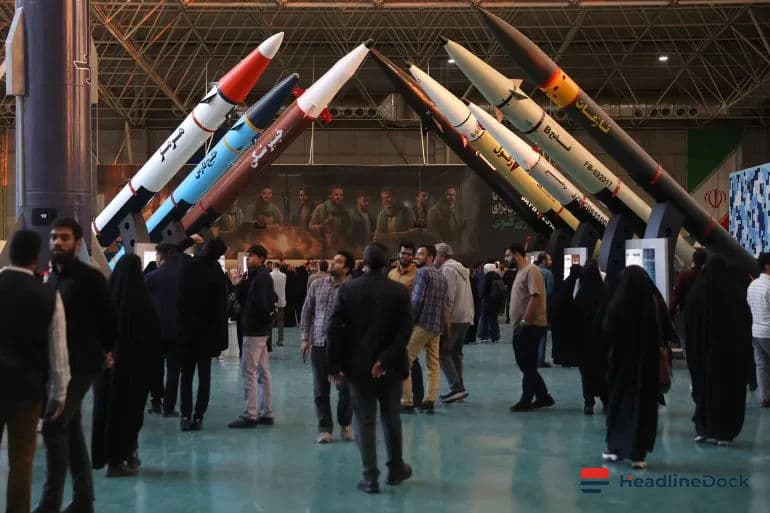
Finally, Iran demonstrated that the industrial base is a critical component of survival. By maintaining dispersed and hardened manufacturing facilities, they continued to produce munitions under heavy aerial assault. Australia should consider similar strategies, focusing on stockpiling critical manufacturing inputs and bolstering the resilience of its defense industry. This includes increasing investment in low-cost, long-range weapons to ensure greater "magazine depth." By prioritizing these adaptive strategies, Australia can better prepare for the realities of modern, protracted conflicts, ensuring that its defense capabilities remain robust and credible in an unpredictable global environment.