US Senate Passes Resolution Seeking to Limit Trump's Iran War Powers
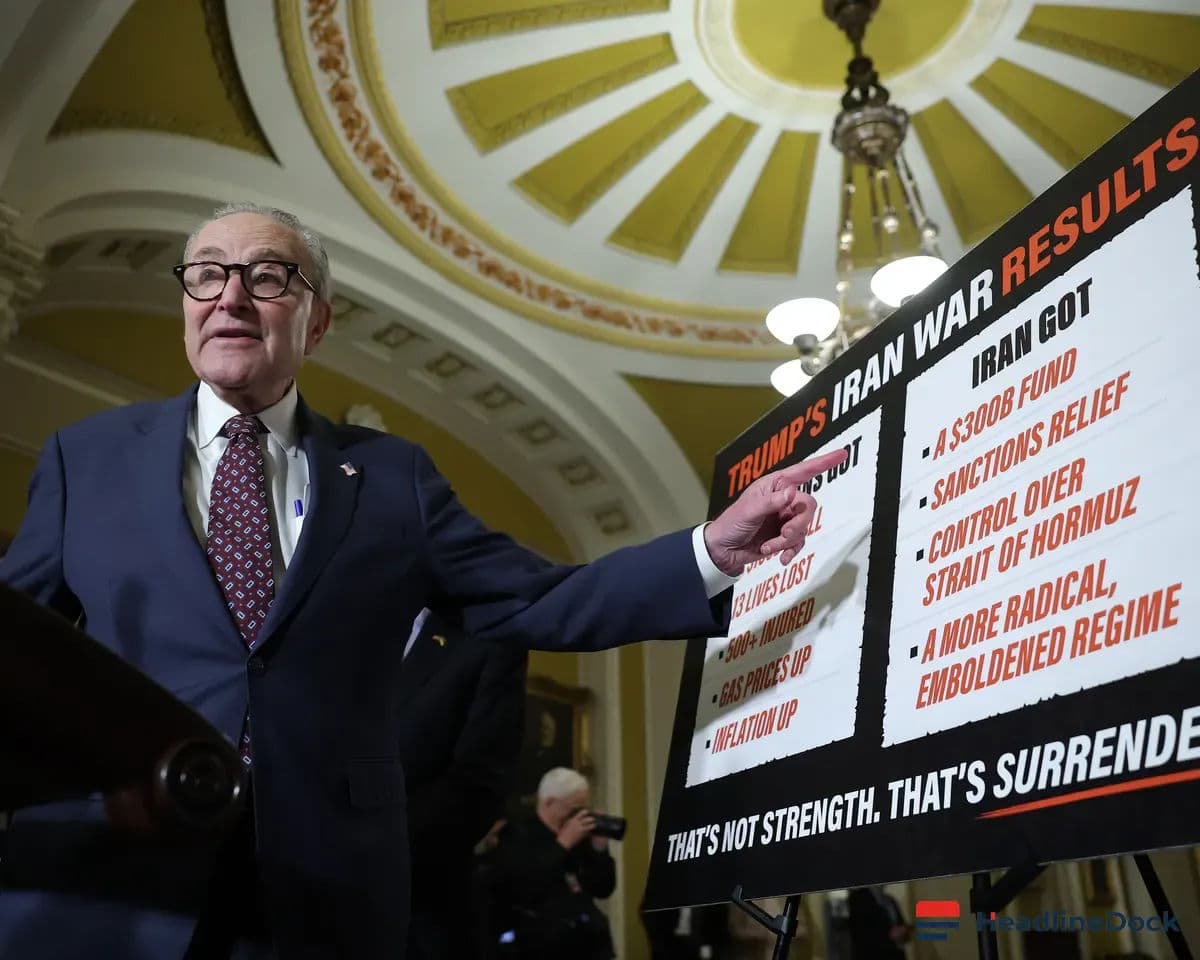
The US Senate has passed a war powers resolution aimed at limiting President Trump’s authority to launch military strikes against Iran. The 50-48 vote reflects rising congressional scrutiny over the conflict's cost and strategy as the Pentagon requests billions in additional defense funding.
Highlights
- •The US Senate approved a war powers resolution 50-48 to limit potential military action against Iran.
- •The resolution reflects growing congressional concern over executive-led conflict and military spending.
- •The Pentagon is currently seeking USD 80 billion in supplemental funding for the ongoing Iran war effort.
- •Four Republican senators broke party lines to support the resolution, highlighting internal political friction.
In a significant legislative development, the US Senate has successfully passed a war powers resolution aimed at restricting President Donald Trump from initiating unilateral military engagement against Iran. This landmark vote, which saw a narrow passage of 50-48, represents the first time the chamber has moved to officially block such executive action.
Although the measure is largely considered symbolic and does not carry the full weight of binding law, it signals deep-seated apprehension within Congress regarding the administration's foreign policy approach. The resolution highlights concerns held by both Democrats and a select group of Republicans concerning the escalating conflict and the financial implications of the ongoing military operations in the region.
Congressional Pushback on War Powers and Spending
The legislative effort gained momentum following the House of Representatives' approval of the resolution earlier this month. While Senate Republicans have historically maintained strong support for the administration, this vote marked a notable shift. Four GOP senators—Lisa Murkowski, Susan Collins, Rand Paul, and Bill Cassidy—crossed party lines to join the Democratic majority. The absence of Senate Republican Leader Mitch McConnell, who is currently hospitalized for an undisclosed health matter, also proved pivotal in the final tally.
This political friction occurs as the Pentagon actively seeks USD 80 billion in supplementary funding from Congress, largely attributed to backfilling munitions and supplies exhausted during the conflict with Iran. Defence Secretary Pete Hegseth has been engaged in discussions on Capitol Hill to secure these resources. However, the request faces scrutiny from lawmakers who are sensitive to the economic pressures currently faced by American citizens, including rising gas prices and general cost-of-living increases.
Meanwhile, the White House is pursuing a massive USD 1.5 trillion defense budget for the current year. This target represents a 50 percent increase, sparking further debate over the necessity of such expenditures. Some GOP leadership, including House Speaker Mike Johnson, are reportedly working to advance these funding packages independently, mirroring strategies used for previous large-scale tax legislation.
As the administration navigates these legislative hurdles, Vice President JD Vance has been coordinating international diplomatic efforts aimed at curbing Iran's nuclear ambitions. Despite these efforts, some prominent Republican voices, such as Senator Ted Cruz, have publicly questioned the efficacy of the current deal, citing concerns over the scale of financial aid allocated for reconstruction. The ongoing debate underscores a growing desire among lawmakers to assert greater oversight on the direction of national defense and foreign policy engagements.