Unpacking the Challenges and Realities of Women’s Careers in STEM Fields
Women in STEM in Indonesia face significant career hurdles, with only 8% of graduates remaining in the field. Experts argue for structural changes to address 'broken scaffolding' and gender bias, emphasizing the need for inclusive policies and better support systems to empower professional advancement.
Highlights
- •Only 8% of female STEM graduates in Indonesia persist in the field after entering the workforce.
- •Diverse gender representation is critical for avoiding research biases and improving the quality of scientific inquiry.
- •Women in STEM often face the 'broken scaffolding' problem, where societal and workplace structures hinder career advancement.
- •Experts advocate for better support systems, including inclusive networking and equitable access to funding and career opportunities.
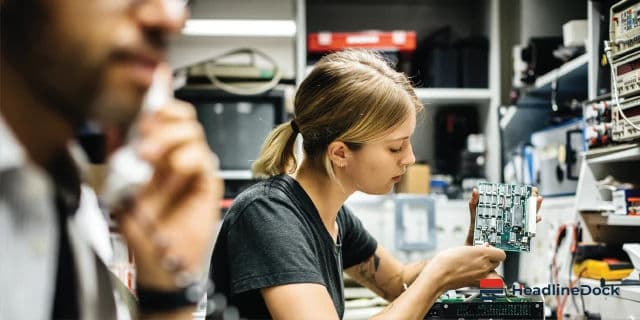
The involvement of women in the Science, Technology, Engineering, and Mathematics (STEM) ecosystem in Indonesia continues to face significant systemic obstacles. While data indicates that 35% of STEM graduates in the country are women, this figure drops substantially when these professionals enter the workforce. Alarmingly, only about 8% persist to build long-term careers within applied science and technology sectors—a phenomenon widely recognized as the leaky pipeline.
To address these critical barriers, a recent virtual discussion focused on the realities of a STEM career. The event featured insights from industry experts, including Yosmina Tapilatu, a research expert at the Deep Sea Research Center of BRIN; Diofanny Swandrina Putri, Director of Strategic Initiatives at CCS Indonesia; and Dwi Yuliawati, Head of the Program at UN Women Indonesia.
Why Female Representation in STEM is Crucial
Experts emphasized that increasing the presence of women in STEM is not merely about achieving numerical representation; it is vital for enhancing the quality of scientific inquiry. Yosmina Tapilatu noted that while homogenous teams may reach consensus quickly, they often overlook nuanced details that emerge when diverse perspectives are included. According to Tapilatu, a lack of gender diversity in research teams can lead to methodological weaknesses, particularly in fields like health research where male-dominated samples remain common.
The discussion highlighted that the most vulnerable phase for women in STEM careers occurs mid-career. During this time, professionals are under pressure to build international networks, secure research funding, and enhance their academic track records. Many women simultaneously manage the burden of domestic responsibilities due to a lack of adequate support systems. This intersection of professional and personal demands often leads to burnout, forcing some to opt for slower career trajectories.
Addressing Structural Barriers
Diofanny Swandrina Putri provided an industry perspective, noting that male-dominated workplaces often create exclusive environments that limit women’s access to decision-making processes. Key professional decisions are frequently made in informal settings, such as networking activities that are not always accessible to women. Furthermore, women in these sectors often struggle to gain recognition for their expertise, frequently feeling pressured to demonstrate twice the competence of their male peers to be considered equivalent.
To move forward, Dwi Yuliawati argued for the concept of broken scaffolding rather than a leaky pipeline. This shift in terminology emphasizes that the issue lies within the structure—spanning families, workplaces, and society—rather than the women themselves. Meaningful change requires a comprehensive transformation, including revised narratives, improved material access, and collective advocacy. By fostering more inclusive work environments and providing targeted support, the goal is to empower the next generation of women to take on strategic roles within the STEM landscape.