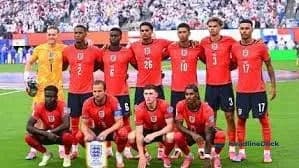
United States vs Bosnia: 2026 World Cup Knockout Clash in Santa Clara
The United States and Bosnia and Herzegovina face off in a critical 2026 World Cup knockout match in Santa Clara. The winner moves on to face Belgium, while the game highlights the complex historical ties and social divisions rooted in the 1995 Dayton Agreement.

KEY TAKEAWAYS
1 MIN READ- The United States takes on Bosnia and Herzegovina in the 2026 World Cup round of 32 in Santa Clara.
- The winner of this high-stakes knockout match will advance to face Belgium in the round of 16.
- The match holds deep historical significance, reflecting the legacy of the 1995 Dayton Agreement mediated by the US.
- Internal ethnic divisions in Bosnia often result in split loyalties among fans regarding their national football team.
The 2026 World Cup stage is set for a high-stakes clash as the United States prepares to face Bosnia and Herzegovina in the round of 32. Taking place at the iconic Santa Clara stadium, which typically serves as the home ground for the San Francisco 49ers, this knockout match carries immense significance for both nations.
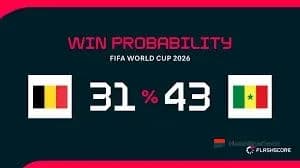
The United States, managed by Mauricio Pochettino, enters this pivotal fixture with a roster featuring key stars such as Christian Pulisic and Folarin Balogun. Having advanced to the knockout stage, the Americans are focused on securing a path toward the round of 16. On the other side, the Bosnia and Herzegovina squad, led by coach Sergej Barbarez, features veteran forward Edin Dzeko in a lineup looking to overcome their opponents on the global stage. The winner of this match is set to face Belgium, who reached this stage after a dramatic comeback victory against Senegal.
Historical Context and Social Complexities
Beyond the athletic competition, the United States vs. Bosnia and Herzegovina match highlights complex historical and social narratives. The modern state of Bosnia and Herzegovina was established following the Dayton Agreement in 1995, an accord mediated by the United States to end the brutal conflict of the 1990s. While this agreement brought peace, it also created a unique and highly intricate governance system built on ethnic divisions, which persists to this day.
This internal fragmentation is often mirrored in the sporting world. Because the population is composed of three distinct ethnic groups—Bosniaks, Serbs, and Croats—the national team does not always receive uniform support. Many residents in the Republika Srpska entity often identify more with Serbia, while those in predominantly Croat areas frequently support the Croatian national team. This social division has led to instances where parts of the population may even root against the national side.
Conversely, the Bosnian diaspora, particularly in cities like St. Louis in the United States, represents a community that often feels a more unified national identity. Figures like Esmir Bajraktarević, who grew up in the United States before choosing to represent his ancestral homeland, serve as symbols of this connection. While the match represents a sporting challenge, it also underscores the ongoing search for a shared national identity within Bosnia and Herzegovina nearly three decades after the Dayton Agreement. As the world watches in Santa Clara, the game serves as a reminder of how sports and politics remain deeply intertwined in the Balkan region.