Understanding Air Hunger: Why You Feel You Cannot Take a Deep Breath
Air Hunger is a distressing sensation of breathlessness despite healthy lungs. Often caused by poor posture, chronic stress, or upper airway congestion, the condition can be managed through lifestyle changes, improved ergonomics, and specific diaphragmatic breathing exercises to restore natural respiratory patterns.
Highlights
- •Air Hunger often manifests as an inability to take a deep breath despite normal medical results.
- •Poor posture during long hours of screen use, known as the Laptop Hunch, restricts diaphragmatic movement.
- •Upper airway issues like sinus congestion and allergies are frequent, often-overlooked causes of breathing discomfort.
- •Stress-induced shallow breathing creates a cycle that can be improved through posture correction and relaxation techniques.
If you frequently struggle to take a deep breath, you may be experiencing a condition known as Air Hunger. Many people deal with the constant urge to yawn, sighing throughout the day, or feeling a persistent tightness in their chest, all while feeling as though they cannot get sufficient oxygen. Often, medical tests for these individuals come back perfectly clear, showing normal lung function and healthy oxygen levels, which can lead to significant frustration.
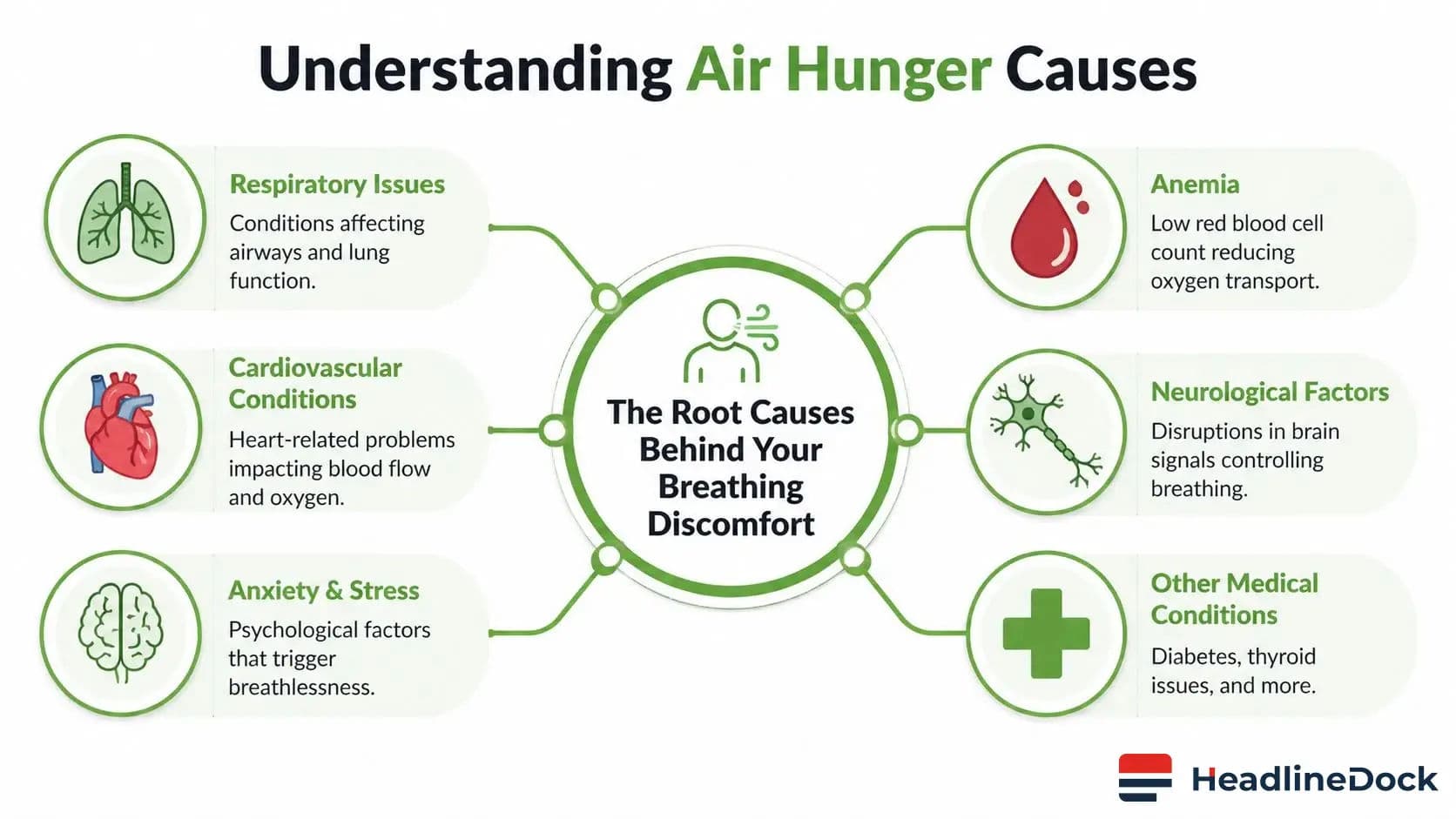
Understanding the Causes of Air Hunger
Experts like Dr. Samir Garde, Director of the Department of Pulmonology and Lung Transplant at Gleneagles Hospital, Mumbai, note that this phenomenon is becoming increasingly common among students and working professionals. While the lungs themselves may be healthy, the sensation of Air Hunger is often linked to lifestyle factors. Common culprits include elevated stress levels, improper posture, and shallow breathing habits that have become subconscious patterns in modern, fast-paced environments.
One major contributor to this breathing discomfort is the so-called Laptop Hunch Effect. Dr. Pooja Singh Gaur, a Consultant Neuro Physio-therapist at NewEra Hospitals, Navi Mumbai, points out that prolonged screen time leads to poor posture. When individuals sit in slouched positions for hours, it inhibits the natural movement of the chest and diaphragm. This forces the body to rely on smaller, secondary muscles in the neck and shoulders, leading to chronic tension and the feeling that one cannot fill their lungs completely.
Upper Airway and Stress Factors
It is important to recognize that breathing difficulties do not always originate in the lungs. Dr. Vishal Vikas Nair, an ENT Specialist at Zen Multispeciality Hospital, explains that issues such as allergies, sinus congestion, or a deviated septum can restrict airflow in the upper airway. This resistance makes breathing feel unsatisfactory even when physiological oxygen levels remain stable. Furthermore, living in urban areas with high pollution and poor indoor ventilation can exacerbate these upper airway sensitivities.
Finally, stress and anxiety significantly alter respiratory patterns. When the body is in a state of high alert, it often defaults to rapid, shallow thoracic breathing. This creates a feedback loop where the individual feels they are not getting enough air, leading to faster breathing, which in turn increases feelings of panic or uneasiness. Fortunately, this condition is often reversible through focused interventions. Practicing diaphragmatic breathing, improving daily posture, and taking intentional movement breaks can help restore a natural, comfortable, and efficient breathing rhythm.