Two New Microscopic Snail Species Discovered In Meghalaya's Limestone Caves
Researchers have identified two new microscopic snail species, Georissa meghalayaensis and Acmella bensoni, in Meghalaya’s limestone caves. This discovery emphasizes the rich, yet poorly documented, underground biodiversity of the region and underscores the urgent need to protect these fragile ecosystems from tourism and mining.
Highlights
- •Two new microscopic snail species discovered in Meghalaya's limestone caves.
- •Species named Georissa meghalayaensis and Acmella bensoni identified by researchers.
- •Findings highlight the biodiversity of the Indo-Burma hotspot region.
- •Experts warn that tourism and mining threaten these fragile underground ecosystems.
Researchers have officially documented the discovery of two new species of microscopic snails within the subterranean limestone cave systems of Meghalaya. This significant find underscores the immense ecological value of the region, which remains a largely untapped frontier for scientific exploration. As experts delve deeper into these hidden environments, there is growing concern regarding the preservation of these delicate habitats in the face of human-led activities.
Scientific Discovery of Micro-Snail Species
The research, recently featured in the European Journal of Taxonomy, was spearheaded by Nipu Kumar Das and Neelavar Ananthram Aravind from the Ashoka Trust for Research in Ecology and the Environment (ATREE). Their diligent work led to the identification of two distinct, minute molluscs: Georissa meghalayaensis and Acmella bensoni. These organisms, which are so minuscule they are easily overlooked without advanced microscopic analysis, have added a new chapter to the understanding of the biodiversity found in the Krem Puri and Arwah cave systems.
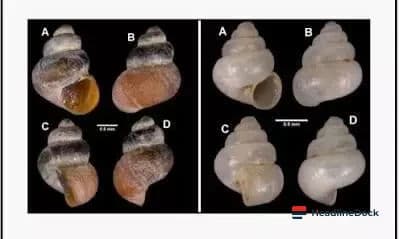
The Georissa meghalayaensis was identified near the entrance of the Krem Puri cave. This species is notably defined by its striking orangish-red shell, which features a complex, mesh-like ridged structure that separates it from similar species known for yellowish shells and spiral lines. Its name serves as a direct tribute to the state of Meghalaya, where it appears to be endemic.
In contrast, the Acmella bensoni was located further within the depths of the Krem Puri and Arwah caves. This creature possesses a translucent, whitish shell characterized by fine, densely packed ribs and deeply impressed grooves. This species was named to honor the 19th-century naturalist William H. Benson, a foundational figure in the study of malacology.
Environmental Risks and Conservation Urgency
The Indo-Burma biodiversity hotspot, which includes Meghalaya, is widely recognized as one of the most ecologically diverse regions globally. With over 1,200 known limestone caves, the area provides a critical habitat for various specialized organisms. Despite this, the underground micro-fauna continues to be poorly documented and understood.
Scientists have issued a stern warning regarding the future of these subterranean ecosystems. Increased tourist foot traffic, the introduction of artificial lighting, and the physical construction of stairways inside these caves threaten to destabilize these fragile environments. Furthermore, active limestone mining and ongoing habitat alteration present severe risks to the long-term survival of these newly discovered snail species. There is an urgent call for robust conservation policies to safeguard the unique biological heritage hidden beneath the surface of this region.