Thousands Participate in Srinagar’s Historic 8th Muharram Procession for Third Year
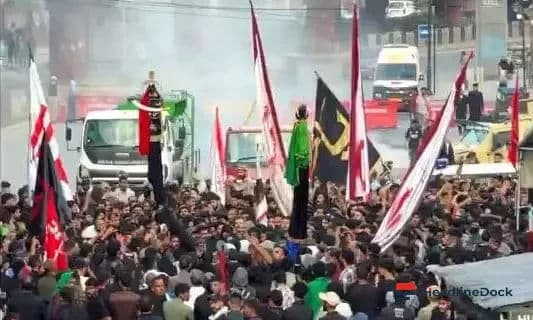
Thousands of Shia mourners gathered in Srinagar for the 8th Muharram procession, marking the third consecutive year the historic route has been opened. The event proceeded peacefully under tight security, reflecting a sustained effort to maintain traditional religious observances.
Highlights
- •Thousands of Shia mourners participated in the 8th Muharram procession in Srinagar.
- •The historic procession route was allowed for the third consecutive year after a three-decade ban.
- •Authorities implemented elaborate security and traffic arrangements to ensure a peaceful religious event.
- •The procession moved from Guru Bazaar toward Dal Gate for the concluding mourning majlis.
In a significant cultural development, thousands of Shia mourners gathered in Srinagar on Wednesday to observe the traditional 8th Muharram procession. This marks the third consecutive year that local authorities have granted permission for the mourners to traverse this historic city route, which had remained restricted for over three decades following the rise of militancy in the region.
The religious procession commenced at Guru Bazaar and moved through key areas including Jehangir Chowk, Budshah Chowk, and Moulana Azad Road. The event, which drew participants of all ages from various parts of the Kashmir Valley, was destined for Dal Gate to conclude with a mourning majlis. The atmosphere was somber as devotees recited traditional elegies, known as nohas, while performing matam to commemorate Imam Hussain and the martyrs of Karbala.
Historical Context and Route Restoration
For more than 30 years, since 1989, the 8th Muharram procession along this central path was prohibited due to concerns that large gatherings might be utilized for political mobilization or spark law-and-order disruptions. Before this long-standing ban, the Shia community traditionally conducted major processions from Aabi Guzar and Guru Bazaar, culminating at Zadibal and Dal Gate.
While the central route faced decades of restrictions, smaller religious observances and tazia processions continued in predominantly Shia localities such as Zadibal, Magam, and Budgam. The reopening of this traditional Srinagar route in 2024 represented a notable shift in administration policy, a gesture that has been repeated this year with rigorous attention to public safety and infrastructure management.
The administration implemented comprehensive security, traffic, and medical measures to facilitate the event. Volunteers played a vital role in coordinating with the police and paramilitary personnel stationed along the route to ensure a peaceful observance. Officials expressed satisfaction with the smooth coordination between the civil administration, security forces, and the community members involved in the procession.
The environment surrounding this year’s 8th Muharram procession was notably different from previous years. While the 2025 observance saw police intervention and subsequent legal cases over the display of specific political symbols and flags, this year's event remained focused on religious observance. Participants refrained from displaying controversial symbols, opting instead to carry the Iranian national flag and portraits of religious leaders. The procession proceeded without incident, underscoring a successful collaboration between the organizers and the local administration in maintaining communal harmony.