The Kombucha Paradox: Measuring the Real Impact on Human Health and Wellbeing
While kombucha is widely popular for its supposed gut-health benefits, recent research reveals a 'kombucha paradox.' The drink shows measurable metabolic activity but fails to demonstrate significant improvements in acute stress resilience or mental wellbeing, urging consumers to be cautious of marketing.
Highlights
- •Kombucha often contains hidden added sugars, contradicting its perception as a universally healthy drink.
- •A controlled study showed that daily consumption did not improve acute stress resilience in healthy adults.
- •Biologically active compounds do not necessarily equate to measurable health or wellbeing benefits for consumers.
- •Product variability makes it difficult to apply broad health claims to every commercial kombucha available.
Kombucha has surged in popularity as a primary choice among gut-friendly beverages. However, recent scrutiny from health organizations highlights a significant gap between marketing claims and scientific evidence regarding its actual health benefits. While often marketed as a wellness elixir, consumers are being urged to exercise caution and inspect product labels for hidden additives.
The British Heart Foundation has cautioned that popular fermented drinks may not always be as wholesome as they appear. Although commercial kombucha can serve as a lower-sugar alternative to traditional sodas, many store-bought varieties are loaded with added sugars. Additionally, other popular fermented items like kimchi and sauerkraut often contain high levels of salt, which can negatively impact cardiovascular health.
Evaluating the Health Claims of Kombucha
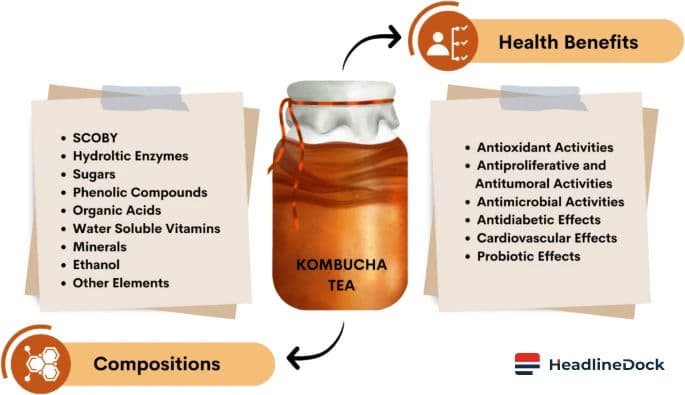
The core of the issue lies in the kombucha paradox: while the drink is biologically active, this does not automatically translate into meaningful health improvements. Many manufacturers promote these drinks based on the presence of compounds derived from fermentation, yet rigorous, controlled human studies have failed to support broad wellness claims. In a controlled trial involving healthy adults, participants consumed 330ml of a specific kombucha prototype daily for eight weeks. When subjected to the Maastricht acute stress test—a rigorous procedure combining physical and mental challenges—researchers observed no significant changes in stress resilience, cortisol recovery, or heart rate variability compared to those who consumed a placebo.
While the study did note that kombucha consumption altered certain metabolic markers in the urine and blood, researchers emphasize that biochemical changes are not synonymous with improved mental health or stress regulation. The findings suggest that while these drinks are biologically active, they are not a reliable solution for managing acute stress in healthy individuals.
The Need for Rigorous Evidence
The diversity of kombucha products currently on the market complicates matters. Because factors such as the tea base, fermentation time, and processing methods vary significantly, findings from one product cannot be generalized to every bottle available to consumers. The gut-brain axis remains a subject of intense scientific interest, but moving from laboratory findings to clear health outcomes requires more extensive research with larger participant groups.
For now, experts advise consumers to remain skeptical of health halos surrounding processed foods. Marketing narratives often race ahead of clinical evidence, and for products like kombucha, the path to proving a tangible, long-term health benefit is still underway. Until more robust data is available, it is essential to view these drinks as a dietary choice rather than a scientifically proven remedy for stress or wellness.